

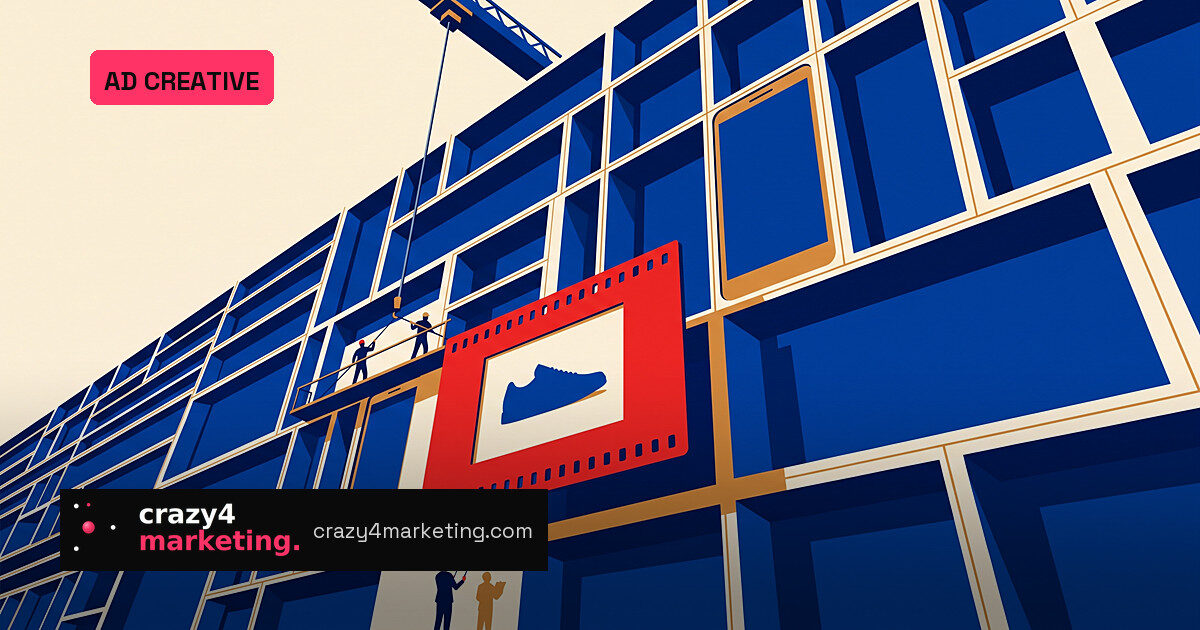
Strip away bidding algorithms, audience models and retail media plumbing, and one thing still sits between a brand and a user: the creative. A new explainer from PPC Land makes the case that this asset — not just the message — has become the last lever advertisers genuinely control.
In ad tech, a creative means two things at once. It is the actual ad content that appears in a slot: a static image, an HTML5 animation, a video, an audio file or the components a publisher assembles into a native unit. It is also the record behind that content: file or tag, identifier, advertiser domain, category labels and approval status. The split exists because the message and the media placement are bought independently. One creative can run across thousands of placements under a single audit; one placement can rotate many different creatives.
Five stages between file and impression
Before anyone sees an ad, the creative passes through five gates.
- Production sets the specs: display sizes or aspect ratios, video duration and bitrate, native components. IAB’s 2017 portfolio pushed flexible sizes and capped non-user-initiated video at 15 seconds.
- Trafficking turns the file into a servable object inside an ad server or DSP. DV360’s API alone distinguishes more than a dozen creative types.
- Review runs on both sides of the market, scanning for malware, policy breaches and miscategorized content. IAB Tech Lab’s AdCOM records the outcome in six audit statuses.
- Transaction is where the creative meets the auction. OpenRTB 2.6 carries fields like crid, adomain, cat, attr and mtype so ad quality can be checked before serving.
- Rendering is policed by browsers. Chrome’s Heavy Ad Intervention unloads ads that use more than 4MB of network data or hold the main thread for 15 seconds in a 30-second window.
The measurement gap nobody is closing
Here is the tension PPC Land puts at the center. A Perion and EMARKETER survey of 111 US marketers found 89.2% say creative is important to performance, but only 3.6% say its performance is well understood and actively optimized.
Platforms are building for volume instead. More than one million advertisers created over 15 million ads in a single month with Meta’s generative tools. Google has expanded Asset Studio inside Google Ads. Mark Zuckerberg has even said a business might eventually bring Meta an objective and a bank account without supplying “any creative” at all.
Seller-reported lift numbers sound strong. YouTube says ads that follow its ABCD guidelines show a 30% average lift in short-term sales likelihood; Amazon claims dynamic creative optimization lifted paid units by 8.4% in internal testing. Neither figure has been independently audited.
Where the asset breaks
Identification is the first crack. UniversalAdId arrived with VAST 4.0, but adoption lags: Alliance Digitale’s Cape tool puts VAST 2 at 41.4% declared publisher compatibility, against 22.2% for VAST 4.0 and single digits for 4.1 and 4.2. Without a shared code, the same spot bought through three platforms counts as three ads, and frequency caps miss.
Weight and review come next. Chrome’s heavy-ad limits judge a single creative, not the page it lands on; it publishes density metrics but sets no thresholds. Google blocked or removed 8.3 billion ads in 2025, 99% before they served, but approval covers only the submitted version — served creative can drift from the audited file.
Disclosure is the newest fight. IAB’s AI transparency framework cites an NYU Stern finding that labelling an ad as AI-made cut click-through by 31.5%, and uses that to argue for labels only where AI could mislead. Earlier IAB research found 82% of executives believed Gen Z and Millennial consumers felt positive about AI-generated ads; only 45% of those consumers did.
What this means for your team
The practical takeaway is not to chase every spec. Use one registered identifier so frequency capping and cross-platform measurement actually work. Run a creative testing cadence — the 3.6% stat suggests almost everyone is leaving this lever untouched. Keep files lean enough to dodge Chrome’s heavy-ad intervention, and label AI-generated ads honestly where they could mislead, regardless of platform defaults.
Recent platform moves tighten the knot. DV360’s rotation settings migrated on August 12, 2026 to follow the line item’s bidding goal. Google added a synthetic content attestation field on July 23, ten days before EU AI Act Article 50 applied, with penalties up to €15 million or 3% of global turnover. And from October 12, YouTube responsive ads in bulk uploads need a business name and logo unless advertiser-level defaults exist.
The creative is no longer just the ad. It is the record, the identifier, the audit trail and the one lever still in your hand.
Source: PPC Land


