
The creator economy just got an upfront. On September 15, 2026, IAB held its first CreatorFronts in New York, kicking off Global Creator Week across 17 markets. The trade body projects US creator advertising spend will reach $43.9 billion in 2026, up from $37 billion in 2025.
That matters because creators are no longer a social media add-on. In an IAB survey of more than 450 US advertisers, 48% called creators a must-buy, behind only social media and paid search. Creator spending grew 26% in 2025, roughly four times the overall media growth rate IAB estimates.
Where creator money actually comes from
The broad creator economy is bigger than ad spend. Goldman Sachs Research sized it at $250 billion in 2023 and projected $480 billion by 2027. The IAB figure is narrower: it counts only advertiser spending in the United States. The gap is a reminder that definitions drive the numbers.
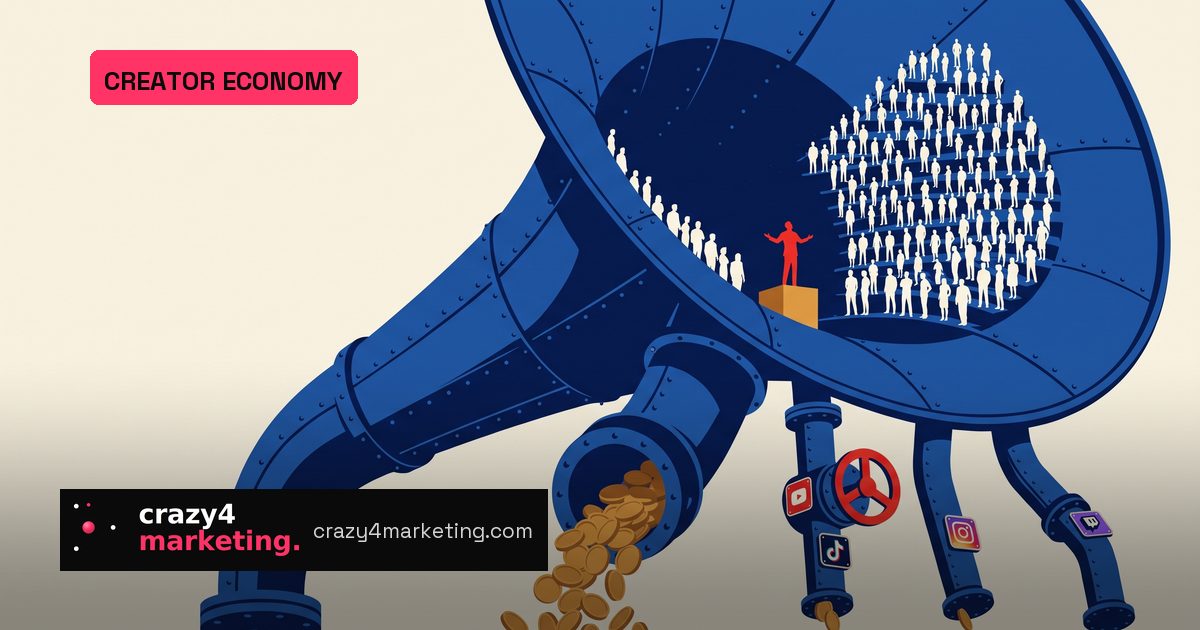
Most creator revenue falls into four buckets:
- Platform revenue sharing: YouTube keeps 55% of long-form ad revenue for creators; Shorts revenue is pooled and paid by views. From February 1, 2027, monetizing Shorts requires 10 million qualified views a month, and new long-form applicants face 8,000 watch hours.
- Brand deals: The largest stream, around 70% of creator revenue by Goldman survey data. Fees are negotiated directly and cover deliverables, usage rights and exclusivity.
- Fan payments: Memberships, subscriptions, tipping and platforms like Patreon or Substack. YouTube says more than half of channels earning five figures in 2024 had income beyond ads and Premium.
- Commerce: Affiliate sales, merch and live events. impact.com reported close to $120 billion in partner-referred GMV during 2025.
From tactic to planned channel
The bigger shift for marketing teams is budget status. IAB counts three buy-side routes: direct partnerships for sponsored content, paid amplification of creator posts, and planned adjacencies where ads sit next to creators. Amplification is growing fastest, as brands boost organic creator content through Meta Partnership Ads or TikTok Spark Ads. Adjacency products such as TikTok Pulse Tastemakers place ads immediately after curated creator videos.
Platforms are also building discovery and matching tools. YouTube merged BrandConnect into Creator Partnerships in March 2026, and TikTok One’s Creator AI Search can return up to 200 creators from a pasted brief. This makes creator buying more programmatic, but it also means marketers need better internal workflow, not just a better list.
What to do differently
Treat creator content as a media asset with a three-step loop:
- Brief for reuse: Secure usage rights, exclusivity windows and raw assets up front so the content can run beyond organic posts.
- Amplify the winners: Put spend behind creator posts that already perform organically instead of boosting every partnership equally.
- Measure beyond reach: ANA found 67% of marketers call measurement the hardest step in influencer marketing, so agree on incrementality or conversion metrics before launch.
Watch the concentration risk too. Goldman Sachs estimated only about 4% of creators earn more than $100,000 a year. That makes creator supply broad but high-performing reach scarce, so contracts and selection matter more than vanity follower counts.
One last distinction: influencer marketing is only the advertiser activity of paying creators to promote products. The creator economy also includes platform payouts, fan revenue and commerce that never touch a brand budget. Marketers should know which slice they are actually planning against.
Source: PPC Land