The hook
The film opens by dropping the viewer into a familiar morning ritual rather than a scientific lecture. Dabur’s framing is deliberate: before the quality claims appear, the ad signals that this is about the honey already sitting in your kitchen. It uses the first glass of water, a smoothie, a family meal.
That opening choice matters. Instead of scaring buyers about adulteration, it starts with belonging and habit. The trust proof arrives as reassurance, not alarm.
The structure of the film
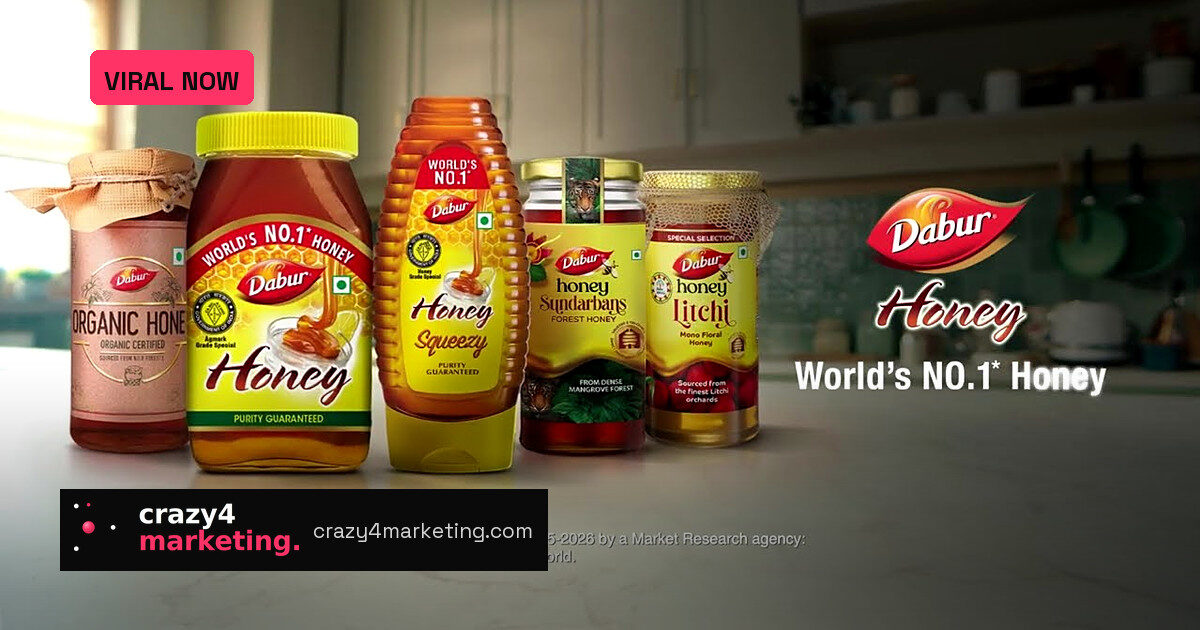
The 30-second TVC is built around three quality credentials: testing across 22 parameters, traceability from beekeepers to the factory, and AGMARK Special Grade certification. These proof points sit alongside everyday household uses—warm water, smoothies and meals—with young women, mothers and families shown using the product in daily routines.
The tagline, Aapka Vishwas Banata Hai Hamare Honey Ko Sabse Khaas, reframes quality as a response to consumer trust. Sriram Padmanabhan, director – marketing, Dabur India, framed the campaign as a celebration of consumers who choose Dabur Honey every day, and a promise of the highest standards of quality.
Why it spread
The biggest distribution decision is language. The film has been released in seven languages—Hindi, Bengali, Odia, Marathi, Tamil, Kannada and Telugu—which gives a single trust argument regional legs. It runs across television, print and digital platforms.
BBDO India developed the campaign; Globe Trotters produced it, with direction by Pooja Khemani. Krishna Mani, national creative director at BBDO India, said the thought was that when millions of families trust the brand daily, that trust has to be earned daily. The film celebrates the brand’s place in everyday rituals, from the first glass of water in the morning to the last spoonful at night.
The share trigger is identity rather than shock. Health-conscious buyers already worried about honey purity see their routine reflected back, now attached to specific checks. That makes the ad easy to forward when someone asks whether a honey is actually pure.
The numbers
The release keeps the numbers lean: a 30-second film, 22 quality parameters, three proof points, and seven languages. There is no view count or sales lift attached to the campaign in the source material.
For marketers, that is enough. The 22 is doing the heavy lifting because it turns a vague purity promise into a countable claim.
Steal this
Three moves a smaller brand can copy:
- Quantify the trust claim. Don’t say pure. Say how many checks, tests or parameters back it up.
- Anchor on an existing ritual. Place the product in warm water, smoothies or a meal, the moments already happening in homes.
- Localize the proof. Seven languages matter more than a bigger production budget. A regional version can carry the same specific claim.
None of these moves require a large advertising department. They require a clear quality story and the discipline to repeat it across formats.
Watch the original: Dabur Honey on YouTube