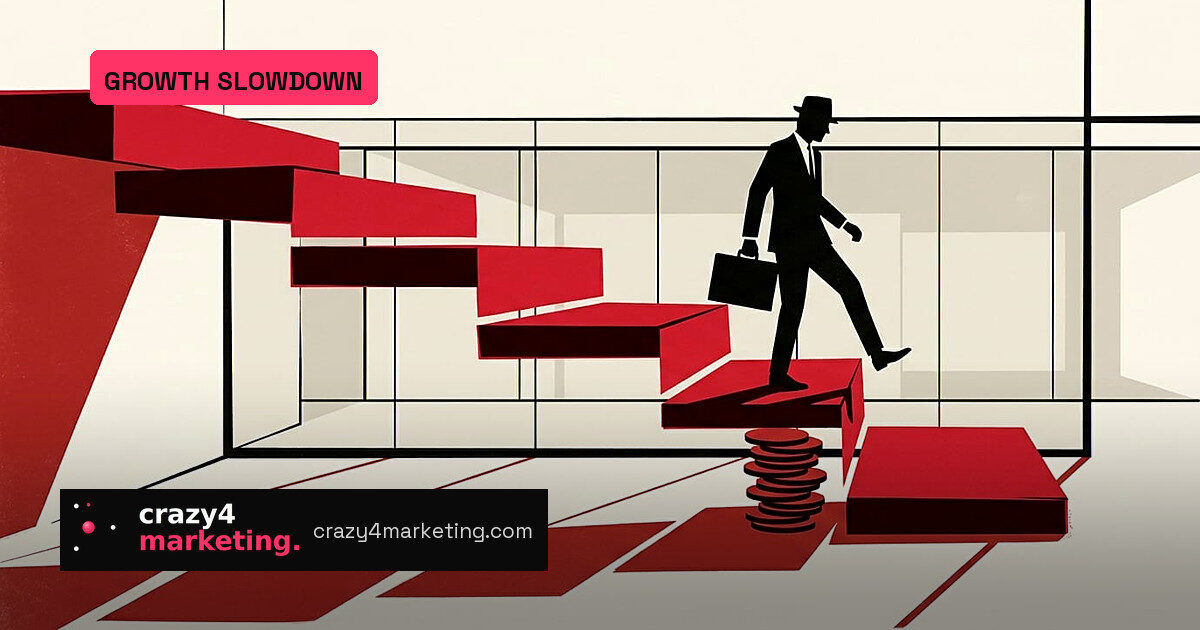
HubSpot just guided fourth-quarter revenue to $945 million to $947 million — a 12% year-over-year rise that lands below the $947.6 million it reported for Q3. That is a steep deceleration from the 17% growth it posted in the third quarter.
The numbers to know
Q3 revenue reached $947.6 million, up from $809.5 million a year earlier. Subscription revenue grew 18% to $930.2 million, while services and other revenue slipped 3% to $17.3 million. Profit rose faster than sales: non-GAAP operating income climbed 33% to $214.2 million, and free cash flow hit $188 million.
The forward view is weaker. HubSpot expects Q4 revenue of $945 million to $947 million. Even the top of that range misses the Q3 result. Management also said net new annual recurring revenue will decline year over year in 2026, and it declined to forecast Q4 customer additions. CFO Kate Bueker said they will likely come in below the 5,300 customers added in Q3.
Why this matters for marketers
HubSpot is a good proxy for inbound-led growth, so its call is a warning for teams built on organic demand. CEO Yamini Rangan was blunt: “Inbound demand remains under pressure.” The company that helped popularize inbound marketing is now leaning harder on intent-based marketing, LLM connectors and answer engine optimization.
The AI shift shows up in several numbers:
- AI agent trials grew 64% quarter over quarter in Q3, but conversion still needs hands-on support.
- HubSpot has said organic traffic to its customers fell 27% year over year.
- 42% of CRM buyers used AI search while evaluating software, and those buyers were 36% more likely to buy.
- 20% of Pro-and-above customers now use HubSpot agents, up 11 points, while 64% use AI features.
Proof is the new demand generation
Rangan summed up the buying mood: “They want to see the proof of AI before they buy.” Upmarket, deals involve larger committees and longer sales cycles because AI platforms feel strategic. Downmarket, small businesses are more price-sensitive because every AI tool is a new line item.
For marketing teams, the operational takeaway is straightforward: audit your visibility in AI-generated answers, build concrete outcome evidence, and stop assuming organic traffic will return on its own.
The pricing experiment to watch
HubSpot is also rolling out a hybrid seats-and-credits model to new customers in EMEA. Buyers get a single go-to-market seat instead of separate Hubs, and usage such as email sends, tickets and data enrichment runs through one credits system. Early signals show credit usage two to three times higher and more Pro-and-above customers, though the filing warns credits could substitute for existing seat spend and make revenue less predictable.
The lesson is bigger than HubSpot: AI is compressing inbound demand while buyers demand simpler, outcome-based packaging. Teams that improve proof and pricing now will be better positioned for the slower-growth stretch ahead.