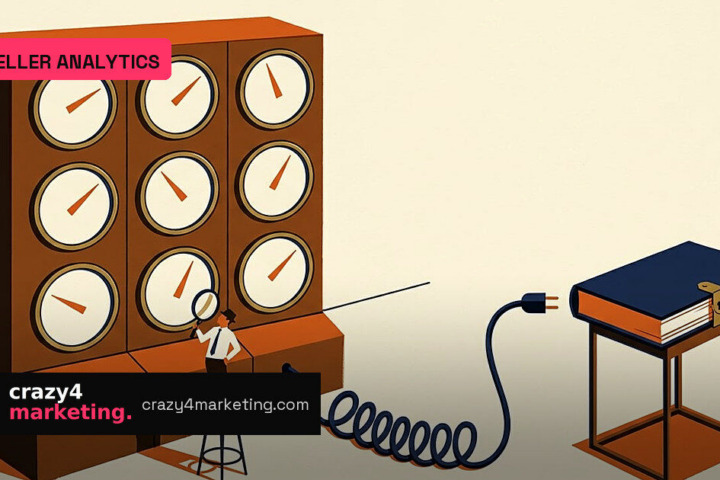
The khata book was never just a ledger. It was the shopkeeper’s memory, a neighbourhood credit system and a quiet record of who came back. What it could not do was search itself, send a reminder or follow a customer home through a delivery. Cloud tools are starting to do that, and the change is visible at the counter, not in a boardroom.
In 2016, Jio launched with the Welcome Offer of unlimited 4G data, voice, video and apps (Reliance Industries). The question India asked moved from “How much does data cost?” to “What can we do with data?” For a kirana, the answer is now practical: digitise the daily routine.
The shop’s memory moves online
Digitising a kirana rarely starts with software. It starts with small acts: a phone photo of a handwritten bill, a payment link sent to a customer, a reorder request by message. Each act leaves a trace. Cloud and AI tools turn those traces into a second memory for the shop.
Jio’s ecosystem today spans connectivity, entertainment, commerce, payments, devices, cloud and AI (Reliance Industries 48th AGM, August 2025), and its stated priorities include digitising businesses and “AI Everywhere for Everyone.” Seen from the counter, that means the technology has to fit between serving a customer and replenishing a shelf.
What the customer begins to notice
The change is subtle. The shopkeeper still knows the regular. The difference is that the shop can now act on what it knows.
- The credit ledger becomes a searchable list instead of a fragile page.
- A repeat order can arrive by text or voice note, not only by visit.
- The shop can tell a regular when a favourite item is back.
- Delivery and payment trails help the shop serve its regulars better.
None of this feels like a technology rollout. It feels like the shop paying better attention.
Where marketers meet the kirana
For digital marketers, the kirana’s cloud shift is a lesson in first-party data. The shop’s records are small, direct and built on daily conversation. It is not programmatic scale; it is relationship scale. A brand that helps a shop use its own memory well earns a place in the next conversation at the counter.
Scale matters because the habits are already present. Jio serves 524 million+ customers (Reliance Jio Infocomm, March 2026; company-reported). A corner shop’s cloud tool does not need to educate a customer about connectivity; that work happened over the past decade.
A D2C brand can treat the neighbourhood kirana as a local media owner: the shopkeeper’s recommendation is the ad, and the cloud record is the measurement. The advantage is relevance, not reach. When a shop recalls that a customer buys a specific flour brand every month, the nudge reads as service, not spam.
The creative opportunity is to design for the shopkeeper’s flow. Barcode scanning, credit tracking, reorder nudges and customer reminders all sound ordinary. That is the point. The tools disappear into the day, and the shopkeeper remains the interface.
The khata was never replaced. It was given a search bar, a reminder and a longer memory.