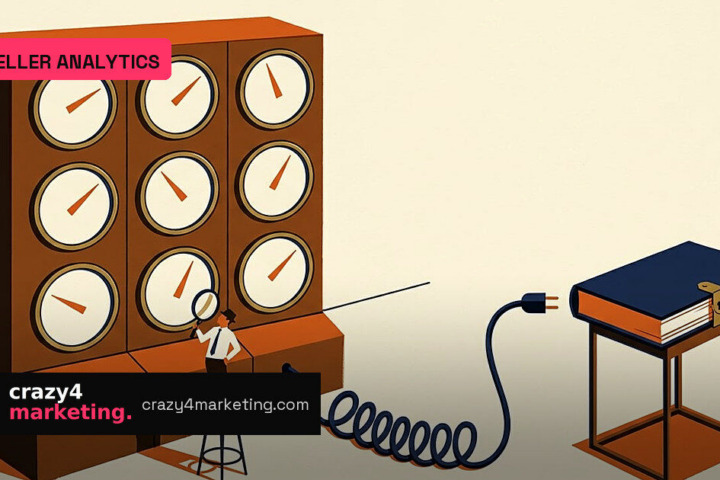
The kirana counter is one of the few places in Indian commerce that has looked unchanged for decades. The jars, the regulars, the credit line, the pencil. But the pencil is now the tell. It is moving aside for a phone screen, a cloud ledger and a customer record that remembers.
For marketers, this is not a small-business story. It is a distribution, data and customer behaviour story happening one neighbourhood at a time.
The khata book was a habit, not just a ledger
The khata book did more than record dues. It was the shop’s memory, its algorithm and its loyalty programme fused into thin pages. A shopkeeper could glance at a page and know who was regular, who was slipping, and who needed a reminder before a festival.
What it could not do was connect that memory to the rest of the shop: what was moving slowly, which regular had not bought a particular item in weeks, or what the neighbourhood was starting to ask for.
What changes when the shop remembers in the cloud
When a kirana moves its ledger to the cloud, the daily transaction becomes a data point. It sits alongside payments, purchases and preferences in a connected system. Jio’s stated priorities include digitising businesses, and its ecosystem now spans connectivity, commerce, payments, cloud and AI.
The shift is tangible for the shop:
- The counter can flag a missing regular before the owner notices.
- A customer’s usual purchase becomes a prompt, not a memory test.
- The shop can see demand patterns without waiting for the month-end reckoning.
None of this requires a data science team. It is the same ledger, just searchable, sortable and shareable across devices.
The enabling layer is not new. In 2016, Jio launched with unlimited 4G data, voice, video and apps, according to Reliance Industries, and reached 100 million subscribers within 170 days, company-reported. By March 2026, Jio reports 524 million+ customers.
The customer who stops asking
For the customer, the cloud ledger changes small rituals. The shopkeeper no longer has to ask, “Which brand last time?” The phone already knows. The exchange becomes shorter, more familiar, and slightly less dependent on the owner being present.
That is a subtle trust shift. The shop is not just recognising a face; it is recognising a pattern. Regulars feel remembered. New customers get a smoother first interaction.
What marketers should read in the kirana cloud moment
For growth teams, the kirana cloud is an early signal of how local commerce absorbs digital behaviour. The question India asked moved from “How much does data cost?” to “What can we do with data?”
A small shop that records repeat purchases is running a primitive customer-data platform. It learns preferences, builds prompts, and turns memory into service. That is the same loop brands chase with loyalty apps and personalisation, just in a smaller container.
The difference is speed. A kirana can act on a pattern in the same visit. A brand usually has to wait for a campaign cycle.
That may be the real lesson: the cloud does not remove the shopkeeper’s judgement. It gives that judgement a longer memory.