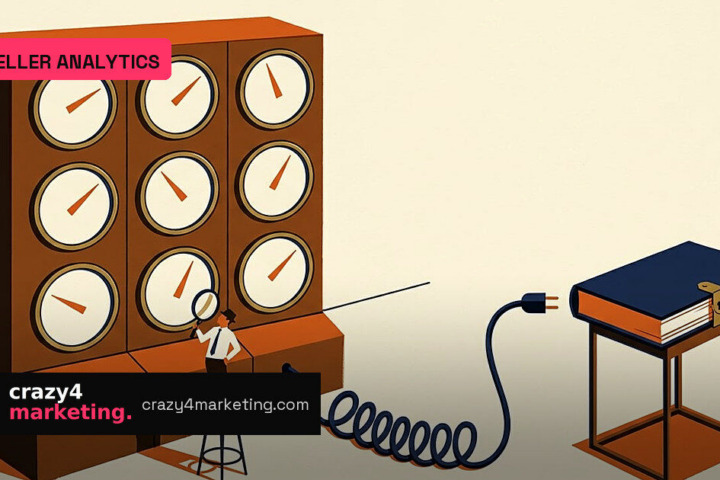
The khata book runs on memory and trust. A name, a date, a line through a settled bill, an unspoken promise that payment will come at harvest or month end. For decades, India’s kirana counter kept its most valuable asset in pencil.
Now that asset is moving to the cloud. The shop still remembers. It just remembers differently: not in smudged pages, but in live feeds of what a household buys, how often, and when it stops.
The data question changed first
In 2016, Jio launched with the Welcome Offer: unlimited 4G data, voice, video and apps (Reliance Industries). It reached 100 million subscribers within 170 days of launch, company-reported in the Reliance Industries Integrated Annual Report 2016-17. Today, Jio serves 524 million+ customers (Reliance Jio Infocomm, March 2026; company-reported).
That was the moment the question India asked moved from “How much does data cost?” to “What can we do with data?” For a kirana shop, the answer stopped being a website. It became a quieter cloud layer under the counter.
What changes for the shop
The shopkeeper stops guessing. A digital ledger turns every purchase into a pattern. The Tuesday sugar buyer, the weekend snack run, the family that buys extra detergent before a festival: the cloud holds these signals without the owner manually writing a report.
- Purchase memory: What used to be recall becomes record.
- Credit cycles: Unpaid bills gain a timeline, which makes trust easier to renew.
- Demand signals: A rise in one item becomes a pre-order prompt, not an empty shelf surprise.
For the marketer inside a small business, this is first-party data at its most useful: behavioural, local, and tied to real cash flow rather than a broad demographic.
What changes for the customer
The regular no longer has to explain the usual order. A quick message can confirm it. A payment can be settled without a visit. The relationship stays human because the repetitive parts move to the cloud.
Customers begin to expect the same lightness they get from larger platforms—without losing the neighbour who knows their family. The shop becomes a personalised feed, not a faceless app.
Where this is heading
Jio’s ecosystem today spans connectivity, entertainment, commerce, payments, devices, cloud and AI (Reliance Industries 48th AGM, August 2025). Its stated priorities include connecting every Indian, bringing digital services home, digitising businesses, and “AI Everywhere for Everyone”.
For a kirana, that future looks like a cloud layer that can suggest a reorder before the shelf is empty, draft a credit reminder with the right tone, or notice that a family’s basket is shrinking before they mention it. The shop’s intelligence moves from memory to a live, learnable feed.
The point is not that the khata disappears. It is that the khata becomes searchable, shareable, and quietly smarter. And the customer who was once a line item becomes a relationship the shop can actually see.