

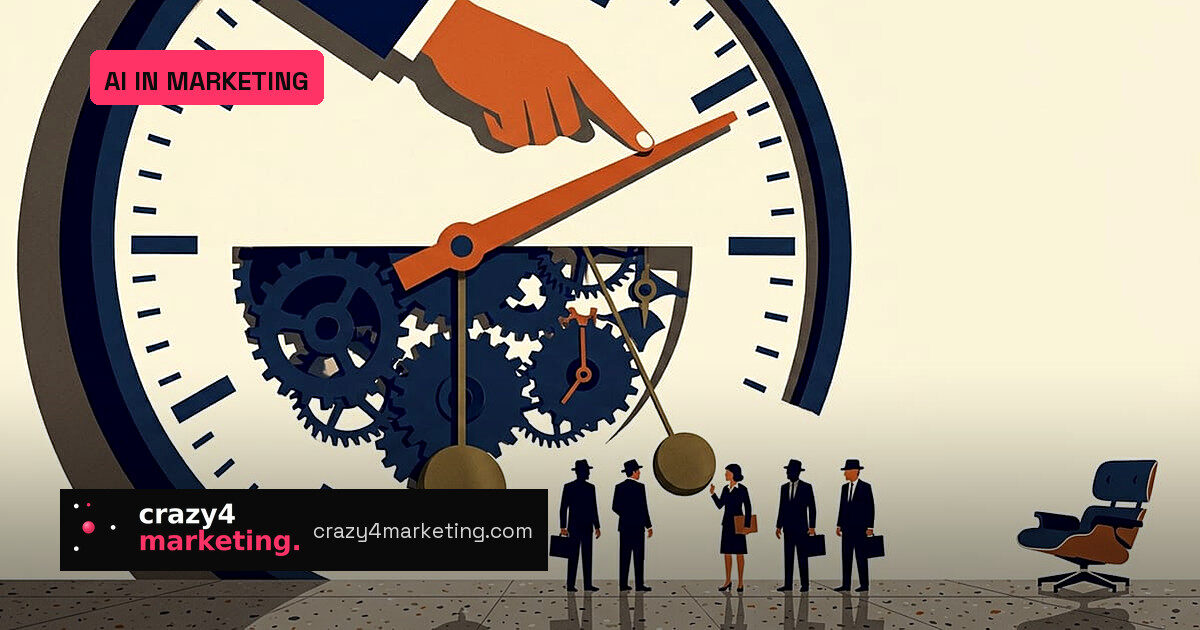
Meta has changed the date on its revised Commercial Terms and Self-Serve Ad Terms, and almost nothing else. The terms that were set to bind every business using its products from October 30 will now take effect on November 20, 2026, after EU and UK publisher and advertiser complaints.
A Meta spokesperson told Reuters the extra three weeks give the company time “to explain to our partners and stakeholders what’s changing and what’s not.” Meta did not say it would amend the text. At the time of the delay, the UK English preview still showed October 30, and the free-standing “train” sentence had been replaced by a broader purpose: “advertising and business products.”
The date moved, the liability did not
European regulators welcomed the pause, but publisher groups want the terms suspended, not just postponed. Angela Mills Wade of the European Publishers Council said that maintaining a business page or advertising a subscription should not hand Meta general rights over a publisher’s website, and that further uses need “separate, express authorisation.” Theo Bamber, chief executive of the News Media Association, called the delay “a pause not a solution.”
- The crawling clause still covers websites associated with a business’s products or services, and still allows test credentials to reach those sites.
- Meta still makes no commitment to honour robots.txt, even though it now says content owners can use robots.txt to signal preferences.
- The AI Features section still says Meta’s AI “may make mistakes” and leaves the business solely responsible for the risks.
- Businesses must still indemnify Meta against claims “of any kind,” and continued use after notice still counts as acceptance with no partial consent.
- US businesses still have a 30-day window from first acceptance to opt out of arbitration, roughly until December 20 if acceptance falls on November 20.
Advertisers carry risk the AI itself can create
This is not a theoretical contract problem. Multiple reports this week described advertisers pulling Meta ads after unwanted AI “glow-ups.” Bookshop.org found an illustration in one of its ads that nobody at the company had made. Exverus said Meta’s AI added sitelinks, translated copy and generated images without advertisers enabling those features, often from options hidden in collapsed menus.
Meta’s own engineers have shown why that matters. After a single AI agent hallucinated in production, the team replaced it with 14 isolated agents, acknowledging that about a third of its changes still need human corrections. Google’s Sundar Pichai made the same concession, calling hallucination “an inherent part of the current state-of-the-art technology.” Yet the contract asks advertisers to accept liability for AI outputs they may never have switched on.
Meta is not alone. In the same window, Google confirmed that new Performance Max campaigns will pull landing-page images by default from December 4, and sourced videos are now opt-out for new campaigns. OpenAI is auto-enabling creative enhancements in ChatGPT ads, while Google Ads in AI Overviews has no setting, no exclusion and no dedicated report. The pattern is default-on, with the risk placed on the advertiser.
What to do before November 20
Treat the delay as an audit window, not a reprieve. Open Ads Manager and check Advantage+ toggles, collapsed menus and any “enhancements” already applied. Have legal review the indemnity, liability cap and the US arbitration opt-out. If you publish content, decide now what robots.txt can and cannot do, because Meta’s mixed-use crawler uses one token for indexing and AI training. The date moved. The risk did not.
Source: PPC Land


