

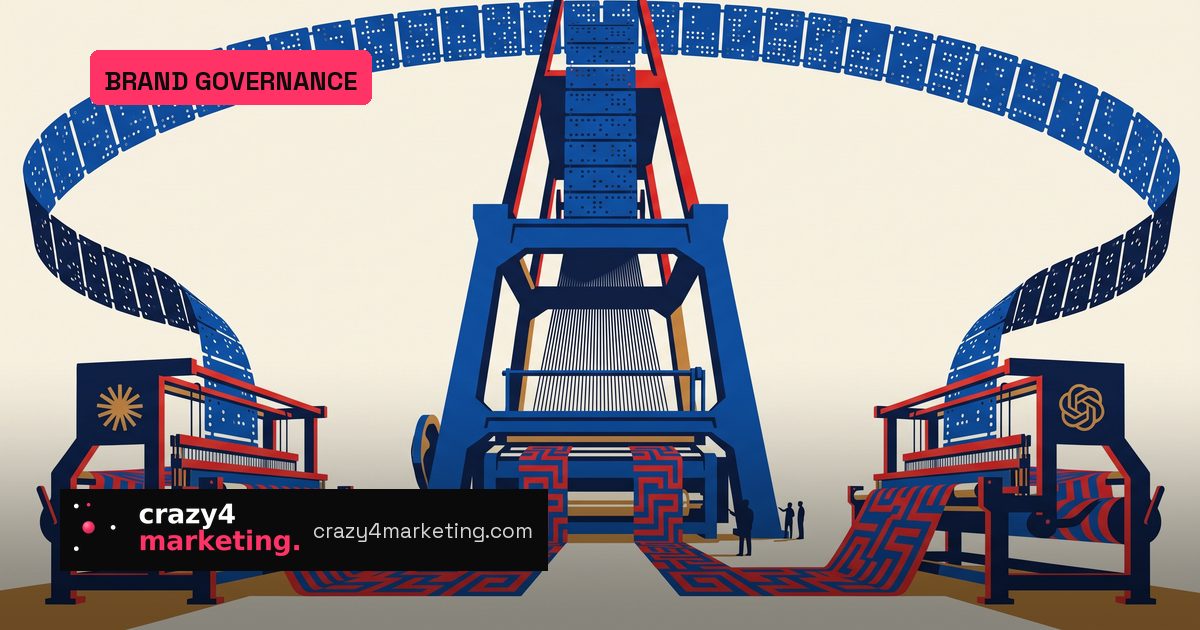
Enterprise brand guidelines usually live in PDFs, design systems and governance portals. Typeface wants them to live inside the AI assistants marketers actually open every day.
On September 22, 2026, the Palo Alto company made Arc Graph, Arc Fabric and Arc Loop available to enterprise customers as one connected system. The system codifies how a brand looks and sounds, lets teams build AI agents around their own workflows, and feeds campaign results back into what those agents create next.
That last loop is the headline for paid media teams: results from Google Ads can now flow back into Typeface as what the company calls grounded learnings, shaping the next round of ads, emails and other content. A human still has to approve any ranked variant before it goes live.
Three layers, one loop
Typeface describes the release as the next generation of its Orchestration Engine. The three pieces map to the classic gap between insight and execution:
- Arc Graph turns brand guidelines into structured rules, multiple brand voices, an approved asset library and a Brand Agent that checks compliance while content is created — and extends those rules into Claude and ChatGPT.
- Arc Fabric is the orchestration layer: adaptive agents, a shared workspace, reusable skills and admin controls over how much autonomy agents get.
- Arc Loop is the optimization layer: performance data from Google Ads, Salesforce Marketing Cloud, HubSpot, BigQuery or a CSV upload becomes ranked, explainable content variants for the next campaign.
Founder and CEO Abhay Parasnis framed the problem as one of execution rather than insight. “For years, enterprises have had more insight about their customers than ever, but they couldn’t act on it,” he said in the release.
Why brand rules in ChatGPT matter
Extending brand rules into Claude and ChatGPT targets a real gap. Marketers already draft copy in general assistants, often outside corporate accounts and outside any governed brand system. If guidelines travel with the person, that shadow content can finally stay on brief.
But there is a difference between passing brand rules to a model as context and enforcing them. The release does not specify which ChatGPT or Claude plans are supported, how authentication works, or whether the assistants enforce rules in real time or merely receive them. Security-conscious marketing teams should ask that first.
What to do before buying in
The strategic idea is strong, especially for enterprise brands that want one brand brain across internal and external tools. Still, the materials leave important details open: no pricing or packaging, no named customer metrics, and Google Ads is the only advertising platform named as a live connector. Meta, TikTok, Amazon Ads and programmatic platforms are absent unless results arrive through a warehouse or spreadsheet.
Here is where to push in the demo:
- Ask whether ChatGPT and Claude enforce brand rules in real time or just carry them as context.
- Ask how often Google Ads data refreshes and which metrics feed the loop.
- Ask whether grounded learnings are validated against a holdout or just correlated with past performance.
- Ask how human approval actually shrinks, since sign-off was already the bottleneck in Typeface’s own research.
Customers supplied supportive statements. Chime’s Vineet Mehra said the system helps teams move at the speed members and culture demand, while J.P. Morgan Asset & Wealth Management’s Rosa Rita framed the goal as a “segment-of-one” client experience rather than AI bolted onto existing processes. Neither statement included a production metric.
The release also tightens an awkward overlap: Salesforce is both an Arc Loop data source and an investor, while HubSpot is both a data source and the owner of its own Loop Marketing playbook. Google, the only named ad connector, has been a Typeface partner since 2024.
Typeface is due to show the product live in a webinar on September 30 at 10:00am PT. That is the moment to see whether the connection is governed, not just connected.
Source: PPC Land


