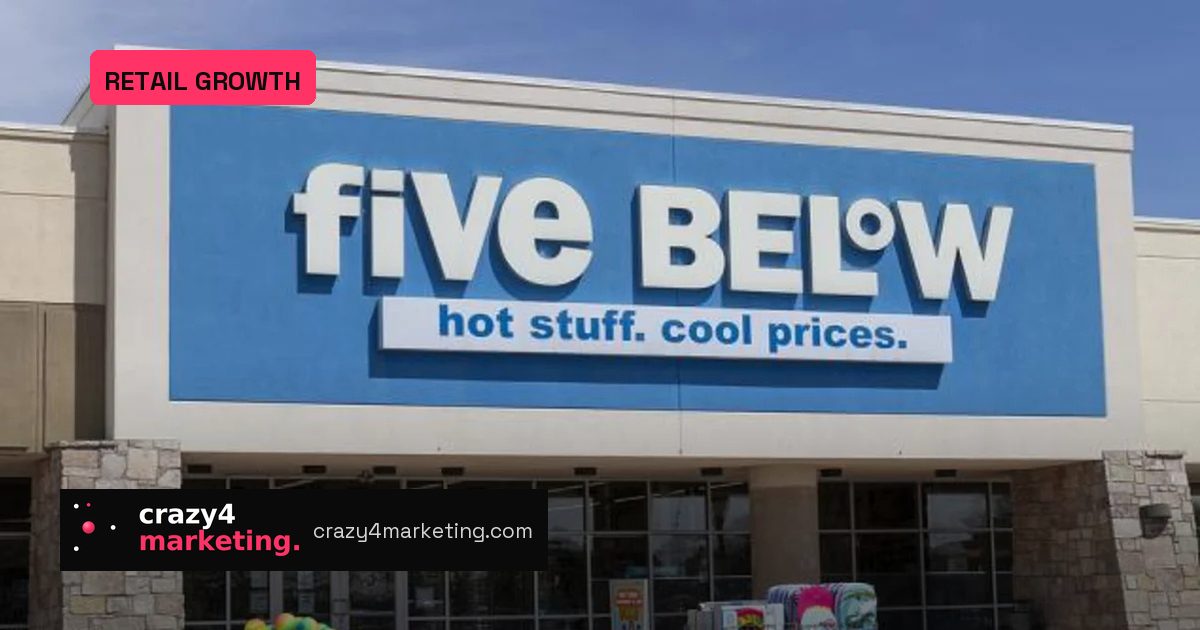
Five Below’s latest quarter is a useful reminder that digital marketing and physical retail are not competing channels—they are two sides of the same growth system. The value retailer posted fiscal second-quarter net sales of $1.26 billion, up 22.9% year over year, while comparable sales rose 14.1%. The most useful detail for growth teams? Almost all of that comp gain came from traffic: transactions grew approximately 13.6%, while average transaction value edged up only 0.4%.
That is a traffic-led result, and it explains why Five Below is putting more weight behind digital engagement, social-first campaigns and a faster omnichannel path from discovery to store visit.
Social and CTV are doing the heavy lifting
Five Below has moved working-media dollars away from traditional spots and toward social channels. Management says the shift has improved brand awareness, with promising early results from connected television and YouTube campaigns aimed at Gen Alpha. On the merchandising side, social listening helps the team identify fast-emerging trends, while digital storytelling amplifies product launches and pushes online attention toward store visits.
The company frames this as a ‘merchandising-marketing-store flywheel’: content built around current trends attracts younger shoppers, stores turn that attention into transactions, and transactions produce data for the next campaign.
Data is the next conversion lever
Five Below is still in the early stages of capturing customer records at checkout, and email is mostly used for broad outreach. Planned investments in personalization could make communications more relevant, improve retention and lift customer lifetime value. The roadmap also includes upgrades to the website, mobile app and broader online shopping experience.
For marketers, the sequence matters.
- Shift reach budget to social and CTV where younger customers actually discover products.
- Treat store visits as a conversion event, not just an e-commerce click.
- Use social listening as inexpensive trend research for merchandising and creative.
- Capture first-party checkout data now, even before the personalization engine is built.
The growth case, in numbers
Management raised its fiscal 2026 outlook to net sales of $5.63 billion to $5.71 billion, comparable-sales growth of 10% to 12%, and adjusted EPS of $9.83 to $10.31. Consensus figures point to a strong current-year jump: the Zacks estimate implies fiscal 2026 earnings growth of 57.6%, slowing to 6.5% in fiscal 2027. Shares have gained 52.5% over the past year, while the industry has declined 22.4%.
The valuation is not cheap: Five Below trades at a forward 12-month price-to-sales ratio of 2.15, above the industry average of 1.43. That means the digital roadmap has to work as a repeatable system, not a one-quarter traffic bump.
What to watch next
The real test is whether digital attention becomes repeat visits and broader baskets. If average transaction value stays flat while personalization matures, the flywheel is still incomplete. If email and app experiences start lifting retention and lifetime value, Five Below will have built a retention layer on top of a very effective acquisition engine.
Source: Yahoo! Finance