

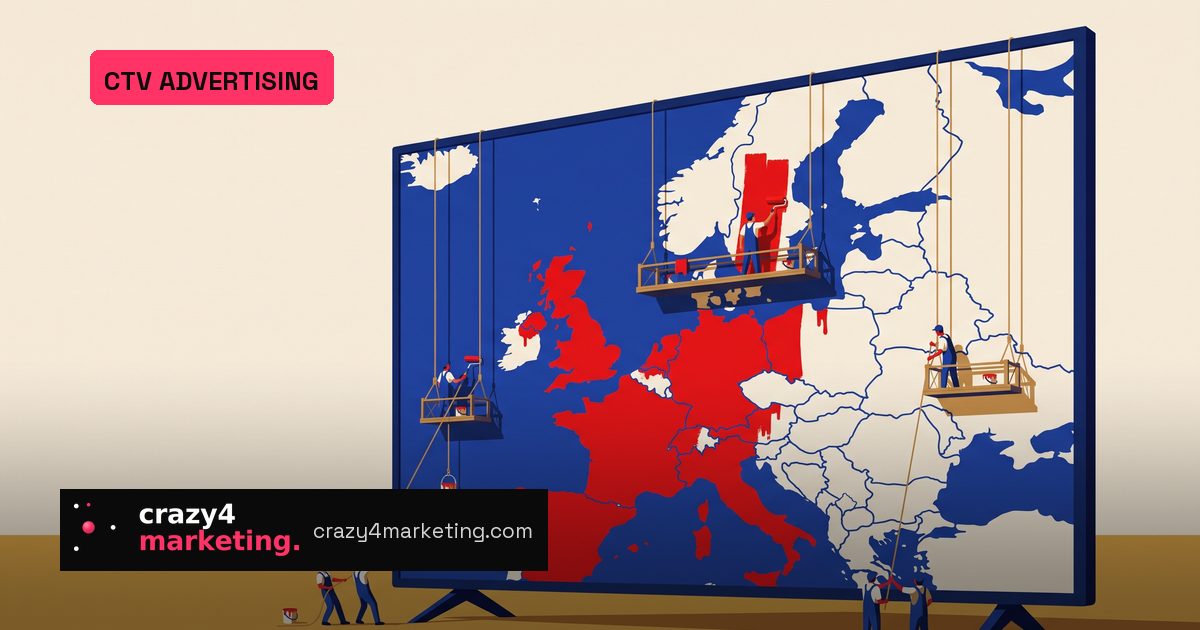
Netflix currently sells advertising in five European markets: the UK, France, Germany, Italy and Spain. On 1 March 2027 it adds Austria, Belgium, Denmark, Ireland, the Netherlands, Norway, Poland, Sweden and Switzerland. In one step, the European ad footprint triples from five to fourteen countries.
The country list had already been announced in May. The news at Netflix’s first UK Upfront, published in a company post dated 24 September 2026, was the fixed start date. Buyers in those nine markets now have a real planning deadline instead of a vague 2027 promise.
New programmatic pipes and targeting
Two changes matter for buyers already active in the UK. First, pause ads become available programmatically across partner DSPs from October 2026. For most of their life, Netflix sold those units only through direct deals. Now they move into the same automated routes as other CTV inventory, though Netflix did not confirm which UK DSPs will carry the format or which deal types apply.
Second, demographic targeting expands to include income and household composition. The EMEA targeting stack already covered age, gender, language, mood-based segments and interest categories. Income is a new axis. But Netflix did not say how income attributes are sourced or modelled, and that detail will draw scrutiny after recent regulatory focus on data sharing.
The pricing twist behind the pitch
The London event landed weeks after a sharp UK price change. Streaming analyst Dan Rayburn reported that Standard with Ads rose from £5.99 to £7.99 a month, roughly a 33% increase. Standard and Premium rose by about 7.7% and 10.5%. The monthly gap between the ad plan and Standard narrowed from £7.00 to £6.00.
Netflix framed this as comfortable. Amy Reinhard, President of Advertising, said “we don’t have to feel that pressure of increasing ad load from quarter to quarter to grow our business.” Ads account for about 6% of total revenue, against a 2026 target of roughly $3 billion and total revenue guidance of $50.7 billion to $51.7 billion.
Read the audience claims carefully
Netflix told the room its UK ad plan reaches more than 14 million viewers, using Barb data. The company called that “nearly one in four people nationwide.” Against the ONS mid-2024 population estimate of about 69 million, it is closer to one in five. Netflix did not specify the population base it used.
There was also a vendor-backed effectiveness study: nine out of ten UK brand partnership ads landed in System1’s top 1% for long-term brand-building potential. Those are strong numbers, but the study was conducted with Netflix and no sample size was disclosed. Independent data offers a counterweight: Simulmedia’s analysis of 73 series found Netflix returning seasons lost viewers 89% of the time.
What buyers should do next
- Lock 2027 test budgets against the March 1 launch, not a generic “next year.”
- Treat pause ads as their own creative format: static, one to three seconds, built for a stopped screen.
- Ask Netflix and your DSP for transparency on deal types, income data sources and attention methodology before scaling.
The watching brief is narrow. October will reveal which demand-side platforms carry Netflix pause inventory and on what terms. March 1, 2027 will reveal whether the nine new markets buy at scale. Prepare now, but keep independent measurement in place for the claims Netflix left out.
Source: PPC Land


