
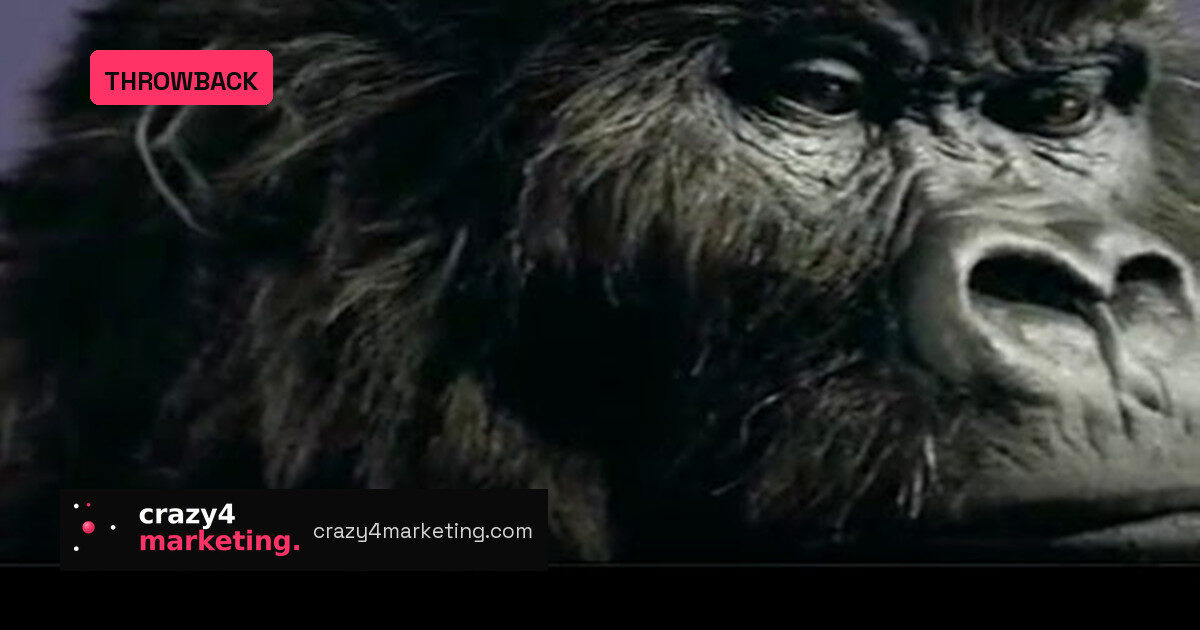
In the middle of the UK Big Brother 8 final on 31 August 2007, Cadbury Dairy Milk did something almost unthinkable for a chocolate brand: it showed a gorilla sitting at a drum kit, waiting for a drum break. No chocolate, no glass-and-a-half claim, no sales pitch. Just anticipation.
The hook and when it ran
The spot premiered in the UK in August 2007, during one of the most-watched TV moments of the year. It ran as a 90-second film, long by confectionery standards, and held viewers through a single, simple idea: a gorilla at a drum kit, about to play Phil Collins’ In the Air Tonight.
The tagline closed it: A glass and a half full of joy. But the product appeared only at the very end. The hook was not an appetite claim; it was suspense and absurdity.
How the film was built
Fallon London built the spot on a piece of cultural intuition: the In the Air Tonight drum fill is a climax almost everyone recognises, even if they can’t name the song. The film spends its first minute making you wait, then rewards that wait with the fill. That was the ad’s structural joke.
Rather than leaning on a product demo, the team built a realistic gorilla suit and let a human performer carry the film. The effect rested on physical performance: the slow head turn, the pauses, the tension in the shoulders. A digital gorilla would not have felt as awkwardly human.
Why it spread in its day
The film dropped into a media moment that still had mass live TV, but also early social video sharing. It was a perfect piece of watercooler content: bizarre enough to talk about, short enough to rewatch, and musical enough to trigger an emotional response.
It spread because it refused to explain itself. There was no voiceover saying Cadbury Dairy Milk, because joy is… You watched, you laughed, you forwarded it. The brand had the confidence to let the film be the message.
What it did for the brand
Cadbury had been through a difficult period, including product recalls. Gorilla helped change the conversation: the brand was no longer defending itself in news cycles, it was making entertainment people chose to watch.
The campaign is credited with helping lift Cadbury Dairy Milk sales in the UK by around 9% in its wake. It also won the Film Grand Prix at Cannes Lions in 2008, and set the template for Cadbury’s subsequent joy-first work.
Steal this: three moves that still work
- Buy the climax, not the product. Attach your brand to a cultural moment with built-in tension and release. You don’t need to create the emotion; you can borrow it.
- Leave a productive gap. No product demo, no voiceover, no rational benefit. The less the ad explains, the more the audience completes the meaning themselves.
- Launch where attention is already gathered. A live TV finale gave it mass reach; early social sharing gave it a second life. Pick a moment, then design something people want to pass on.
Watch the original: Cadbury Dairy Milk on YouTube