In 2011, Coca-Cola made a counterintuitive call: it pushed its own name aside. On bottles and cans across Australia, the famous script was replaced with “Share a Coke” and one of the country’s most common first names.
The hook and when it ran
Share a Coke launched in Australia in 2011 as a summer campaign. The first run printed 150 popular first names. The tagline was straightforward: “Share a Coke.”
The hook wasn’t a new flavour or a price drop. It was recognition. If you found your name, the bottle felt like it had been made for you. If you didn’t, you started looking for someone you knew.
How the film was built
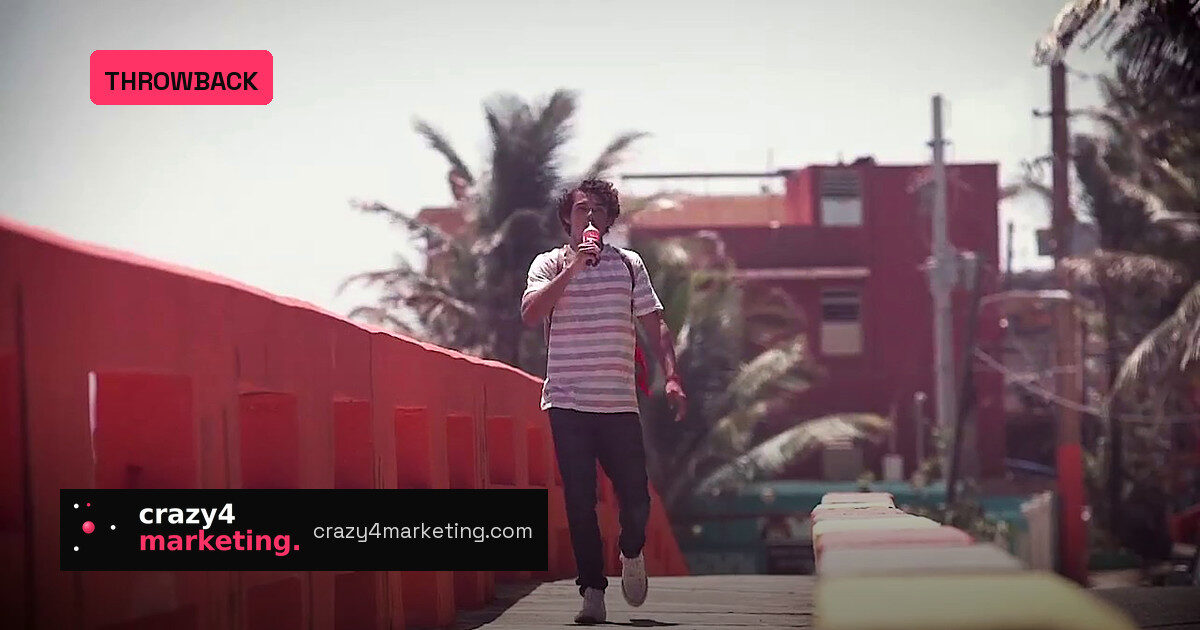
The film leans out of the way. It doesn’t explain the technology or lean on brand heritage. It shows the bottle as social currency—a reason to walk up to someone, hand them a drink, and share a moment. The label carries the message; the camera simply records that moment.
That restraint is the real craft. The film is built like a proof point, not a promise. Viewers see ordinary people doing exactly what the campaign wanted them to do: spot a name, smile, and pass the bottle on.
Why it spread in its day
In 2011, personalization at this scale still felt fresh. A name on a package was rare enough to stop people in the aisle. Australians hunted for bottles, photographed what they found, and posted it to Facebook—the platform the campaign was built around.
- Identity: your name made the product feel personal, not mass-produced.
- Scarcity: not every name made the 150, so the search became a game.
- Social proof: every photo of a bottle worked as a recommendation without asking for one.
The bottle stopped being packaging and became the media placement.
What it did for the brand
Share a Coke is credited with lifting sales in Australia and giving Coca-Cola a way back into the hands of younger drinkers. It didn’t stay local. The platform expanded for years, adding nicknames, local names, song lyrics, and eventually a global rollout. The campaign became a template for turning packaging into participative media.
More importantly, it changed how marketers thought about packaging. A label could be a call to action, a status badge, and an earned-media engine at the same time.
Steal this: three moves that still work
Make the customer the logo. Personalization at scale can outperform a louder brand mark when it makes the buyer feel seen.
Design for the camera. If a customer wouldn’t photograph it, it isn’t finished. Packaging should be worth a post.
Test locally before you scale. Australia was the petri dish. One market can prove a global idea before the world spends on it.
Share a Coke didn’t sell a new drink. It sold a moment of recognition—and the customer did the rest.
Watch the original: Coca-Cola on YouTube