

Google is putting AI Mode monitoring in front of every user, not just subscribers. In a Monday post on X, Robby Stein, VP of Product for Google Search, said the feature is now rolling out globally after AI Ultra and Pro users had early access.
The pitch is simple: instead of running the same search over and over, you ask AI Mode to watch a topic and it keeps checking the web for fresh information. The examples Google showed are mostly local and shopping-oriented, which is a signal for marketers.
What the feature actually does
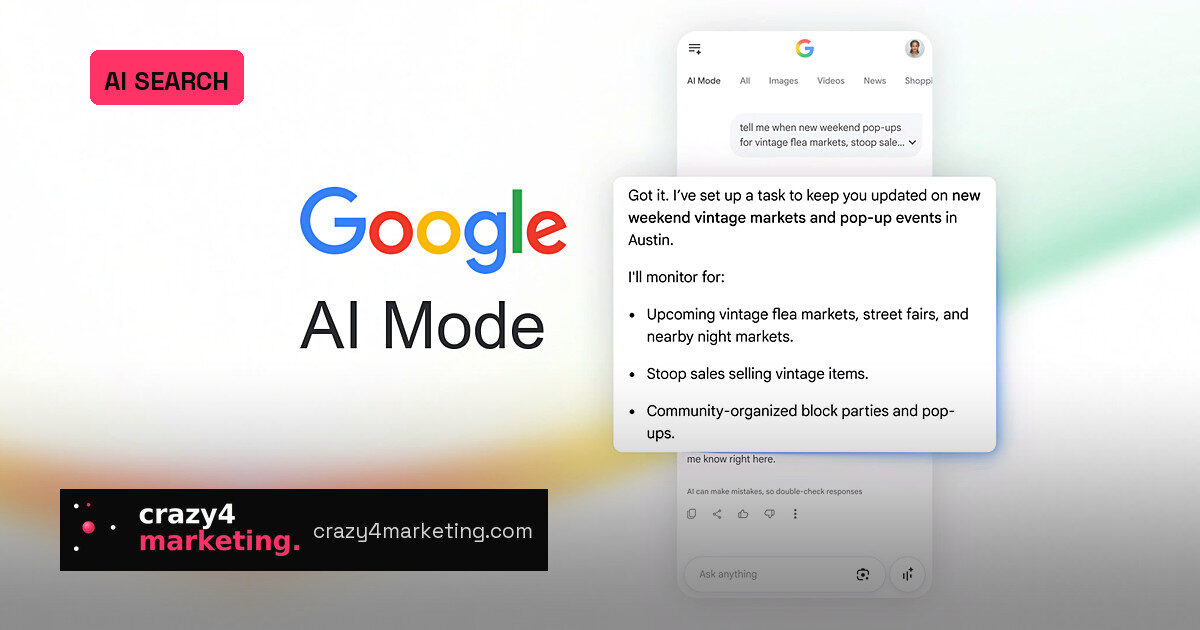
In the announcement demo, someone asks AI Mode to flag weekend pop-ups. It sets up a task for vintage markets and pop-up events in Austin, then lists what it will monitor: flea markets, stoop sales and block parties.
Stein described the mechanics this way: Search continuously checks changing information across sites, forums, social posts, Google’s real-time data sources and the Shopping Graph of 60B+ products. It will also suggest monitoring tasks while you search.
Why local and commerce brands should care
The examples Google chose are revealing: new restaurants and pop-ups nearby, holiday activities for kids, back-in-stock alerts and price drops. Stein called them topics people keep coming back to.
That means recurring local and product searches could start behaving less like one-off queries and more like ongoing relationships between users and AI Mode. Brands that win in traditional search may not automatically win here if Google’s monitoring layer chooses different sources or pauses before linking out.
Open questions for SEO teams
Google’s June update said agent updates would include links to the web. Monday’s post does not mention links, and neither post explains how Search picks the sources behind an update. For local businesses and retailers, that leaves two questions unanswered.
- How often will monitoring updates surface a given site?
- Will those updates drive measurable visits, or keep the answer inside AI Mode?
That’s not a reason to panic, but it is a reason to test. Once the rollout hits your account, set up a monitoring task for your category, your brand and a top non-brand search term. Watch what sources appear, whether links come through and how frequently updates fire.
The mindset shift
Monitoring is another step toward persistent search, where usefulness is judged by what changes in your content, inventory and local data after a query is saved. A static page may be enough for ranking; staying visible in an ongoing task may require fresher inputs.
This aligns with a familiar jobs-to-be-done view: someone checking for new restaurants nearby is not looking for one static answer, but for a recurring job of finding fresh options. Google is productizing that recurring job as a task, and marketers should make their updates task-ready.
Source: Search Engine Journal


