AI has made content production faster, cheaper and almost frictionless. But a recent Neil Patel breakdown argues that speed is creating a false sense of progress. The real shift is structural: marketing is moving from campaign-based execution to continuous growth systems.
McKinsey’s research, cited in the piece, identifies five capabilities shaping AI-first marketing: continuous insights, scaled creativity, hyperpersonalization, marketing to AI agents, and always-on orchestration. The uncomfortable number: fewer than 10% of organizations have scaled AI or captured value across marketing workflows.
Campaigns are becoming loops
Traditional campaigns follow a linear pattern: plan, launch, run, review, then start again from scratch. AI shortens that cycle by making audience signals, creative variations and performance data available in near real time.
That turns marketing into an always-on loop. Teams can watch behavior shift, adapt creative, and feed what worked into the next cycle. The challenge is not adopting AI; it is redesigning the workflow around it.
Why more output backfires
Using AI as a publishing machine creates a content operations problem: more assets to manage without a clear link between strategy, quality, distribution and business results.
The goal should not be maximizing the number of articles, videos or social posts. The goal should be content that answers real questions, demonstrates expertise and contributes to a measurable outcome.
What a working content system includes
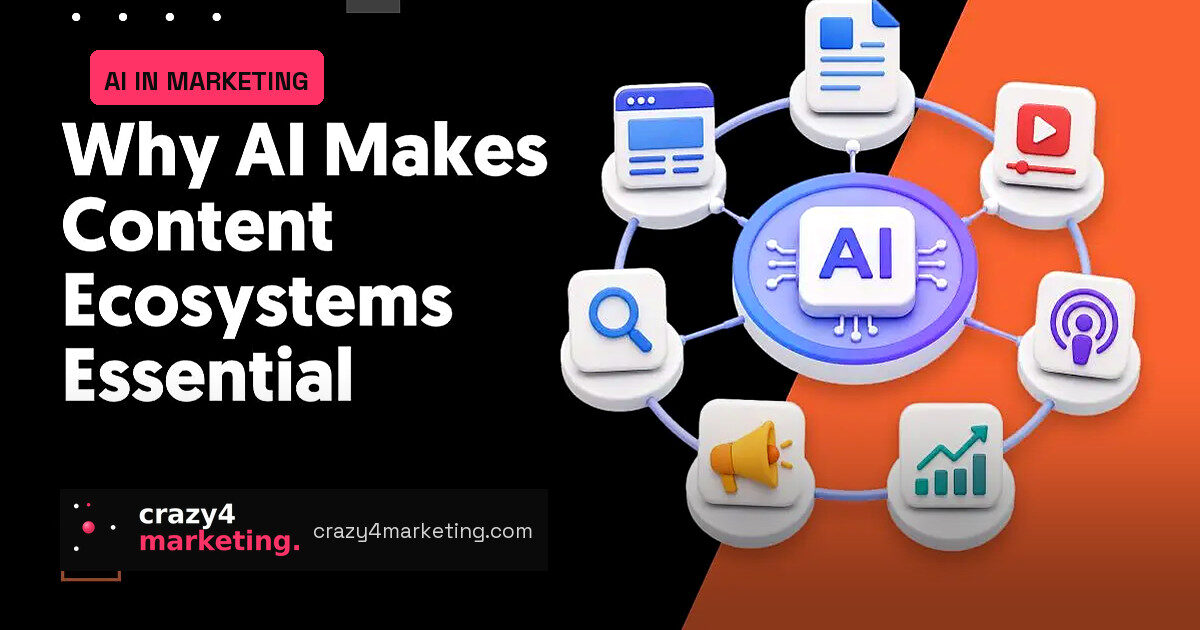
A useful AI content strategy does not start with a tool list. It starts with the workflow those tools should improve. The breakdown points to three layers:
- Original expertise and first-party insight that a brand can genuinely own.
- Repeatable AI-enabled workflows for research, drafting, adaptation and analysis.
- Measurement wired into creation, so performance feeds the next brief.
That turns content into a learning loop: learn, create, measure, improve, and learn again — not a series of disconnected campaigns.
AI search raises the stakes
AI search agents now evaluate information on behalf of users. McKinsey’s “marketing to AI agents” capability means brands must create content that is clear, structured, credible and consistently updated — so both people and machines can interpret it.
This expands content strategy beyond ranking pages. It becomes part of the information system through which audiences discover and evaluate brands.
Start with an audit, not another tool
Teams can begin by mapping how content moves from idea to publication and measurement. Look for repetitive tasks, handoffs and bottlenecks. Then add AI only where it removes friction without removing human judgment.
Access to AI is no longer a differentiator. The differentiator is the operating system built around it: technology plus human expertise, original insight and performance feedback.
Source: Neil Patel