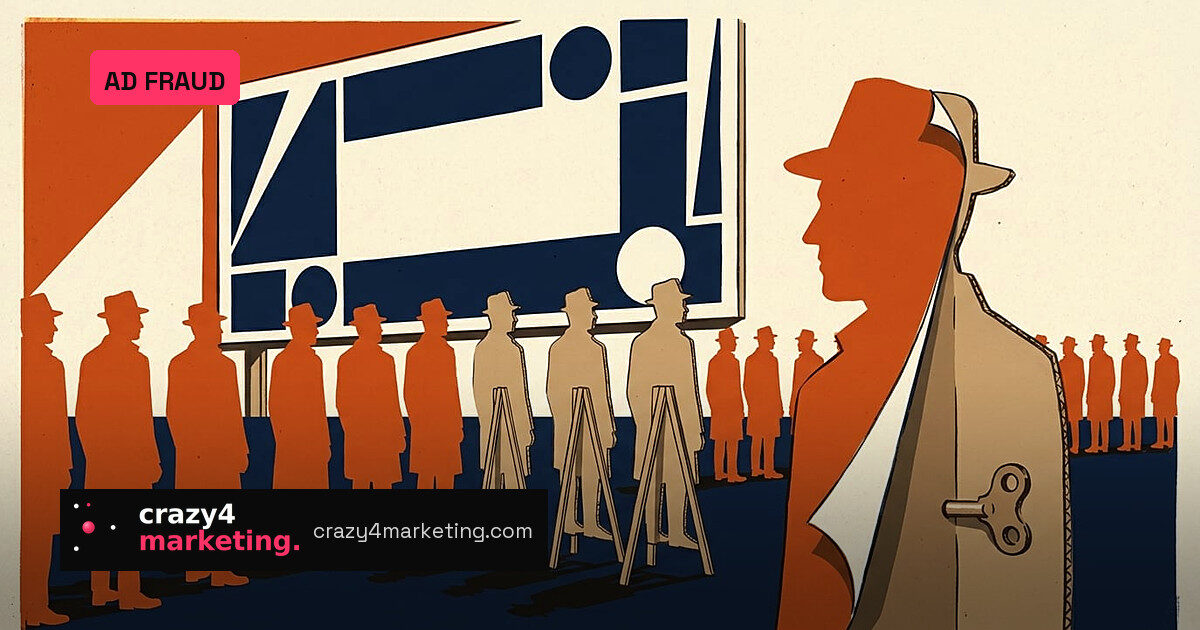
ADEX, the Limassol-based anti-fraud and traffic-quality unit of AdTech Holding, says artificial intelligence played a significant role in 52% of the advertising fraud schemes it identified between January and September 2026. The data comes from eight ad platforms using ADEX, covering 1.2 million campaigns and 4.9 million creatives.
That is not a market-wide fraud rate. It is a snapshot of what moderators caught in a specific queue – and a warning about how cheap AI has made convincing fraud.
What the 52% actually counts
The headline figure counts distinct fraud schemes, not campaigns or advertiser accounts. ADEX does not publish how many schemes sit behind the percentage, how they were grouped, or the error rate on AI detection. The platforms are unnamed, and ADEX sells the moderation and detection products that generated the data.
So read it as directional, not absolute. One scheme can span many campaigns and creatives, and a falling share in one category can simply mean another category grew.
The same scam with a better finish
ADEX argues the underlying playbook has not changed: borrow a trusted face, promise big returns, move the victim into a private chat. What changed is production cost and polish.
“What AI changed is the finish,” said Sergey Martianov, Chief Product Officer at ADEX.
Among AI-involved schemes, bots impersonating humans appeared in 64%, cloned brands and fake endorsements in 53%, and deepfakes in 11%. The categories overlap, so they add up to more than 100%. Across all flagged schemes, that translates to roughly a third involving bots impersonating humans, a little over a quarter involving brand cloning, and under 6% involving deepfakes.
Operationally, ADEX researchers observed rejected campaigns returning within hours, sometimes the same day. That matters for review teams: AI-generated variants make resubmission fast enough to be an attack loop, not a one-off mistake.
Six shifts in the moderation queue
The 2026 report lists several changes, and the denominators are not always the same. The overall signal: fewer violating campaigns, but the ones that arrive are harder to catch.
- Cloaking share fell from about three quarters of suspensions in 2025 to under half in Q3 2026.
- Malicious iOS scripts became a separate suspension category, at around one in five suspensions in Q3.
- Copyright violations grew from 8% of rejected campaigns in Q1 to more than a fifth by Q3.
- Adult content dropped from 42% of rejections in Q1 to 14% by Q3.
- Messenger-based phishing on services such as WhatsApp and Telegram became its own suspension reason.
- Fewer, better-disguised campaigns replaced high-volume submissions.
2027: fraudsters target the shopping agent
ADEX’s second argument is a forecast, not a measured attack category yet. The mechanism is prompt injection: malicious instructions hidden in invisible page elements, metadata, images or text addressed directly to AI assistants. Fraudsters may also show AI agents one page and humans another – cloaking with a new audience.
Shopping agents are already real enough to fight over. Amazon cut Meta’s Muse agent off from buying on Amazon.com in September 2026. Identity standards are thin: Arkose Labs reported in October 2026 that only 2.3% of legitimate AI agent sessions carried a verified signature.
ADEX suggests replacing the old “bot or human?” test with three questions: can the visitor prove who it is, does it behave like its stated task, and do sessions end in a real transaction?
What marketers should do now
For brands, the most direct exposure is cloning. If a large slice of AI-involved fraud borrows brands or faces, legitimate advertisers are the raw material. Start with three checks: watch for your brand in third-party ads, follow where your clicks actually land, and ask verification partners how they distinguish a good AI agent from bad automation.
The review queue is changing shape. The ads that reach moderation are fewer but more convincing, and the next battleground may be what a landing page says to a machine rather than to a person.
Source: PPC Land