
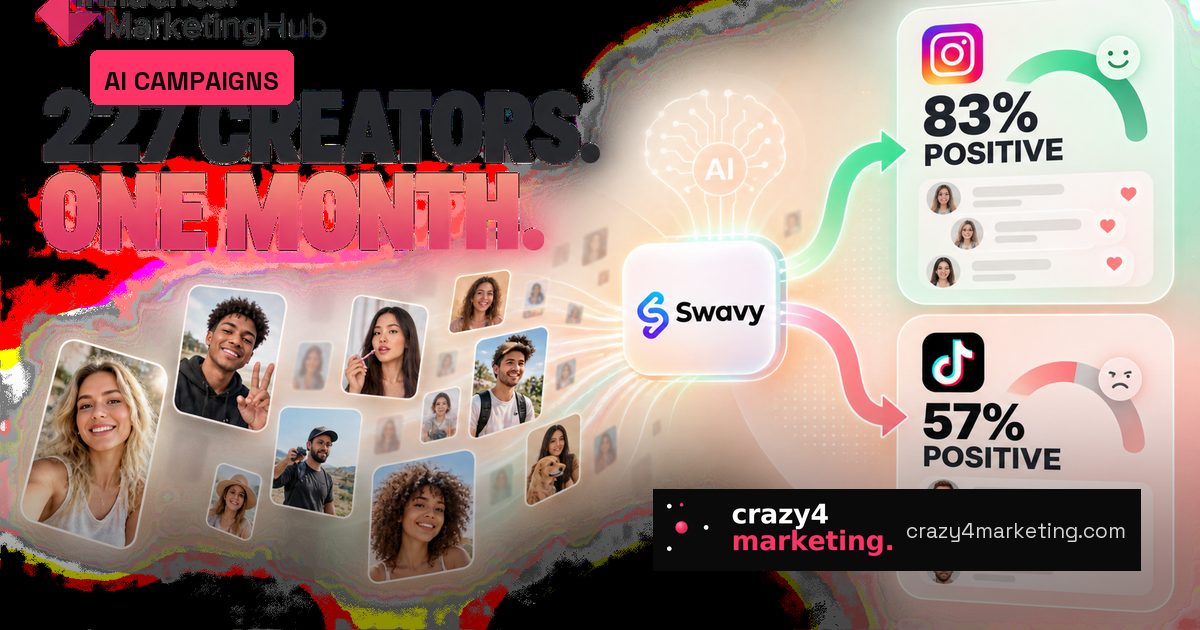
Scale sounds great until you have to read every comment. A global haircare brand just showed what happens when AI handles both sides: activating 227 nano-creators in one month and making sense of roughly 5,000 comments before planning the next flight.
The campaign, run through Swavy’s AI-powered influencer platform, included 150 creators in Saudi Arabia and 77 in the UAE. The result was 266 posts across Instagram and TikTok, with a 3.8% engagement rate on Instagram and 4.5% on TikTok.
Where AI changed the workflow
Normally, sourcing, vetting, contracting, and briefing this many nano-creators is a multi-month job. Swavy’s agents worked across the entire roster in parallel. They matched creators on market, niche, audience quality, and brand-safety signals rather than follower count alone.
The team and client tracked every creator on one live dashboard, from sourced to approved to briefed to posted. Creators used a comedic, product-in-hand format and could write captions in Arabic or English. That loose frame helped hundreds of separate posts feel native instead of templated.
The platform gap hidden in the numbers
Engagement rates only told part of the story. Swavy’s sentiment engine read approximately 5,000 comments and split the reaction by platform. That is where the real insight appeared:
- Overall sentiment: 69.6% positive, 24.4% neutral, 6% negative.
- Instagram: 83.1% positive.
- TikTok: 57.3% positive, with negativity closer to 9%.
- Top TikTok complaint: the post felt like a promo.
A single blended sentiment score would have hidden this. TikTok audiences punished anything that felt like an ad, so the same creative that felt natural on Instagram came across as pushy on TikTok.
Why small negative signals deserved attention
The negative slice was small, but it was more useful than the praise. About 55.7% of negative comments carried a reasoned opinion, compared with 28% of positive comments, which were mostly quick reactions.
Most of the positive reaction was about the content itself. Around 54% of substantive positive comments praised the humor and creative, while product love or product questions made up closer to a quarter. In short, the entertainment carried the campaign—not the product pitch.
What marketers should do next
The brand walked into the next brief with a clear adjustment: protect the creator’s voice, keep the humor, and loosen TikTok creative guidelines so posts read as native rather than ad-like.
For D2C founders and growth teams, the framework is simple. Scale creator activation without losing qualitative signal. Analyze sentiment by platform. Treat negative comments as a focus group you didn’t have to pay for.
Source: Influencer Marketing Hub