

AI search has quietly broken one of the most basic assumptions in performance marketing: that a valuable interaction leaves a click. An answer engine can recommend your product, mention your brand, or associate you with a strength — and hand the user not a single link to your domain. That sale still counts, even when the analytics path does not show it.
The gap is attribution, not just traffic
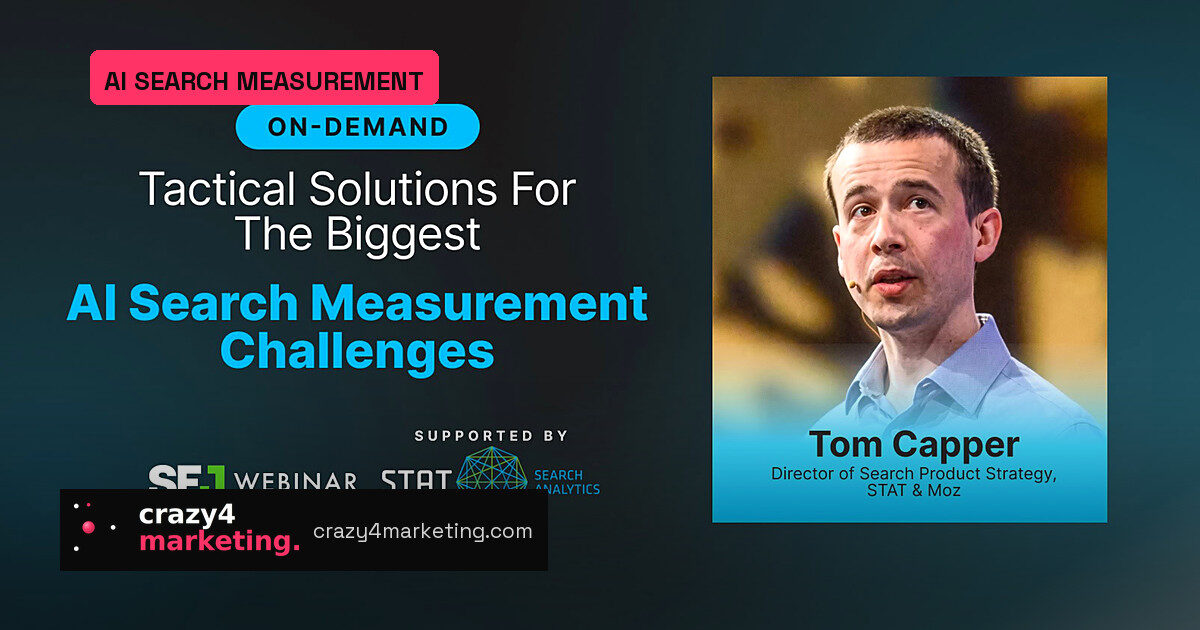
Tom Capper, Director of Search Product Strategy at STAT, frames zero-click AI search as an attribution problem. The business outcome matters, but the earlier influence is invisible in standard reports. His proposed fix is not to demand better click paths. It is to measure visibility alongside outcomes, so you can see the influence that clicks cannot capture.
Mentions and citations are different signals
Capper used an AI car recommendation to show the split: Audi was the brand being recommended, while the cited URLs pointed elsewhere. A report that only asks whether Audi earned a citation would completely miss the moment it was actually recommended. As he put it:
“citations have URLs… mentions have entities.”
— Tom Capper, Director of Search Product Strategy at STAT
The practical step is to define the brand entities and sub-brands you want to track, and do the same for competitors.
Treat prompt variability as a sampling problem
AI answers shift from prompt to prompt, but Capper argues this is not a measurement dead end. It is a sampling challenge, similar to the location- and device-specific results SEOs already handle. A tiny prompt list gives an unstable picture. Instead, sample realistic situations: People Also Ask questions, personas, locations, budgets and needs — not a raw keyword list.
Collection context matters too. Capper said STAT uses the web interface because API responses can differ from what actual users see.
Citations become investigation fuel
Dropping citations as the headline KPI does not mean ignoring them. Capper recommends looking at pages cited when competitors get recommended. Those sources — review sites, industry publications — reveal where you need stronger representation. Then watch whether your work on those sources changes the brand recommendations that follow.
Add visibility metrics to your report
Capper suggests leading indicators that sit next to, not instead of, revenue reporting:
- Presence: does the brand appear in the AI answer or result?
- Recommendation and context: is it recommended, merely named, or tied to a specific strength or problem?
- SERP prominence: how far down the page and how much visible space does it occupy?
He also warns against over-trusting sentiment scores; a spike can amplify small differences in mostly neutral answers. The theme behind a mention is often more useful than a volatile summary number.
Surveys close the attribution loop
When Loren Baker asked how to connect visibility to the customer journey, Capper recommended combining evidence. Post-purchase surveys can reveal that an AI recommendation helped someone discover or choose the brand. Pass those answers into analytics as a dimension, and compare self-reported discovery with the channel analytics actually credits. Avoid showing survey options in the same order, which can favor the first one.
Start with the next reporting cycle
For the next report, audit where your dashboard sees a visit or citation but not a brand mention. Define your entities, prompt contexts and collection environment before comparing periods. Record the cited pages you investigate and watch how recommendations change. Then bring revenue, conversions and survey responses back into the same conversation.
Source: Search Engine Journal


