Coffee brands have spent decades telling consumers fresh is better. Cometeer made the opposite bet: some of the best coffee arrives frozen.
The Massachusetts company brews specialty roasters’ coffee into a concentrated liquid and flash-freezes it in aluminum capsules. Customers melt a capsule into hot water or milk, no grinder or machine required. The convenience is easy to understand once someone tries it. Convincing people to try frozen coffee was the hard part.
The product problem was never the coffee
Co-founder Matthew Roberts started experimenting with frozen coffee while studying abroad in Spain. He wanted iced coffee and began freezing brewed coffee to see if it would hold its flavor. Those tests led him to specialty coffee pioneer George Howell. Radically different coffees convinced Roberts that freezing could preserve qualities that normally fade in storage.
Cometeer built a precision-brewing and liquid-nitrogen process. But a new format forces a new routine. Roberts summarized the heart of it: “Everyone can melt the perfect cup. Not everyone can brew the perfect cup.” The promise was clear. The emotional barrier was not.
Taste before trust
Instead of leading with the technology, Cometeer put a cup in someone’s hand first. In September 2022, after Goldman Sachs reportedly removed complimentary cold brew, the brand set up a pop-up outside the bank’s New York headquarters in about 16 hours, serving roughly 100 employees. It was a small cultural moment, but it introduced the product through taste, not an explainer.
The larger bet came in 2023 with coffee expert James Hoffmann and the Great American Coffee Taste Test. Five thousand consumers tasted four coffees blind and recorded their preferences. Only 55% of stated roast preferences matched their blind-tasting choices. That gap gave Cometeer a reason to push experimentation: people who assumed they liked dark roasts might actually enjoy lighter, fruitier coffees.
Mall kiosks used the same logic. Staff offered a complimentary coffee tailored to each visitor’s preference, demonstrated the frozen capsule while preparing it, and introduced a subscription offer available only at the kiosk. Brand manager Olivia Laskowski called the kiosks the company’s strongest acquisition channel at the time.
Creators brought frozen coffee into real routines
Roberts described a creator strategy of testing many partners, then deepening relationships with the ones that performed. Cometeer explored paid placements, revenue-sharing and personalized coffee selections. The story changed by audience: fitness creators talked caffeine and convenience, food creators showed recipes, coffee enthusiasts spoke flavor and preparation.
Content on TikTok made that range concrete. One creator said he had used Cometeer for six months before agreeing to a paid partnership, then demonstrated his usual iced latte. Another creator noticed someone else’s frozen capsules in videos, identified the brand, and went looking for it at Sprouts. An Instagram audit found 55 mentions from 44 creators, with 37 organic posts across family, lifestyle, baking and food accounts.
Cometeer built credibility on three tracks:
- Cultural relevance: a February 2024 Houseplant collaboration with Seth Rogen and Evan Goldberg, featuring roasts called Bean There Done That and Get Roasted.
- Expert guidance: the August 2025 James Hoffmann Discovery Kit with 16 capsules across 8 coffees and tasting videos.
- Product knowledge: roaster collaborations like Black & White, whose director of roasting, Matt Ferraro, explained how the format removes brewing anxiety.
Turn discovery into a game customers share
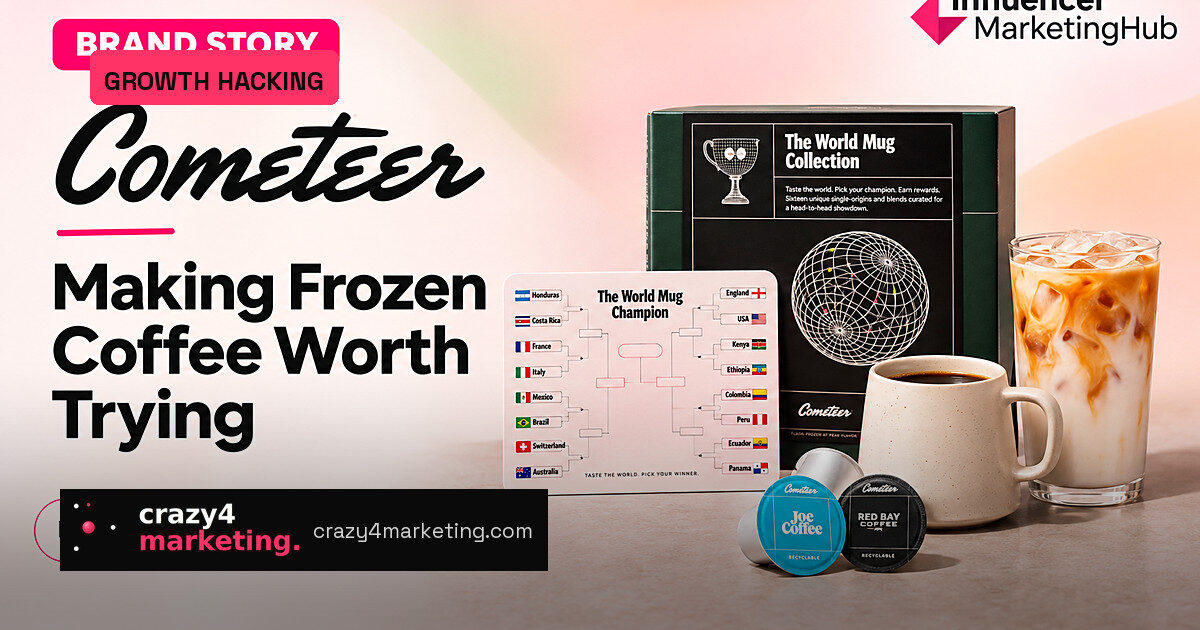
Cometeer’s 2026 World Mug Collection pushed interaction further. Buyers received 32 capsules—two each of 16 coffees from 16 countries—and compared them in head-to-head tastings through a tournament bracket. They recorded preferences in the app, selected a winner and built a better coffee profile. Roberts said the team tasted more than 500 single-origin coffees while developing the collection.
Referral programs did similar work with less friction. Customers could earn subscription credits, merchandise or access to rare coffees, and loyal subscribers could gift a free box. Roberts later identified referrals as the leading acquisition channel.
What to steal
The lesson goes beyond coffee. When a product asks people to change their assumptions, awareness alone cannot do the job. Design a journey where the first meaningful ad is a taste, a routine or a recommendation from a trusted creator. Then give customers a way to share what they discovered.