

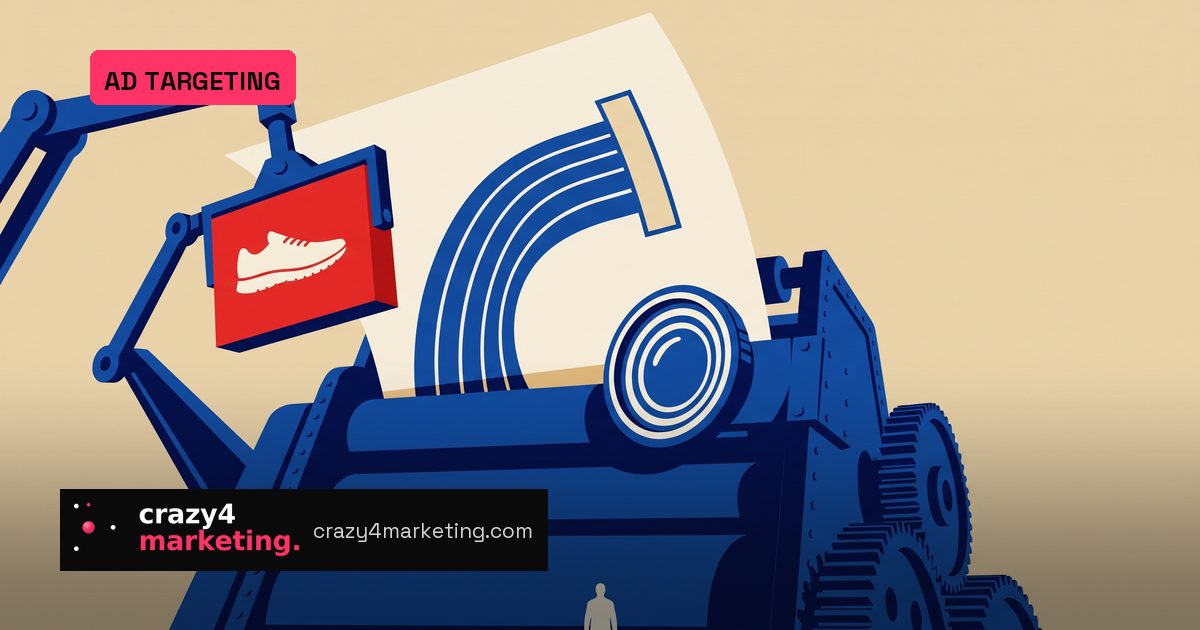
Contextual advertising picks the ad by what someone is reading, watching or typing, not by who they are. A running shoe appears beside a marathon training plan because of the page, not the reader. That makes context the only targeting input available on every impression, even when cookies, device IDs and consent are missing.
From AdSense to a privacy-era revival
Applied Semantics launched AdSense in October 2002. Google announced its own content-targeted ads in March 2003, bought Applied Semantics for $102 million that April and opened the self-service AdSense programme in June. Behavioural targeting later pushed context into brand safety. GDPR from May 2018, Safari and Firefox blocking, and European consent rules have pushed it back to the buying table.
How a page becomes a bid
Three steps sit behind a contextual impression: classification, transport and decision.
- Classification: crawlers and NLP extract topics, named entities, sentiment, and now images, audio and video, mapped to IAB Content Taxonomy or vendor segments.
- Transport: OpenRTB bid requests carry the URL and taxonomy codes via fields such as pagecat and cattax.
- Decision: DSPs check each URL against cached vendor classifications and bids or declines, the same pre-bid mechanism used for brand safety.
Google Ads describes contextual targeting as matching ads to sites and videos by keywords or topics. OpenAI’s ChatGPT ads go further, matching advertiser context hints, landing page copy and ad title against the live conversation.
The numbers are contested
Vendor wins are self-reported. IAS cited a 300% click-through rate increase for Samsung in March 2026. Amazon’s paper reported 23% lower CPMs for brand campaigns. But a Google-commissioned study by Implement Consulting Group estimates a 66% efficiency loss when display spend shifts from personalised to contextual, and publisher groups say personalised inventory still sells for several times more.
Classification errors are costly. Vodafone moved to exact-match keywords, cut block rates by 41% and opened 10% more news inventory, because a blocked word like die stopped catching diet. On CTV, Peer39 says only 40% of bid requests carry usable programme-level signals.
Chatbots are the live test
OpenAI launched ChatGPT ads in the United States in February 2026. Europe followed in August 2026 on a contextual-only basis, excluding past chats and memories until users opt in to personalisation. A Cologne court ruled in September that Snap could not treat My AI prompt text as merely contextual, because prompts can contain sensitive data under GDPR. If a user typed it, context alone is not a safe harbour.
The ICO advised easing consent for contextual targeting in May 2026, while the DSA has barred profiling-based ads to known minors since February 2024. Regulators see context as lower risk, but courts are drawing boundaries.
What to do now
Treat contextual as a buying mode, not a fallback. Ask vendors for taxonomy mapping and verification data. Use exact-match keyword lists in news to reduce overblocking. Benchmark contextual CPMs on reach and incrementality, not slide-deck case studies.
Source: PPC Land


