

Most call reports tell you which campaign drove a phone call. The recording itself can tell you whether that call was worth anything, what the buyer actually needed, and which questions your content never answered.
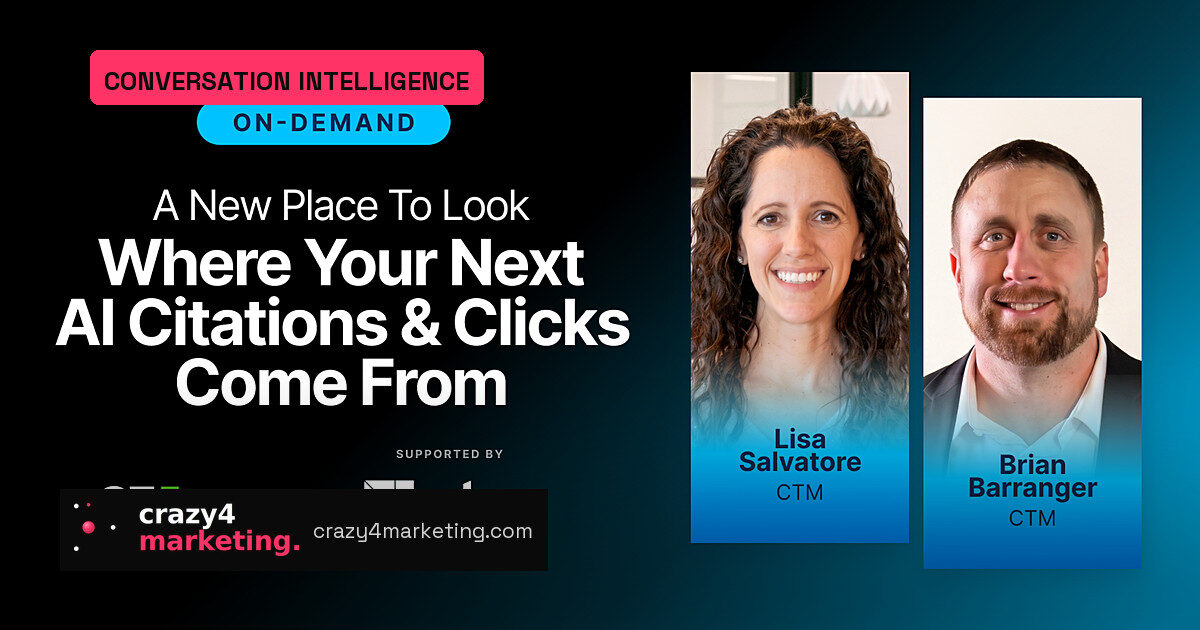
In a recent Search Engine Journal webinar, CTM’s Lisa Salvatore, Senior Manager of Integrated Marketing, and Brian Barranger, Senior Account Executive III, laid out a repeatable workflow for turning those conversations into better lead scoring, content, and ad signals.
Define lead quality before counting calls
Marketing can celebrate a rising lead count while sales sees mostly poor-fit prospects. Salvatore calls this the MQL treadmill: without a shared definition of quality, the two teams optimize toward different goals.
Her recommended first step is to have both teams review a representative sample of calls. Look for the traits of a qualified conversation, such as a relevant need, a service you can actually deliver, buying intent, or a booked appointment. Turn that agreement into scoring criteria that can be applied manually or with automation, and use the score to refine targeting or coach call handling.
Turn customer questions into search content
Calls and transcripts preserve how customers describe problems in their own words. The presenters’ conversation-to-content workflow uses repeated questions and objections to shape a content roadmap:
- Recurring questions can inform FAQ pages and service-page answers.
- Common objections can reveal a need for comparison content or clearer trust-building explanations.
- Customer phrasing can sharpen headings, descriptions, and ad copy.
The goal is to answer those questions accurately, not to stuff phrases onto a page. Salvatore cautioned that matching customer language can support discoverability but does not guarantee an AI recommendation. Credibility and brand recognition still matter. The same input can come from chats, texts, and form submissions, not just phone calls.
Feed better signals to ads and AI tools
Barranger illustrated the difference between an attribution label and a useful insight with a pest-control call. Knowing someone called about pest control is vague; knowing they needed help with ants in their kitchen and booked an appointment is a qualified outcome.
That distinction changes what you send back to ad platforms. Instead of treating every phone call as equally valuable, conversation scoring can identify eligible qualified outcomes through supported conversion workflows. Barranger stressed the need to validate scoring criteria and test before making major budget changes.
For content creation, call insights supply the context a generic AI prompt lacks: the service a customer needs, the objection they raised, or the question they keep asking.
“And the AI helps us produce and explore ideas faster. But the customer conversations are what make those ideas actually relevant.” — Brian Barranger
He also reminded marketers to review and validate anything AI produces before publishing.
Start with one repeatable workflow
The framework moves from capturing and attributing conversations to transcribing, scoring, analyzing, integrating findings, and repeating the process. You do not need to launch every use case at once.
Pick one area that would make the biggest difference, then make the first pass concrete: agree on qualification with sales and marketing, tag recurring needs and objections alongside the call’s source and outcome, choose one application such as improving a page or testing a message, validate before scaling, and repeat.
Barranger also recommended tagging AI-agent calls separately. An AI checking hours or pricing on someone’s behalf does not carry the same intent as a human buyer’s urgency or objections.
Source: Search Engine Journal


