

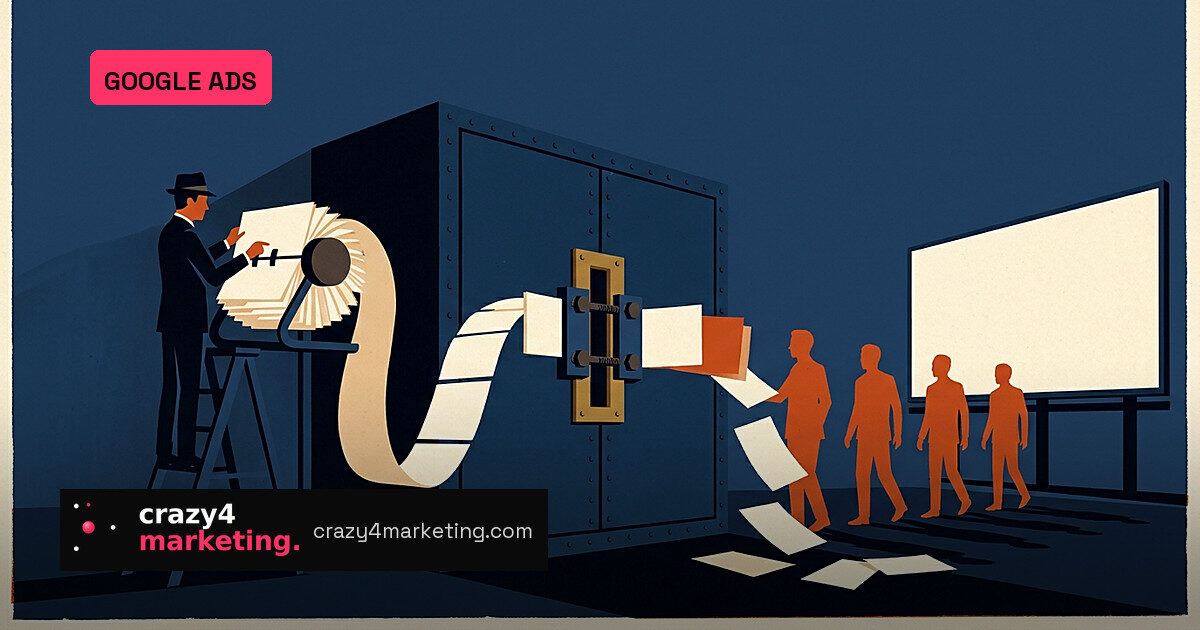
Customer Match still connects a CRM with the Google Ads auction, but by October 2026 it is no longer the quiet set-and-forget upload many teams remember. The feature matches hashed emails, phone numbers and addresses, and outside Europe IP addresses, to signed-in Google accounts across Search, Shopping, YouTube, Gmail, Display, Demand Gen and Performance Max.
Why it matters
A business often knows more about its customers than any cookie. A loyalty member or phone buyer may leave little browsing trail on Google, but the advertiser holds the contact details. Customer Match turns those contacts into reachable segments across the places those users spend time.
What changed
Since April 1, 2026, uploads must run through the Data Manager API, with a limit of 10,000 audience members per request and up to ten identifiers per member. The API merged the old pipelines for Customer Match, conversions and Display & Video 360 audiences. On May 28, 2026, the API began accepting IP addresses; in September 2026 that option reached Google Ads file uploads, excluding the 32 EEA countries, the UK and Switzerland.
The 540-day expiry
From April 7, 2025, matched members drop out after 540 days unless re-uploaded. Google applied the cap retroactively, so a list built once and left alone decays into a dormant asset. The damage is not only in targeting. If only 40% of a 50,000-contact file matches, 30,000 existing customers can still see acquisition ads. Processing is not instant either; Google says it can take up to 48 hours.
Customer Match works in three roles:
- Targeting: restrict a campaign to known customers, such as an upgrade offer for existing subscribers.
- Observation: keep reach while reporting and setting bid adjustments on listed users.
- Exclusion: suppress current buyers so prospecting budgets stop paying for their clicks.
The consent gate
In the EEA, advertisers must obtain consent to share personal data with Google and for personalised advertising. API uploads carry ad_user_data and ad_personalization fields for EEA users. Regulators are also watching the step before upload. Norway’s Datatilsynet fined two Elkjop companies NOK 20 million, about 1.85 million euros, in a decision dated June 1, 2026, partly over planned reuse of loyalty club data for Customer Match without assessing compatibility.
What to do now
Audit suppression lists first, because they protect spend. Re-upload high-value segments before the 540-day cap, keep phone numbers in E.164 format, and treat hashed emails as personal data rather than anonymous data. Check eligibility too: full targeting requires at least 90 days of history and more than $50,000 lifetime spend, while observation and exclusion are open to compliant accounts.
The bigger shift is strategic. In Performance Max, a Customer Match list is an audience signal rather than a boundary; in Demand Gen it seeds lookalike suggestions. With similar audiences removed and cookies weakening, Customer Match remains one of the few advertiser-supplied audience inputs left, but it is now a fuel source for automation rather than a manual targeting switch.
Source: PPC Land


