

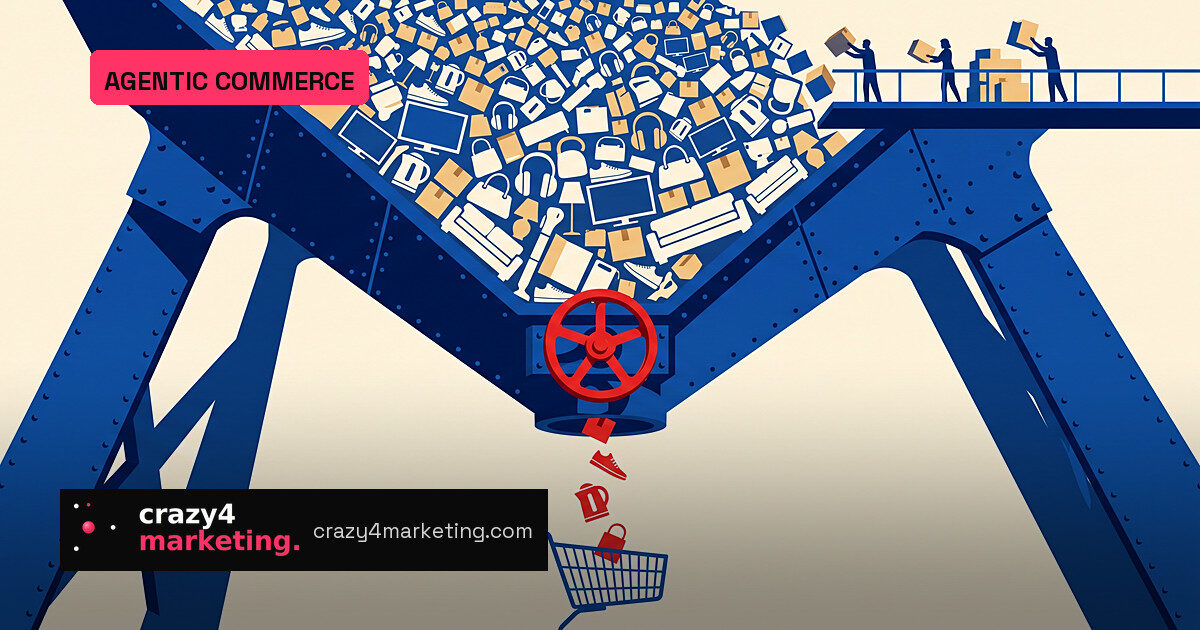
When Google’s Heiko Hotz posted on LinkedIn in late September, the message was simple: AI shopping agents need fresh, structured product data, and Google holds more than 60 billion product listings in its Shopping Graph.
His argument: “agentic commerce runs on grounding data!” Since assistants can only recommend products they know about, the breadth and freshness of that catalogue decides who gets picked.
What the numbers actually mean
Hotz’s post wasn’t a product announcement. It was a positioning pitch aimed at retailers and enterprise partners. The 60 billion figure matches what Google’s Vidhya Srinivasan cited at Google Marketing Live in May 2026; Google also says more than 2 billion listings are updated every hour.
But the source data adds important caveats. Sixty billion listings is not 60 billion unique products — forty retailers stocking the same TV can generate forty listings. And freshness at Google’s end does not guarantee freshness from a merchant’s feed. Earlier reporting found Merchant Center automatic imports running nine to ten days stale, despite a stated 24-hour cycle.
Indexed is not the same as shown
For performance marketers, this is the central tension. A listing inside the Shopping Graph can still be invisible when an AI assistant answers a query. Productrise tracked more than 100,000 shopping queries in July 2026 and found AI Mode returned roughly 95% fewer product listings than standard search. In a later dataset, only 1.28% of products that ranked in traditional search also appeared in AI Mode for the same query on the same day — and where an identical product appeared, the lead price averaged 21.6% higher.
That creates a new optimization problem:
- You are not competing for a page of results; you may be competing for one of four products an AI answer shows.
- Fresh, complete product data becomes a ranking factor across AI Mode, AI Overviews and Gemini.
- Visibility in Google’s graph does not transfer automatically to conversational surfaces.
What marketers should do now
The practical playbook starts with your own feed. Google’s AI performance insights in Merchant Center now report share of voice and attribute completeness across AI surfaces, but the weighting is not public. That makes structured data hygiene the safest lever: accurate price, stock, GTINs, descriptions and images. If a price cut takes days to reach the graph, an agent may select a competitor.
Also watch defaults. In September 2026 Google emailed Shopify merchants that native checkout had been enabled in AI Mode and Gemini, with eligible products included automatically. Merchants who want checkout on their own sites must opt out in Shopify admin.
The bigger shift
Agentic commerce changes what you can measure. Click and referral paths get compressed when a chat assistant buys on a customer’s behalf. That’s why NIQ and Similarweb announced plans to measure shopping inside ChatGPT and Gemini starting in Q4 2026. Until those tools mature, the platforms running the agents also supply much of the reporting.
The 60 billion number is real. The reach is real. What merchants should not assume is that their products will surface — or that a “partner” graph is the same thing as a neutral shelf.
Source: PPC Land


