

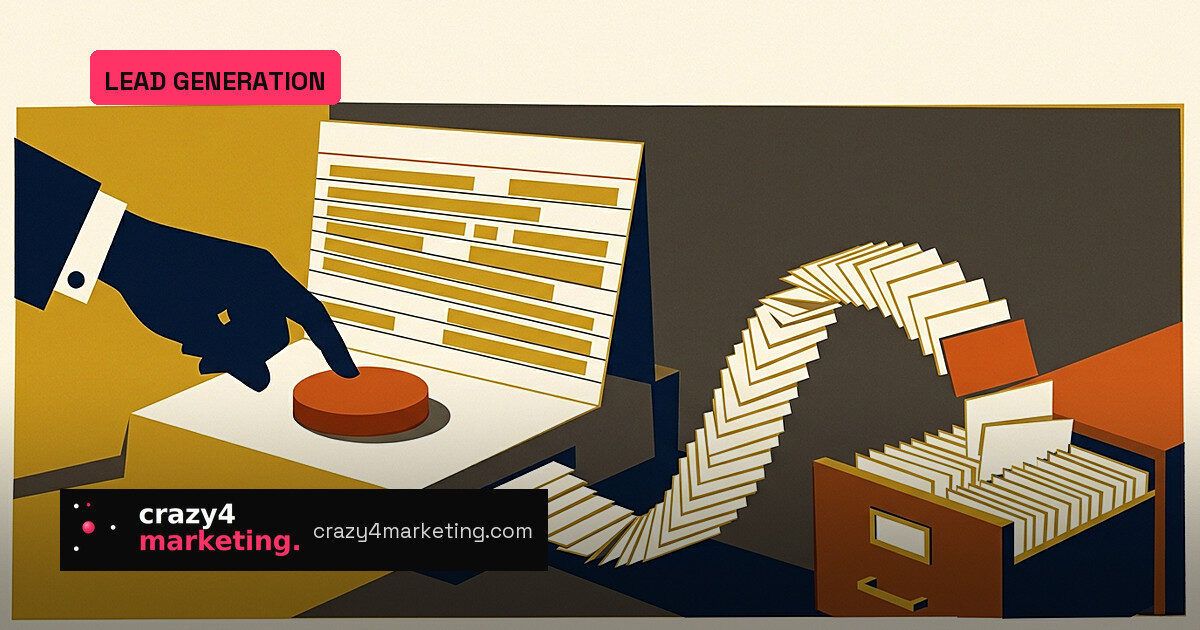
Lead Gen Forms are the anti-landing-page. Instead of sending a tap through to a website, LinkedIn opens a form already filled with the member’s profile data: name, email, job title, employer. One more tap and the record lands in the advertiser’s CRM. The click never becomes a site visit.
LinkedIn owns the capitalised product name, but the mechanism is shared. Meta has Instant Forms, Google sells lead form assets, and TikTok uses the same Instant Forms label inside its app. The category exists because landing pages leak. On mobile, every page load, typed field and cookie banner costs submissions, and B2B advertisers paying LinkedIn’s high click prices have the most to lose.
What actually sits inside the format
In Campaign Manager, the form attaches to a campaign rather than the creative. Sponsored posts, carousel and video ads, document ads, Message Ads and Conversation Ads can all carry one. Advertisers set an offer headline, choose profile fields to collect, add custom questions such as purchase timeframe, and attach hidden fields for campaign names or tracking parameters. Nothing sends until the member presses submit.
Delivery then follows three paths: CSV download from Campaign Manager, native CRM integrations with Salesforce or HubSpot, or the Lead Sync API and tools such as Zapier. There is no separate form charge; cost per lead is simply spend divided by submissions.
Why B2B budgets tolerate it
Dreamdata’s 2026 benchmarks put LinkedIn’s attributed ROAS at 121%, against 67% for Google Search and 51% for Meta, across buyer journeys averaging 272 days. Those figures measure revenue attribution, not form quality. Still, they explain why demand-gen teams treat LinkedIn as a pipeline channel rather than an awareness buy: the records come with verified employer and job-title context.
The quality trap in one-tap design
The convenience that raises volume also lowers intent. Two-tap submissions attract curious browsers and produce accidental sends. LinkedIn fills the email field with a member’s primary address, often a personal account registered years ago, so sales teams receive records they cannot match to a company domain. Advertisers can request a work email field, but it is not pre-filled in the same way and reduces completion.
Retention windows add operational risk: leads remain downloadable for 90 days on LinkedIn and Meta, but only 30 days on Google. Under GDPR, the advertiser receiving the lead is normally the controller and must have a lawful basis for each use, which is why platforms require a privacy policy link and optional consent checkboxes.
Run it as a filtering system
- Send outcomes back. LinkedIn’s Qualified Leads Optimization and Meta’s Conversion Leads goal let you feed qualified or converted signals back into bidding.
- Add one high-signal question. A custom field such as purchase timeframe filters for intent the profile cannot answer.
- Export on a schedule. Recurring exports prevent leads from expiring inside Google’s 30-day or LinkedIn and Meta’s 90-day windows.
The platforms are already moving from counting form fills to grading them. LinkedIn launched Qualified Leads Optimization in December 2024; Google added Lead Intent Scores in May 2026 and a native leads screen the following month. The lesson: treat the pre-filled form as a volume tap with a filter attached, not as the end of the funnel.
Source: PPC Land


