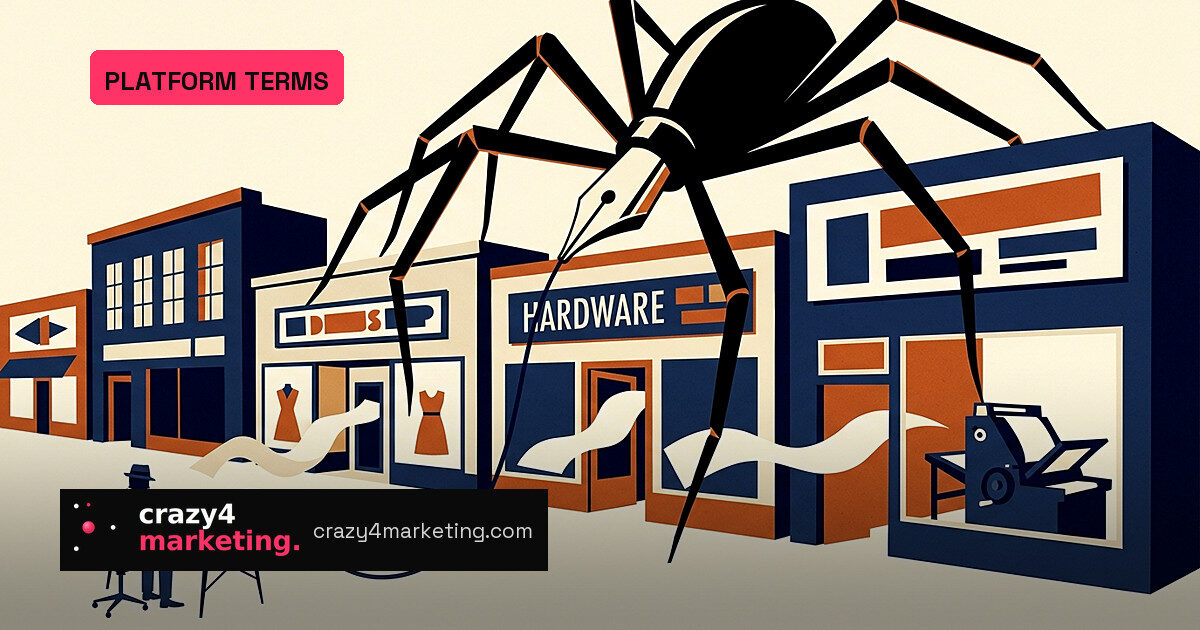
Meta is about to change what every business using Facebook, Instagram and its other commercial tools agrees to. From October 30, 2026, the updated Meta Commercial Terms let the company point crawlers, bots and scrapers at the websites tied to a business and use what they collect to train its products and AI.
The clause everyone is arguing about
The new language sits in Section 1, now called “Licences and rights you provide Meta.” It authorises Meta to access, index, cache, analyse and crawl any domains, pages or URLs associated with a company’s products or services, and to pull updates periodically. The collected content can be used to “train” and “maintain” Meta Company Products, services and features.
That is a major expansion. The March 2024 version covered only content a business posted or uploaded on Meta’s platforms. The new paragraph reaches content that never touches Meta’s apps at all.
Meta says product data, legal experts say wider
Meta communications lead Andy Stone called reports that the terms would scrape news sites “false.” He said the update is about pulling accurate product information from third-party shopping sites for ad and content recommendations, not news.
But lawyers who reviewed the text for Nieman Lab see a bigger permission. Cornell law professor James Grimmelmann said the clause gives Meta a training licence on publisher content and could, at its broadest, support building a comprehensive archive served through AI. The clause itself doesn’t limit collection to product pages, prices or catalogues.
What changed in practice
- There is no partial opt-out. A business that keeps posting after October 30 is deemed to accept the terms.
- Meta can create “test credentials” to access covered domains; the terms don’t say whether paywalls are off limits.
- robots.txt is a voluntary signal. The contract doesn’t mention it, and legal experts say it may not override a signed term.
- Indemnification now covers claims brought by your own business, not just third parties.
Why marketers should care
For advertisers, the most immediate use is probably practical: Meta wants current price and stock data to power in-app product browsing and its Muse shopping agent. If Andy Stone’s intent matches the contract, catalogue-driven advertisers may see little change.
But the permission is written much wider than product data. Any brand with a site, a Page or an Ads Manager login is granting a recurring crawl right. Publishers and D2C brands with proprietary content should treat this as a data-licensing decision, not a routine terms update.
A framework: intent vs contract
Here’s a useful way to decide. Meta’s public statements describe intent. The contract describes permission. After October 30, what binds you is the contract. Before the deadline, map the domains connected to your Meta business account and ask two questions: what content could be collected, and what would it cost to license that content elsewhere?
If the exposure is high, the levers are blunt. You can restrict bots via robots.txt as a stopgap, but experts note that’s not a contractual safeguard. The only hard rejection is to stop using Meta’s commercial products, which is not realistic for most growth teams. So the practical play is to segment data: keep high-value or unpublished content off crawlable pages, and review what your ad tools actually share.
Source: PPC Land