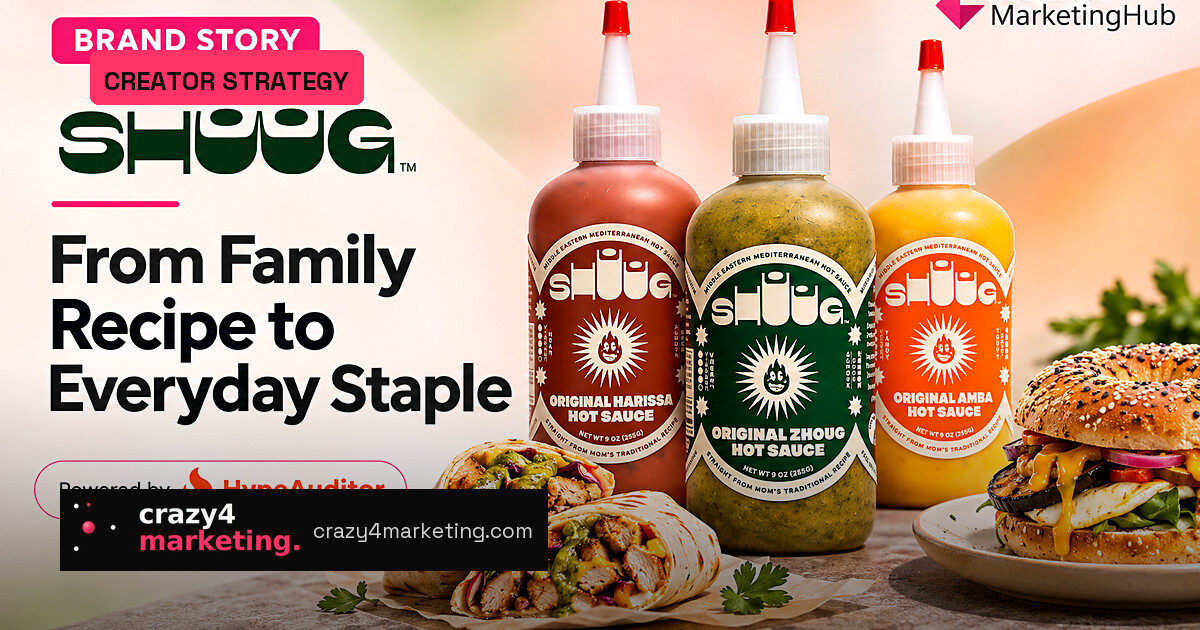
Shuug did not try to teach America what zhoug is. It showed them where to put it.
The Connecticut-founded hot sauce brand, launched in 2024 by Yoni Awad and his father Yosi, draws on Yemeni family recipes such as zhoug, harissa and amba. The family already knew commercial food: Yosi started a catering business in 2002, launched Yosi Kitchen in 2007 and supplied hummus, falafel and salads to retailers including Whole Foods.
Instead of leading with cilantro and pepper notes, Shuug built a creator strategy around one idea: unfamiliar flavors become approachable when they appear in meals people already eat. Packaging supports the same move. Zhoug ships in a portable squeeze bottle, not a jar, so it can sit beside everyday condiments instead of being saved for a special Middle Eastern meal.
Show the sauce, not the spec sheet
Across TikTok, creators put green zhoug on steak tacos, breakfast burritos, salmon rice bowls, pizza and even chicken nuggets. One creator compares the sauce on a steak taco and a fried fish taco, and says steak wins. Another pauses at the heat level. Those small admissions make gifted content feel less like a scripted ad.
This is the core lesson. A product description can explain what zhoug is. A creator demo can show how to use it tonight.
Community entry points stretch reach
Shuug also inserts itself into existing food communities. Apollo Bagels put Original Amba inside a limited-run sabich bagel; HypeAuditor recorded about 1.2K likes and a 1.58% engagement rate on the announcement. Lovebite Dumplings mentioned Shuug in a Coachella post that hit 9.44% engagement, the highest in the dataset. A Hungryroot multi-brand giveaway with Beyond Meat and Ozery Bakery drew 851 comments.
The formats served different jobs: a purchasable food experience, a festival audience, and a shared consumer promotion.
Retail content closes the loop
Several creators filmed themselves finding Shuug in Big Y’s international food aisle, buying it and cooking with it. One identifies the video as a paid sponsorship but says she had already purchased and tested the sauce independently. That honesty keeps the recommendation credible while still showing exactly where to buy it.
Shuug is now reportedly in more than 300 stores and restaurants, with Farmer J the latest chain to partner.
Early numbers and the takeaway
The paid creator data remains modest. HypeAuditor reports an average campaign engagement rate around 0.37% and classifies a $1.06 CPE as high. But a separate Amazon case study from The Amazon Whisperer reports monthly revenue grew 34x, from $481 to $16,194, over 15 months, alongside advertising, listing and search improvements.
That points to a layered funnel rather than a single silver bullet:
- Creator gifting turns an unfamiliar product into a familiar use case.
- Restaurant and festival collabs let people taste it inside a finished dish.
- Retail videos connect social proof to a physical store trip.
- E-commerce optimization captures the demand those touchpoints create.
For emerging CPG brands, Shuug’s approach is a useful template: demonstrate the fit before you explain the difference.