Sprout Social’s latest guide to building social media teams lands on an uncomfortable truth: most organizations are still resourcing social like it’s 2010. The work has changed, but the structure hasn’t. Modern social teams are now responsible for video production, influencer partnerships, customer care, paid media, community engagement, social search and—increasingly—the intelligence that informs decisions far outside marketing.
That creates a gap between what leaders expect and what teams can deliver. The numbers from Sprout’s Social Intelligence Report make the stakes clear: 93% of leaders see social intelligence as essential for future growth, yet only 10% have embedded it into enterprise strategy.
The 93% to 10% gap
The problem isn’t just awareness; it’s speed and capacity. Only 10% of organizations report they can act on a social insight within hours, while most take one to two weeks. Meanwhile, 80% of individual contributors spend at least half their time on operational execution, leaving little room for the analysis that turns social chatter into a business decision.
Sprout’s research also found that 86% of professionals believe their organization may have missed opportunities over the past two years because consumer insights arrived late, stayed siloed or went unused. That is the real cost of under-structuring: not just burnout, but lost revenue and slower decisions.
Four ways to organise the work
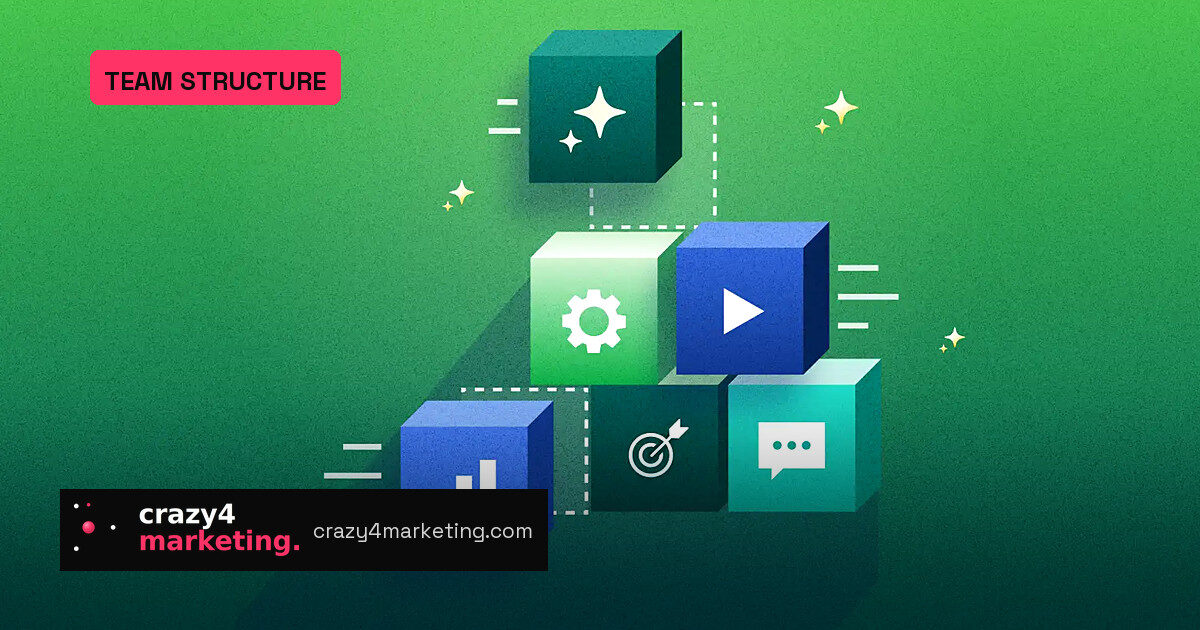
There is no single right answer, but Sprout outlines four common models. A functional structure assigns ownership by capability—influencer partnerships, paid media, social intelligence or content. A network model puts one person in charge of a specific platform such as TikTok or LinkedIn, though Sprout found this works better as an interim step for lean teams because platforms and roles change quickly. An audience engagement structure organises around awareness, engagement and customer service. A center of excellence creates a cross-departmental council that sets shared social standards and governance for larger organizations.
The strongest teams have one habit in common: they structure around business outcomes, not tasks.
Nine roles that matter now
- SOSEO strategist: owns social search and keyword-led content as consumers use TikTok, Instagram and social feeds for discovery.
- Social customer care lead: builds response workflows and escalation paths; 38% of consumers expect a reply within one to two hours.
- Paid media specialist: makes organic and paid social reinforce each other instead of competing.
- Influencer marketing strategist: manages creators across the funnel; two-thirds of consumers bought from a creator recommendation in the past year.
- Social intelligence analyst: turns raw reporting into cross-functional business insight.
- Content creator: brings platform-native production skills plus cultural fluency.
- Social media leader: represents social’s priorities in business decisions and clears roadblocks.
- Extended team: involves PR, legal, product and customer care so social data flows both ways.
- AI assistant: absorbs monitoring, first-draft replies and report generation to free strategic time.
Make the case with the numbers
If budgets are rising but headcount isn’t, the gap widens. More than 75% of marketers say influencer marketing budgets are up year over year, yet only 17% of professionals are extremely confident their organization is maximizing the value of social data. Point to the 86% who say opportunities were missed, and to the forecast: 71% of directors predict that by 2029 social data will influence enterprise strategy more than traditional market research.
Sprout’s own analytics story makes the ROI concrete. After prioritizing social reporting within marketing analytics, the company’s multi-touch attribution model showed a 5,800% increase in social’s pipeline impact.
What to do next
Build before the structure slows the team down. Hire for specialization—especially an analyst who can connect social data to revenue. Share intelligence across departments instead of keeping it in marketing. Give AI the repetitive operational tasks, and give people the time to interpret what the data means. The future belongs to teams that turn an insight into action within hours, not weeks.
Source: Sprout Social