

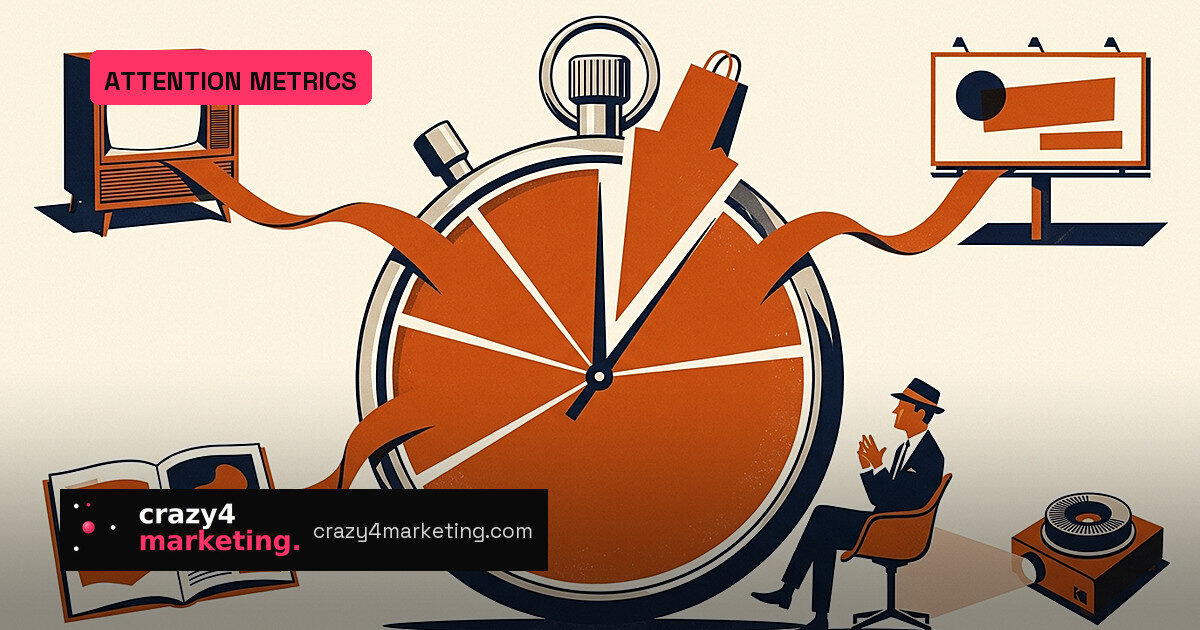
A new study from Lumen Research, Amazon Ads and Cint finally puts a number on a question media planners have been circling: how much actual looking does it take before an ad campaign moves purchase intent? The median across 270 cross-media campaigns is 47 seconds of cumulative attention, according to Lumen’s public page on the work.
The finding spread after Peter Buckley, Connection Planning Director at Meta, summarised it on LinkedIn. His sharpest claim is that raw exposure counts barely predict brand lift, while cumulative attention predicted it about eight times better. That comparison does not appear on Lumen’s public page, and the statistic behind it is not detailed.
What cumulative changes
Forty-seven seconds is a lot for any single ad format. Lumen’s earlier Snapchat work linked one second of visual attention per impression to a 20x increase in ad recall. The new figure becomes reachable only when seconds are summed across many exposures and several media. That is the point: no single ad gets someone over the threshold.
Buckley’s summary lists three findings. First, order matters: streaming TV followed by online ads produced 30% more brand lift than the reverse. Second, attention is not a silver bullet: around a quarter of the highest-attention campaigns showed no lift in purchase intent. Third, cumulative attention is, in his words, ‘frequency counted properly.’
Why planners should care
Attention is moving from post-campaign reporting into bidding. Adelaide brought attention pre-bid targeting to Amazon DSP in June 2026, and Google followed in DV360. Those tools score impressions one at a time. This study argues for a person-level, cross-media attention budget instead, exactly the kind of data Amazon can assemble across its own properties.
For growth teams and performance marketers, the practical shift is:
- Replace pure frequency caps with a cumulative attention target per person.
- Sequence high-attention formats first; let cheaper online touches follow.
- Treat the 47-second median as a starting benchmark, not a universal guarantee.
What remains unknown
The Lumen page names only the purchase-intent threshold. The thresholds for ad recall, awareness, consideration and favourability are not public, and the sample count is slightly inconsistent: 270 in body copy and 270-plus in the meta description. The markets, media mix, date range and the spread around the median are also missing.
Buckley also connects the study to Meta’s own research: multiple short views drive on average 21% more sales lift than one long continuous view. That framing suits both Meta and Amazon, every glance adds to a total, making low per-impression inventory easier to justify. But the full white paper remains gated through Amazon representatives, so independent verification is still missing.
The takeaway is not to abandon frequency. It is to count frequency in attention units, across people and channels, and to remember that creative and prior brand familiarity still decide whether those 47 seconds mean anything.
Source: PPC Land


