The Prime badge has left Amazon
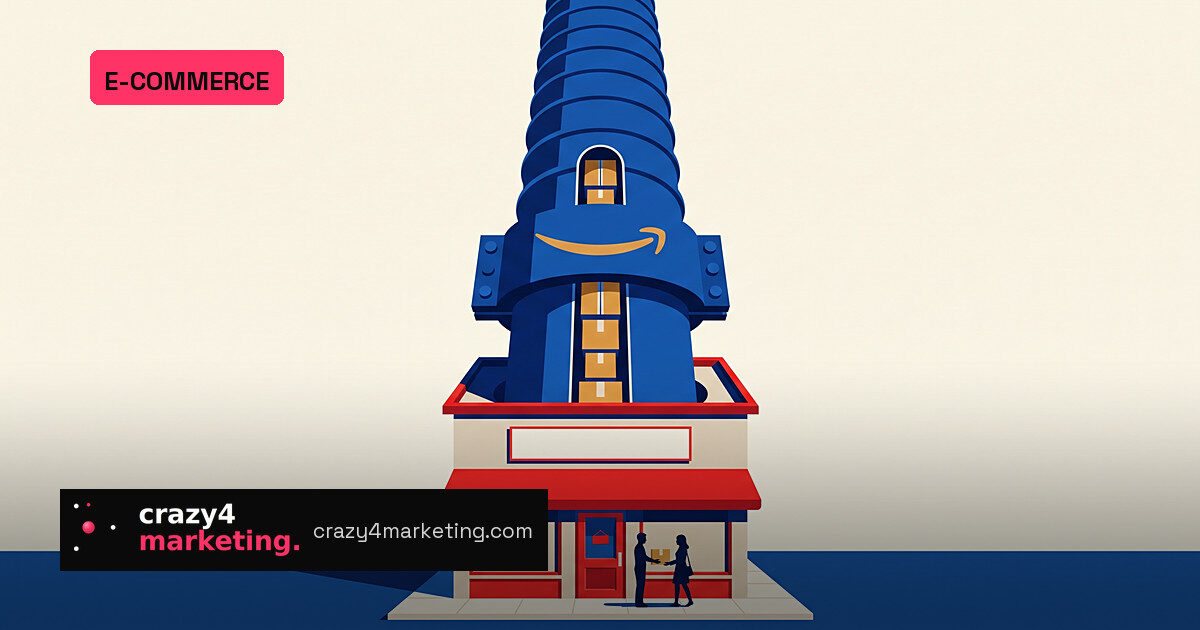
Buy with Prime is no longer just a button on a product page. It is a full conversion layer that puts Amazon’s most powerful trust signal—the Prime badge and a delivery date—on a merchant’s own website. Prime members pay with the card and address stored in their Amazon account. Amazon ships the order and handles returns. The merchant keeps the storefront and the customer’s contact details; Amazon keeps logistics, payment and a fee on every order.
As of September 2026, the programme is only open to US-based businesses shipping to US addresses, according to Amazon. To use it, a merchant needs inventory in Amazon fulfilment centres, an Amazon Pay account and SKUs mapped to Amazon’s catalogue.
How the machinery works
Stock usually sits in the same Fulfillment by Amazon (FBA) pool, and off-Amazon orders ship through Multi-Channel Fulfillment (MCF). On Shopify, the Buy with Prime app runs inside Shopify’s checkout. BigCommerce and Salesforce Commerce Cloud have their own connectors, and bigger merchants use the GraphQL API for delivery windows, order creation and event notifications.
At checkout, a Prime member signs in to Amazon and confirms a stored card and address. Shopify Payments processes the charge from the Amazon wallet on Shopify; elsewhere Amazon Pay does. The merchant receives name, email, shipping address and phone number, and may use them under its own privacy policy. But merchants may not tell third parties which customers are Prime members.
The fee stack is easy to underestimate
Pricing is not one fee. It is a stack: a 3% Prime service fee on order value excluding tax, per-unit fulfilment based on size and weight, monthly storage and payment processing. Amazon.com referral fees do not apply. Storage is billed even when goods do not sell, rises from October to January and carries a surcharge beyond 180 days.
The minimum service fee shapes small baskets. Until January 15, 2026 it was $1.00, so a $10 order paid 10% instead of 3%. At the new $0.30 minimum, the 3% rate applies from $10 upwards.
Why this matters for performance marketers
Buy with Prime turns a logistics contract into an advertising input. Amazon DSP for Buy with Prime builds audiences from Amazon product-page visits and purchases, combines them with your own site signals, and sends them to product pages on your domain. Without the programme, a brand can only use category-level Amazon audiences to drive traffic to its own site.
Delivery promises also travel into rival ad units:
- Google Merchant Center integrated with MCF in October 2024.
- MCF fast badges reached Google Shopping and TikTok ads in June 2025.
- TikTok ads added Buy with Prime checkout, but not for catalog video formats.
Click, landing page and order sit on the merchant’s domain, and the customer’s email reaches the merchant’s CRM. For brands already holding FBA inventory, one stock pool can serve the marketplace, the website and paid social.
What to do before you switch
Run the unit economics first. The famous 25% conversion lift is drawn from 37 merchants with monthly traffic between 5,000 and 3 million visits. A 16% rise in revenue per shopper comes from A/B tests with 167 merchants between July 2023 and June 2024. Both figures are Amazon-reported, and growth is often presented as percentages rather than absolute counts.
Also consider control. Standalone Buy with Prime replaces your checkout, returns handling and customer service with Amazon’s. The badge is tied to Amazon warehouses: no Amazon fulfilment, no badge. European brands cannot use it at all. Test it against your native checkout before rolling it out, and keep the customer email flowing into your CRM.
Source: PPC Land