The numbers behind the price tag
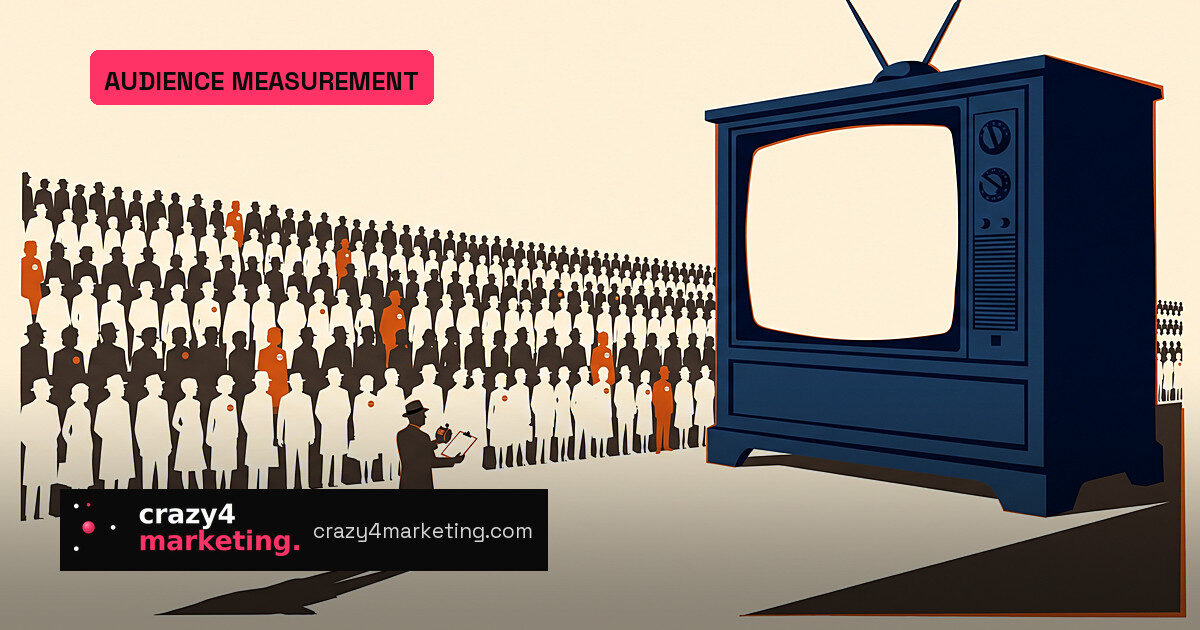
Audience measurement exists because no one can watch every viewer directly. A streaming service knows a device requested a file, but not how many people were in the room or how old they were. Measurement fills that gap by combining recruited panels with machine-generated device counts, then projecting the result onto the whole population.
The output is the set of ratings, reach, frequency and impressions that decide inventory prices. If a campaign underdelivers against the guaranteed audience, the shortfall is repaid in additional inventory. That makes any methodology change a money event.
Three methods, one default
Measurement methods break into three families.
- Panels: recruited, demographically balanced homes with meters. Panel members log in, so the system knows who was watching, not just which channel was on.
- Census data: return-path set-top box records, automatic content recognition on smart TVs, and streaming server logs. These count tens of millions of devices, but carry no person-level demographics.
- Hybrid: the industry default. Panels supply demographics; census data supplies scale. Nielsen’s Big Data + Panel combines about 101,000 people in 42,000 panel homes with tuning data from roughly 45 million households and 75 million devices.
The MRC accredited Nielsen’s hybrid method in January 2025, and Nielsen ended stand-alone panel ratings for the 2025 television season.
Who owns the number?
In much of Europe and Asia-Pacific, Joint Industry Committees such as the UK’s Barb commission measurement and publish the official figures. In the United States, commercial vendors sell measurement directly, and advertisers and media owners agree which one becomes the currency. Oversight comes from the Media Rating Council through independent audits, plus a US Joint Industry Committee formed in January 2023 to certify alternative currencies.
Why one point can cost $39 million
In television, inventory is bought against a guaranteed audience, and a miss is made good with extra spots. The VAB has estimated that a single ratings point of undercounting is worth about $39 million. That is real money moving between buyers and sellers, which is why methodology changes, accreditation lapses and platform refusals to join independent systems get so heated.
The US national TV measurement market is worth $1.5 billion to $2 billion a year, and Nielsen holds an estimated 85% to 90% of it, so the stakes concentrate fast.
Recent flashpoints make this easy to see. In May 2021 the MRC found national viewing underreported by an estimated 2% to 6% among adults aged 18 to 49, and suspended accreditation of Nielsen’s national and local services that September; national accreditation returned on April 17, 2023. In the February 2026 Gauge, unreleased figures reportedly showed linear television at 47.4% of US viewing against 41.9% for streaming, reversing January’s order. VAB’s Sean Cunningham called the handling “indefensible manipulations”, and Netflix co-CEO Greg Peters responded that the change altered “Nielsen’s numbers, not actual viewing behaviours”.
What to check before you buy
Do not take a single audience figure at face value. Ask what method the currency uses, whether it is accredited or certified, and how co-viewing is modelled, because no device can tell how many people are on the couch.
- Ask whether the number is panel-based, census-based or hybrid before you trade on it.
- Check the MRC or JIC status of the currency the deal settles on.
- For cross-platform plans, look for deduplicated reach rather than platform-by-platform impressions.
That discipline matters even more now. Nielsen put seven currency methodology changes into effect on August 31, 2026, including co-viewing captured through wrist-worn wearables. The same day, YouTube introduced a private metric that counts a household of three watching one TV playback as three co-viewed views. Models are changing what reach means, and your CPM is attached to that definition.
Source: PPC Land