
A water bottle should be a difficult product to keep in the feed. You buy one, the need disappears, and the story ends. Owala’s approach is different: it built a product that creators can demonstrate in seconds, then layered colors, drops and community programs on top to keep the bottle returning to short-form video.
The FreeSip gave creators a visible hook
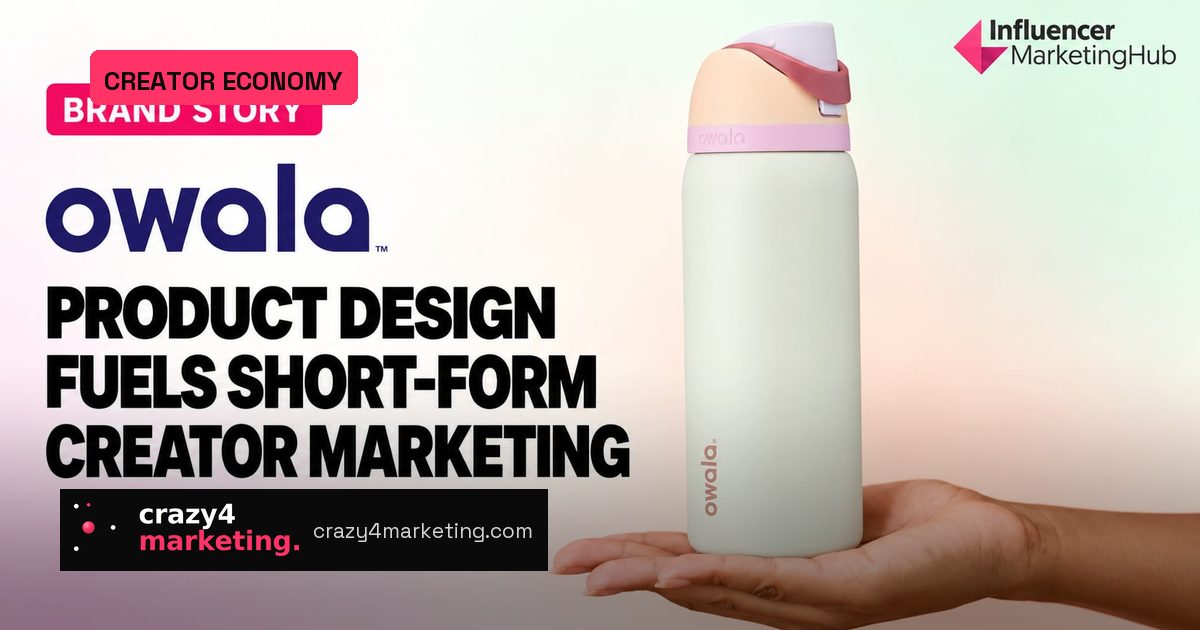
Owala launched in 2020, but the FreeSip lid was seven years in the making. The design lets users sip through a built-in straw or tilt the bottle to use a wider opening, while a push-button cover protects the mouthpiece. Every feature can be understood on camera without a long explanation.
That visible behavior matters. Parent company Trove Brands first tried the design under BlenderBottle, but shoppers tied that name to protein-shake bottles. The company pulled it, refined it and relaunched it under Owala as a separate brand.
Short-form formats do the selling
Owala content generally falls into four creator jobs:
- Reviewers test insulation, leaks and cupholder fit.
- Educators explain sizes, lids and cleaning.
- Lifestyle creators show first purchases, color matching and customization.
- Retail scouts report drops, restocks and stock levels.
Together they move viewers from awareness to product understanding, identity and purchase intent. Cleaning videos may look like a risk, but they actually expand search visibility and give current owners a reason to post after buying.
Drops turn owners into retail correspondents
Owala has released hundreds of color combinations, plus retail exclusives and licenses with Disney, Marvel, Star Wars and Pokémon. That changes a simple bottle into hauls, rankings, unboxings, collection tours and store hunts.
Scarcity supplies the plot. A Target shopper can document a Pokémon drop line, leave empty-handed, and still produce a video that markets the product. Limited releases shift buying from replacement to collection, reactivating existing customers and giving creators fresh visuals and search terms.
The network is broad, not celebrity-led
HypeAuditor analysis of worldwide Owala mentions across roughly six months found 1,620 mentions from 1,182 accounts. Nano creators made up 46.6% of accounts and micro creators another 27.2%, so almost three-quarters of the observed network had fewer than 50,000 followers. Reels accounted for 81.4% of content. The modeled audience was 77% female and just over half in the United States.
The exact sponsored percentage is less important than the shape: Owala benefits from a high volume of video-led, mostly small-creator visibility.
Ambassadors, collabs and social listening close the loop
Owala’s ambassador program gives fans an individual link, commission, product rewards and early access to drops. A social following is not required. That creates a progression from customer to advocate to measurable partner.
Big collaborations do heavier cultural work. The Wicked x Owala collection sold out, supported by product design, photography, set design, campaign video and social advertising.
Social listening also lets Owala respond to unplanned moments. When artist and tennis coach Binoy Zachariah posted about using an Owala during an attempted home invasion, the brand responded within a week with a custom “Sipcurity Safe” filled with bottles and a paid weekend trip. Brand director Chad Sorensen told MarketingBrew the company tries to balance “being playful with being helpful” and decide case by case.
Planned activations follow the same logic. Owala’s 2025 Owalafy It campaign turned social nominations into episodic surprises, and its 2026 college tour is bringing customization, exclusive merchandise and a human claw machine to 10 campuses.
What to borrow
The lesson isn’t to add artificial scarcity to every product. It’s to design creator marketing around four repeatable inputs: demonstration, opinion, identity and news. Owala supplies all four, then replenishes them with drops and collaborations.
Source: Influencer Marketing Hub