

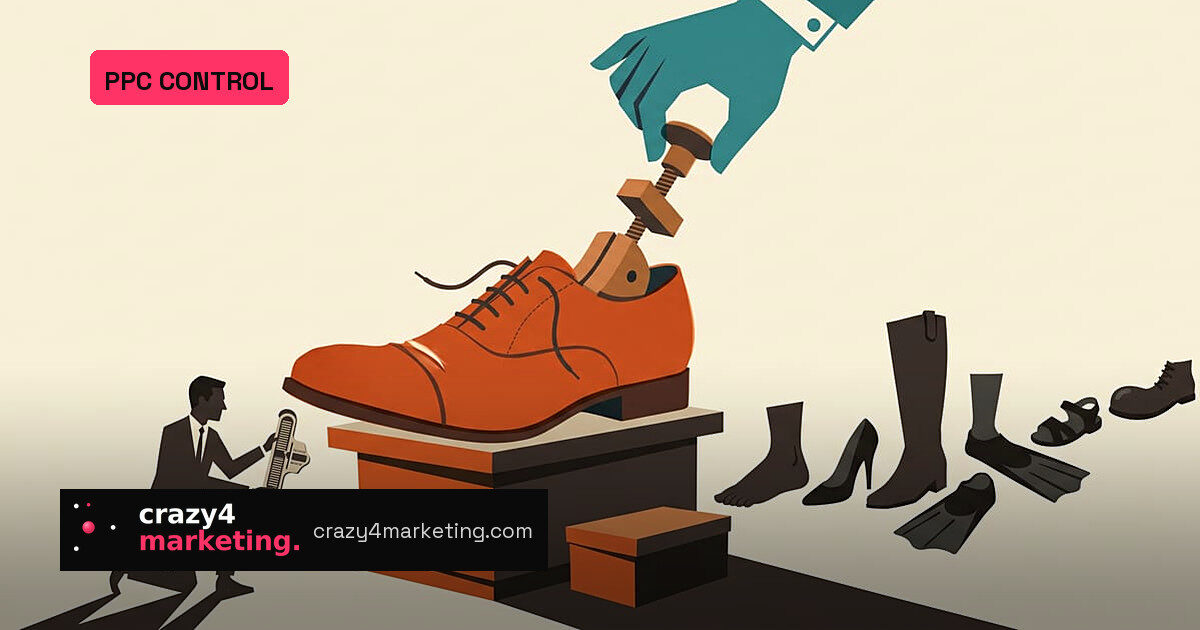
Search marketers have been trained to think of match types as a precision dial. That dial has slipped. Smarter Ecommerce’s analysis of 383 million EMEA ecommerce impressions found nearly 29% of exact match impressions had been broadened by AI Max by July 2026, up from zero in January 2025.
Google’s official story is different. The company says AI Max, which left beta on April 15, 2026, delivers an average 7% more conversions or conversion value at similar CPA or ROAS. The gap between those two numbers is the real story: platforms and advertisers are now looking at different queries behind the same keyword label.
What a match type still means
Match types are the setting attached to every keyword. They decide which searches a keyword may enter. Google Ads and Microsoft Advertising still offer three positive types:
- Broad: typed plainly; matches queries related to the keyword, using search history, landing page and other signals.
- Phrase: put in quotes; matches queries that include the keyword’s meaning.
- Exact: square brackets; matches same meaning or intent, not the literal words.
Negatives work differently and more literally. They do not expand to close variants. A negative broad keyword such as “flowers” blocks “red flowers” but not “red flower”. That literal behaviour is one of the few hard controls left.
From literal auction to AI Max
Paid search began as a literal auction: GoTo.com launched pay-per-click keyword auctions in February 1998, and Google’s AdWords Select brought per-click pricing in February 2002. For years, exact meant exact. Then close variants arrived, mandatory from late September 2014 and same-meaning queries from September 2018.
AI Max for Search launched on May 6, 2025, and Google began reporting it as a distinct match type on July 2, 2025. On August 3, 2026, Google blocked new campaign-level broad match settings and moved those campaigns to AI Max through September. Microsoft folded Predictive Matching into AI Max in July 2026 and rolled AI Max out globally on August 19, 2026.
Navah Hopkins of Microsoft Advertising described the current hierarchy on December 18, 2025: “Exact match will get the priority if it’s there, otherwise Ad Rank determines everything.” In other words, the old cascading logic now often stops at “the platform decides.”
Why this shift is contested
Advertisers are not seeing the same numbers Google cites. Brian Lasonde of PPC Boost documented an exact keyword, “best hypoallergenic food for dogs,” matching 13 queries none of which contained “hypoallergenic.” Brad Geddes of Adalysis found AI Max traffic attributed to exact and phrase keywords when no broad version existed. Google’s Ginny Marvin said Google is “increasingly determining relevance by inferred intent.”
Reporting has changed too. Google documentation now says the search term shown in reporting is “the best approximation of the user’s intent” for AI Mode and Lens queries, not what was typed. Negatives still work on strings, so blocking a reported approximation may not block the underlying query.
What to do about it
You cannot restore 2018-era exact match, but you can reassert control.
- Audit search terms weekly and treat the report as directional, not literal.
- Build negative lists on literal strings; plurals and synonyms need their own negatives.
- Test AI Max against phrase and exact in separate campaigns with a clear KPI.
- Use branded search controls inside AI Max to stop brand queries from inflating results.
The lever has not disappeared. It moved. Smart search teams are building guardrails instead of trusting the label.
Source: PPC Land


