
The hook, and the moment it ran
In 2003, Honda UK had a rational car and a rational reputation. Wieden+Kennedy London turned that logic into the most emotional two minutes a saloon car could ask for. The brief was simple: show what happens when one Accord part starts a chain reaction.
It ran as a launch film for the Honda Accord in the United Kingdom. No celebrity, no voiceover, no jump cuts. Just a long, deliberate chain of real parts, each one setting off the next.
How the film was built
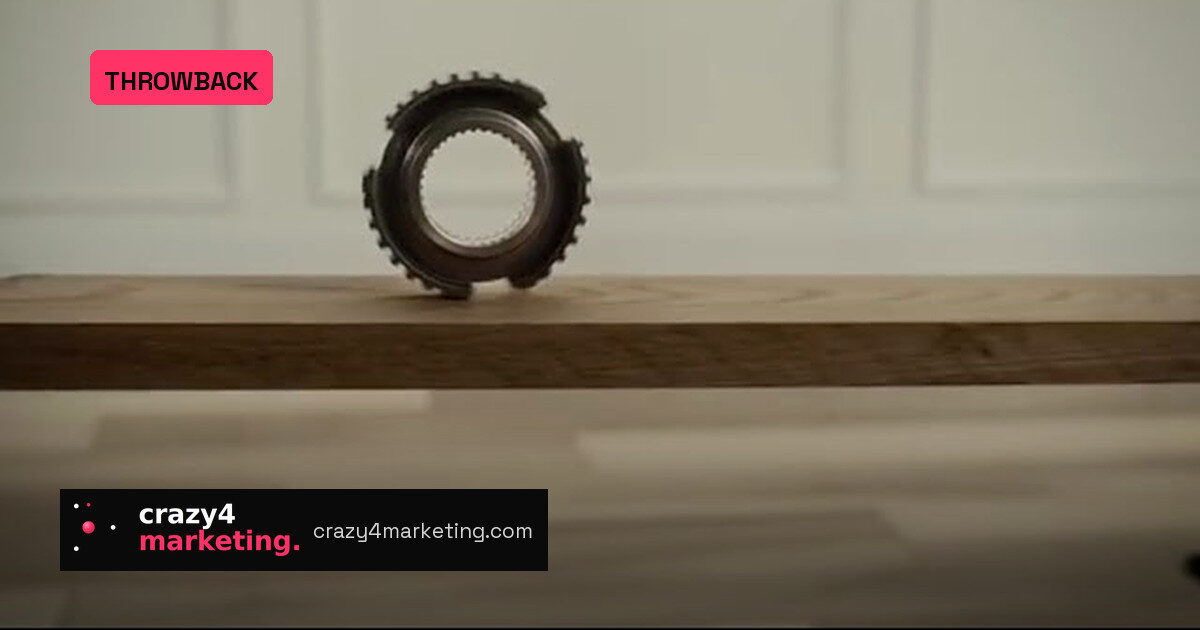
The production team took a Honda Accord apart and let the pieces perform. Every component was real, and the whole sequence was shot in camera. No CGI, no hidden supports, no post-production cheat.
The discipline behind that choice was brutal. The crew chased a clean two-minute take and landed it on attempt 606. That number is the story. The ad feels effortless because the process was anything but.
This was not a car ad about comfort or horsepower. It was a product trial disguised as cinema. The message was precise: when every part is made to fit, the whole machine just works.
Why it spread in its day
In 2003, there was no Reels, no TikTok, no easy social distribution. Yet people passed the film around through email and forums because it was surprising, rewatchable, and a little unbelievable.
It rewarded a second look. Viewers retraced the chain, looked for cuts, tried to catch a hidden wire. The lack of trickery was the trick. That tension kept the film alive long after its paid media window.
What it did for the brand
The ad turned Honda’s engineering reputation into a feeling. Precision stopped sounding like a spec sheet and started looking like obsession. It gave the Accord a halo that conventional car advertising rarely achieves.
The campaign collected major creative honors and became a teaching staple. More importantly, it gave the brand permission to make the product the hero, not the backdrop for a borrowed emotion.
Steal this
- Let the product be the cast. The Accord was not the payoff at the end; it was every single frame.
- Show the making. The no-CGI, one-take discipline was a proof point no competitor could argue with.
- Engineer a rewatchable moment. One continuous mechanism gave people a reason to share and discuss the work.
If a rolling bearing can hold an audience for two minutes and then two decades of case studies, the lesson is clear: prove what you sell, and the audience will do the selling.
Watch the original: Honda on YouTube