
India’s advertising market is on track to cross INR 2 lakh crore in 2026, and for the first time the structure of that spend has clearly flipped: digital media now commands 60% of total AdEx. That is not a temporary surge. It puts the Indian ad economy firmly in digital-majority territory, with traditional formats settling into a slower and more stable role.
Digital is no longer a channel — it is the planning baseline
Television holds 26% share, print 10%, out-of-home 2%, radio and audio 1.2%, and cinema 0.6%. Digital is also the fastest-growing segment, projected to expand 11.1% in 2026, ahead of overall AdEx growth of 9.7%. The updated digital classification includes connected TV, OTT, digital publisher editions, streaming audio and digital out-of-home, which means the line between “digital” and “traditional” media planning is blurring fast.
For growth teams, that changes the starting question. Instead of asking how much budget to move from TV to digital, the better question is: how do we build a screen-led plan that works across mobile, connected TV and retail media?
Where the incremental budget is going
The growth is concentrated rather than broad-based. The report highlights a small set of channels absorbing a disproportionate share of new spend:
- Retail media: nearly 20% of digital AdEx and one of the fastest-growing channels.
- Quick commerce: advertising investment is expanding at roughly 50%.
- Connected TV: spend is expected to exceed INR 8,000 crore in 2026.
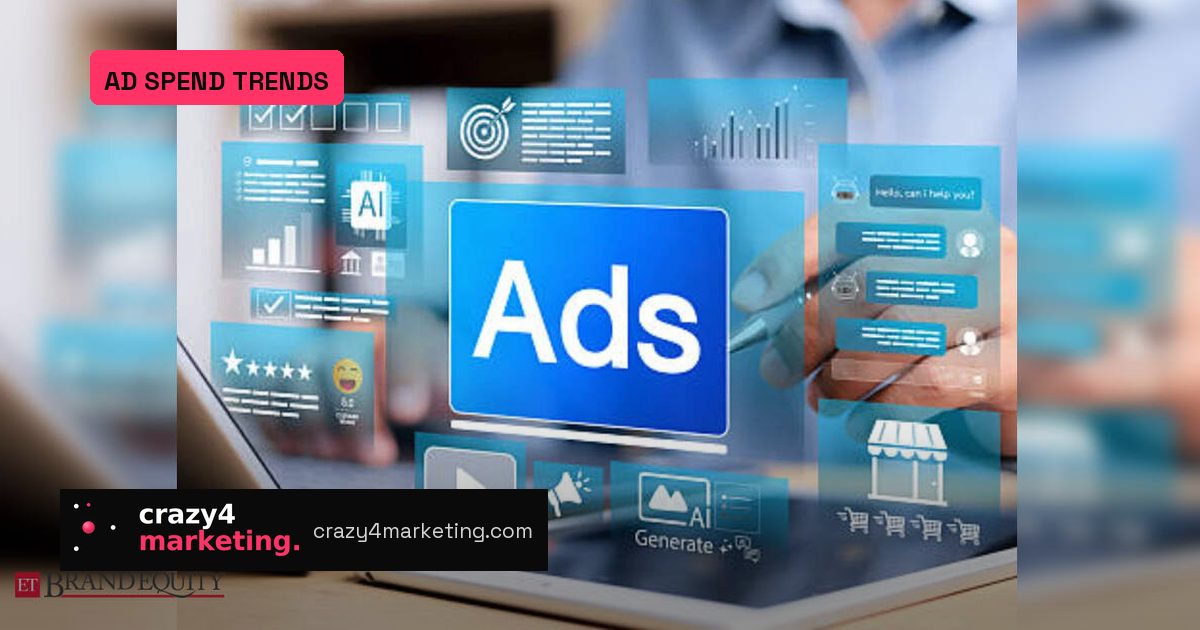
- AI-assisted performance marketing: budgets are rising beyond lower-funnel conversion goals.
This pattern matters because it rewards advertisers who build for purchase-ready audiences and closed-loop measurement. Retail media and quick commerce both put ads close to the point of sale, while connected TV brings brand-building precision to the biggest screen in the house.
Consumer behaviour is moving faster than most media plans
The data also shows a shift that should reshape media strategy: shopping is moving from stores to homes, viewing from linear television to connected devices, browsing from casual to action-led, and search from traditional engines to AI platforms.
The reach numbers support that. Among a population of roughly 147 crore, mobile subscribers stand at about 130 crore, internet users at 96 crore, and TV viewers at 90 crore. Perhaps more telling for marketers: about 42 crore people already use AI platforms, ahead of online shoppers at 36 crore and connected TV users at 20 crore.
That AI-user number is the one to watch. If nearly a third of the population is using large language models, discovery is no longer limited to a search results page. Brands need to be visible in AI-generated answers, summaries and recommendations — or risk becoming invisible at the exact moment of intent.
What to do with this signal
This is not a story about cutting TV and print to zero. It is about reallocating around behaviour and measurement. A practical 2026 playbook could look like this:
Shift video planning from TV-led to screen-led. Build reach and frequency across mobile and connected TV instead of treating CTV as an add-on.
Fund retail media as a full-funnel channel. With retail media nearing 20% of digital AdEx, it is no longer just a conversion tactic; use it for visibility, category share and new-to-brand growth.
Test quick commerce before competitors own the shelf. At roughly 50% growth, early advertisers will lock in cheaper placements and stronger data loops.
Make AI part of media operations. Use AI for audience identification, forecasting and channel-mix recommendations, but keep the strategic framework human-led.
The DCODE 2.0 playbook wraps this into a Paid, Owned, Earned structure and positions the guidance as a living resource. Rajeev Jain, SVP – corporate marketing at DS Group, captured the shift well: digital marketing is “evolving from standardized engagement into a landscape defined by precision and foresight.” Prasanth Kumar, CEO of WPP Media, South Asia, said the update is designed to help marketers “navigate complexity with confidence.”
For Crazy4Marketing readers, the takeaway is simple: India’s ad market is now digital-first, but the real advantage belongs to teams that move from digital-first thinking to behaviour-first execution.
Source: ETBrandEquity.com