

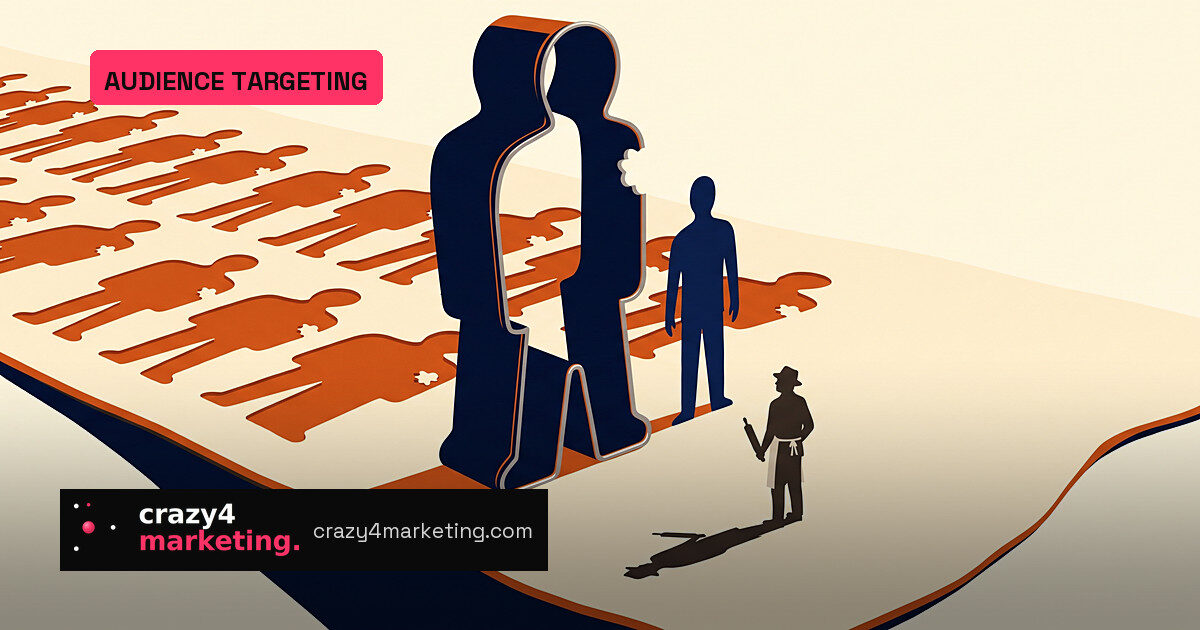
Lookalike modeling is the quiet engine behind a decade of prospecting. You hand a platform a seed of known customers, and it returns a much larger pool of strangers who resemble them. No third-party cookies, no manual interest stacks — just math on the platform’s own logged-in users.
It is also pulling in two directions at once in 2026. Google now treats the same tiers as hard limits in one campaign type and as vague suggestions in another, while the bias problem researchers measured years ago has never really been solved.
How a lookalike is actually built
The process runs in five steps. First, the seed: a hashed customer file, web or app visitors, video viewers, or buyers ranked by value. Meta requires at least 100 matched people from a single country and recommends 1,000 to 5,000. Google’s Demand Gen segments need more than 100 active matched users across the seed lists; Pinterest asks for 100 members.
Then the platform matches those people to accounts it can recognise — and only matches count, so a 10,000-email upload can shrink to a few thousand usable seeds.
Next comes representation: every user is scored on a long vector of signals such as pages followed, videos watched, purchases, searches, device, location and activity timing. The model learns which signals matter, then scores the rest of the user base on resemblance. Finally, the platform ranks and thresholds the results. That threshold is the slider advertisers know: Meta’s 1% to 10% of a country’s users, Google’s Narrow (about 2.5%), Balanced (5%) and Broad (10%) tiers. A 1% lookalike in the US is roughly 2.8 million people.
Same feature, two behaviours at Google
In March 2026, Google turned Demand Gen Lookalike segments from hard similarity thresholds into “audience suggestions” that its systems may exceed. The same feature behaves differently elsewhere. On June 15, 2026, DV360 lookalikes replaced legacy audience expansion for YouTube campaigns, with 2.5%, 5% and 10% tiers set as boundaries. Google documented Lookalike segments for Video brand campaigns on September 1, 2026, with tiers still acting as a limit.
- Demand Gen: tiers are suggestions, not borders.
- DV360 and Video: 2.5%, 5% and 10% tiers remain hard caps.
- Meta’s Advantage lookalike: the system may go beyond 1% when it predicts better results.
For a buyer, the practical question is simple: before you rely on a percentage, check which mode that campaign type is actually in.
The bias that survived de-biasing
The legal history here is not a footnote. On March 28, 2019, HUD charged Facebook with housing discrimination over lookalike-style targeting. “Using a computer to limit a person’s housing choices can be just as discriminatory as slamming a door in someone’s face,” said Ben Carson, then HUD secretary.
Meta built Special Ad Audiences for housing, employment and credit ads by removing demographic inputs. Researchers led by Piotr Sapiezynski at Northeastern University tested the result: a Special Ad Audience seeded only with women still delivered to 91.2% women, versus 96.1% for a standard lookalike. Stripping the inputs did not fix the outputs.
The DOJ sued Meta in 2022, and the settlement required the tool’s removal plus a $115,054 civil penalty — the maximum available. Meta now runs the Variance Reduction System to correct delivery when an audience drifts from the eligible population.
What to do with lookalikes now
Lookalikes still earn their place, especially where clean rooms and retail media let brands seed from high-value behaviour. Amazon Marketing Cloud’s high-value audiences, for example, let brands sort customers into spending percentiles and model lookalikes from the top buckets.
The discipline is the same as ever: seed with your best customers, not every customer; test a tight tier before buying reach; and audit who actually saw the ad, because resemblance is not intent — and vendor-reported uplifts rarely face independent verification.
Source: PPC Land


