
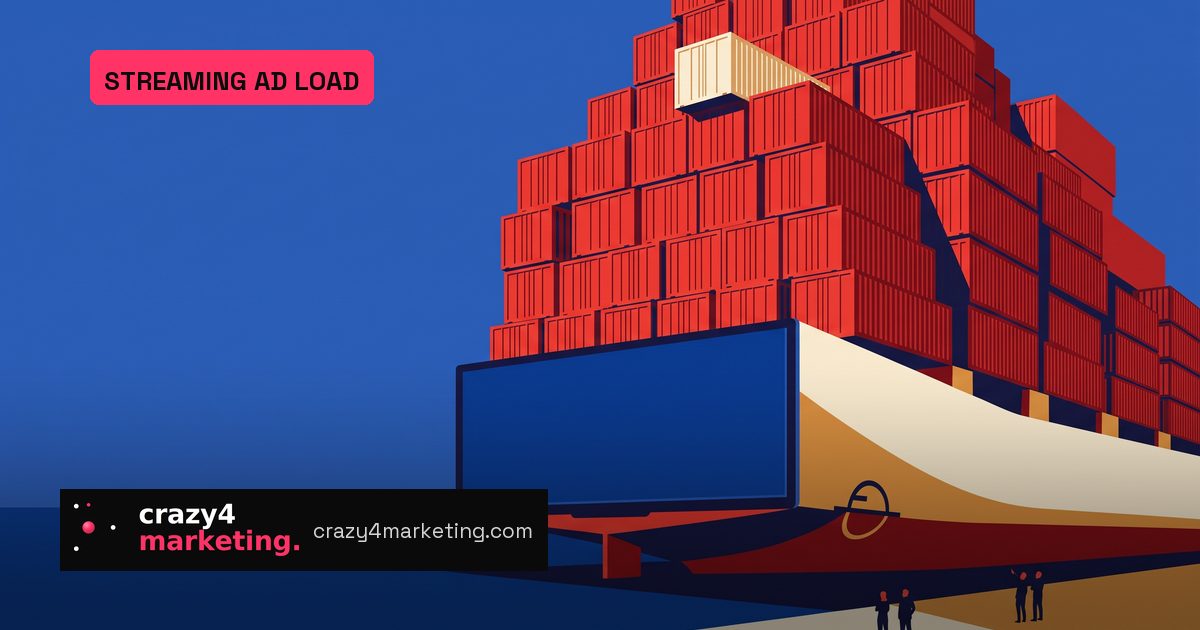
FreeWheel’s latest attention study offers a counterintuitive warning for media buyers: the channel matters, but the ad environment may matter even more. In a controlled test with MediaScience and 436 participants, the same 30-second streaming ad generated 41% unaided brand recall in a light ad load of three minutes and 45 seconds per half hour. When ad load jumped to nine minutes per half hour, recall fell to 26%.
Streaming still beat social on attention and memory overall. Eye tracking showed 94% of streaming viewers looked at the ad, versus 75% in social feeds. Dwell time was 71% of the ad’s duration for streaming, compared with 52% for social. After one exposure, unaided recall was 33% for streaming versus 12% for social.
The ad load finding is the real takeaway
Most headlines will focus on the streaming-versus-social gap, but many planning teams have already priced in the premium of a lean-back TV screen. The more actionable result is the 58% relative drop in recall when a programme carried heavy ad breaks. That is a publisher economics problem as much as a creative problem.
Publishers monetise ad minutes. Cutting from nine minutes per half hour to three minutes and 45 seconds removes more than half of sellable time. FreeWheel’s report frames the commercial answer as:
- Sell lighter ad breaks as a distinct premium product, not a blanket load reduction.
- Price light-load placements higher to protect revenue per viewer.
- Use recall and attention data to justify that premium to advertisers.
For buyers, the implication is equally clear. Heavy-load streaming recall at 26% sits closer to two social exposures at 24% than to a lightly loaded streaming exposure at 41%. If you buy streaming placements without asking about pod length and break density, you may pay a TV premium for a social-like outcome.
What to do with the mixed-exposure data
The study also found a streaming-plus-social sequence produced 42% recall, compared with 24% for two social exposures. That supports a “streaming first, social retarget” plan: use one premium streaming impression to build memory, then reinforce with social frequency.
A simple framework: treat ad load as a third targeting variable alongside channel and creative. Before you approve a streaming buy, ask for ad load, break structure, and whether lighter pods are available. If not, negotiate placement in shorter breaks or measure whether recall-based brand lift justifies the CPM.
Keep the limitations in your pocket
The report comes from a company that sells streaming ad technology, and the data is from a controlled lab/home experiment, not live campaigns. The deck discloses only that comparisons were statistically significant at p<0.05. It does not publish per-condition sample sizes, confidence intervals, the order of mixed exposures, or base rates for lower-funnel intent claims. Treat attention as a proxy, not an outcome, in line with recent MRC and IAB guidance.
Source: PPC Land