

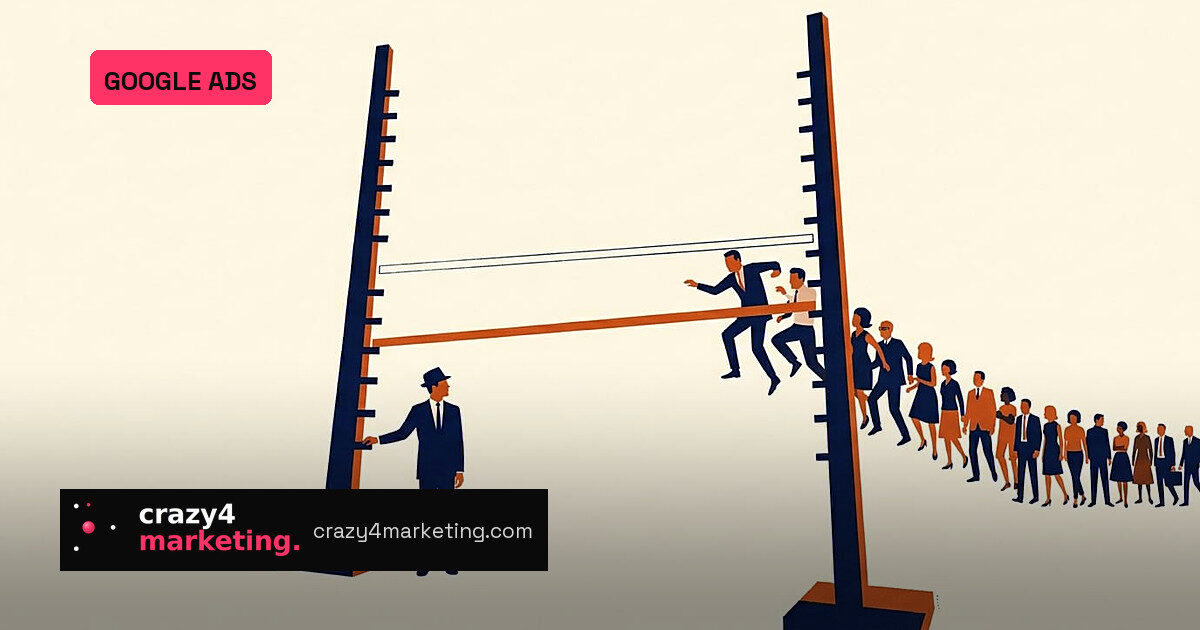
Google Ads has turned one of the oldest performance-marketing trade-offs into a single dial. Target ROAS tolerance tells Smart Bidding how far below your return-on-ad-spend target it may go while it explores search queries that have no conversion history yet.
It is not a new bid strategy. It is the control at the centre of Smart Bidding Exploration, introduced in May 2025, and from June 2026 it also drives promotion mode for sales periods. As of October 2026, it applies to campaigns using Target ROAS or Maximize conversion value inside Google’s own ad products.
What the tolerance actually changes
The mechanic is arithmetic. Google subtracts the tolerance from your baseline target and bids toward that lower effective target. Set a 200% Target ROAS with a 10% tolerance, and the system works toward 180%. The tolerance is a percentage share, not a fixed number of points, so a 10% tolerance on a 500% target moves the goal to 450%.
A lower target raises the bid an auction can justify. Queries that would have missed a strict threshold now clear it, which is the point: more traffic diversity in exchange for a controlled drop in efficiency.
Google’s measurement guidance adds a second discount in practice. While Exploration is active, actual ROAS may land within roughly 15% below the tolerance-adjusted figure. In the example above, an outcome near 153% would still fall inside the range Google describes.
Why marketers should care now
Strict ROAS targets make Smart Bidding cautious. The system bids only where it already expects the target to be met, so queries without a conversion history rarely get a chance. Tolerance buys that chance.
The setting has become more important because of another change. From August 17, 2026, budget-limited campaigns were steered back toward the targets advertisers typed in, rather than the better returns many had quietly received. Smarter Ecommerce data showed the median budget-limited campaign beating its target by about 20% before the change; that surplus fell to roughly zero by the end of August. In other words, deliberately setting a low target to force exploration no longer works the same way. Tolerance is now the explicit, reportable lever for that trade.
Rules before you switch it on
This is not a set-and-forget feature. Google warns it works poorly when a campaign is budget-limited, and HawkSEM reported at least 15 conversions in the previous 30 days as a prerequisite. Google also discourages testing on brand-new campaigns without history.
- Start with the 10% tolerance Google recommends; agencies report a 10% to 30% range.
- Keep budgets uncapped so exploration is not constrained.
- Exclude a ramp-up of one to two conversion cycles when judging results.
- Run the experiment for at least six weeks before drawing conclusions.
The evidence and the gap
Google’s internal data from March 11 to April 11, 2025 showed campaigns using Exploration gained on average 18% more unique search query categories with conversions and 19% more conversions. Later, a Google product manager said Search campaigns using the feature saw 27% more unique converting users on average.
Those numbers are platform averages, not independently audited incrementality studies. Google itself recommends pre- and post-test experiments to separate Exploration from seasonal demand. The search terms report also shows new queries without a separate label, so visibility is limited.
Promotion mode is now leaving beta on Search and Performance Max. A scheduled promotion switches on Exploration for its duration, runs three to 14 days, and switches itself off. While a window is active, the baseline target is locked; you edit the tolerance instead.
Source: PPC Land


