
The hook and when it ran
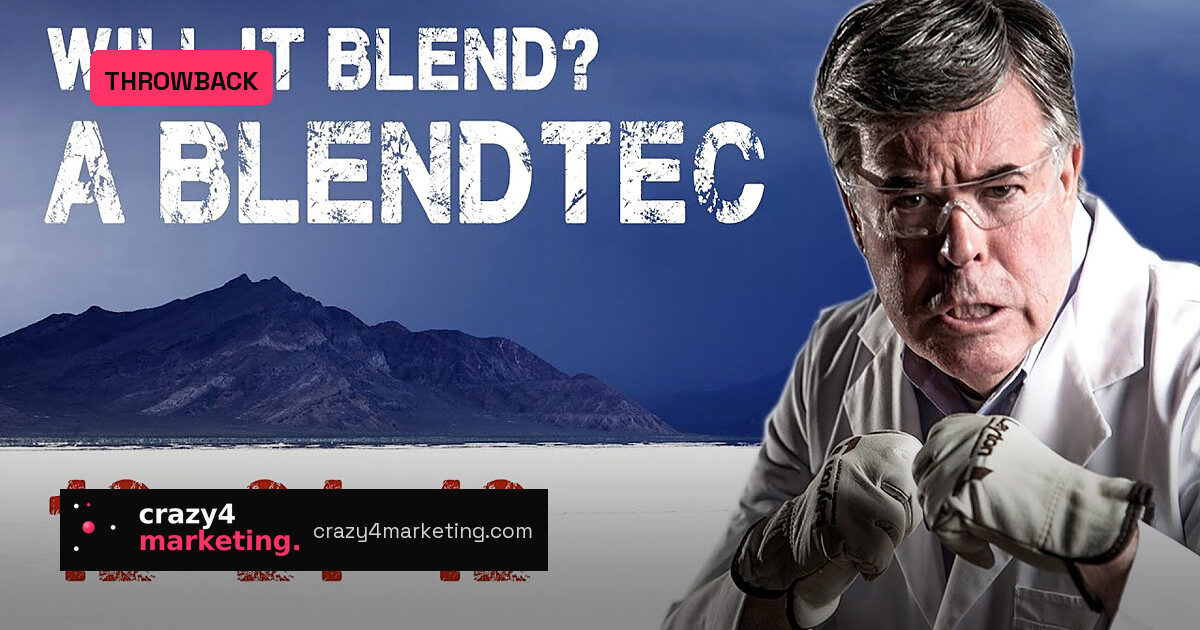
In late 2006, Blendtec asked a question no blender brand had built a campaign around: Will It Blend? The first episode was spare and low-budget—a founder in a lab coat, a kitchen appliance, and an object that had no business being inside it. It ran online at the very moment social video was becoming a viewing habit, but before most brands had a playbook for it.
The campaign did not try to sell blenders with lifestyle shots or spec sheets. It sold the result of a brutally simple test.
How the film was built
The format came from a real behavior. Blendtec founder Tom Dickson tested blenders by blending rough materials. Marketing director George Wright saw the footage and shaped it into a recurring show. The first episodes were produced for about $50—props, a lab coat, and time in a back room. There was no agency, no script, and no glossy production.
Each episode worked from the same structure: a mild-mannered host introduces an item, gives the one-line question, and the blender answers. Over the years the items escalated: marbles, golf balls, and eventually newly launched gadgets like the iPhone. The genius was that the test was the narrative. Nothing was hidden. The setting stayed consistent, so each new episode felt familiar from the first second.
Why it spread in its day
It spread because it was built for the early social web: short, surprising, and easy to forward. Destruction was satisfying and a little absurd. The deadpan host made it feel like a science experiment, not an ad. Low production values were a feature—they signaled that the result was real. The title did the advertising work—it opened a loop viewers wanted closed.
The series also borrowed attention from bigger launch moments. When a new iPhone arrived, Blendtec put it in the blender and captured demand people already had. That made the content feel timely and gave viewers a reason to share before the moment passed.
What it did for the brand
Blendtec moved from a commercial kitchen niche to household familiarity. The campaign is credited with lifting retail sales by roughly 500% in the years after it took off. The videos kept compounding because each episode fed the same question, turning first-time viewers into subscribers and buyers.
It also made the founder a recognizable face and gave the company a long-running property instead of a one-off viral hit. It became the example other brands studied when they tried to make product demos watchable.
Steal this (three moves that still work)
- Make the product test the entertainment. Show the claim in an extreme, repeatable way. Do not explain durability; break something.
- Anchor to moments people already care about. Launch-day gadgets, cultural objects, seasonal demand—borrow attention instead of buying all of it.
- Use a real human over a polished actor. The founder’s deadpan calm made the destruction believable and gave the brand a personality no studio could fake.
Watch the original: Blendtec on YouTube