
The hook and when it ran
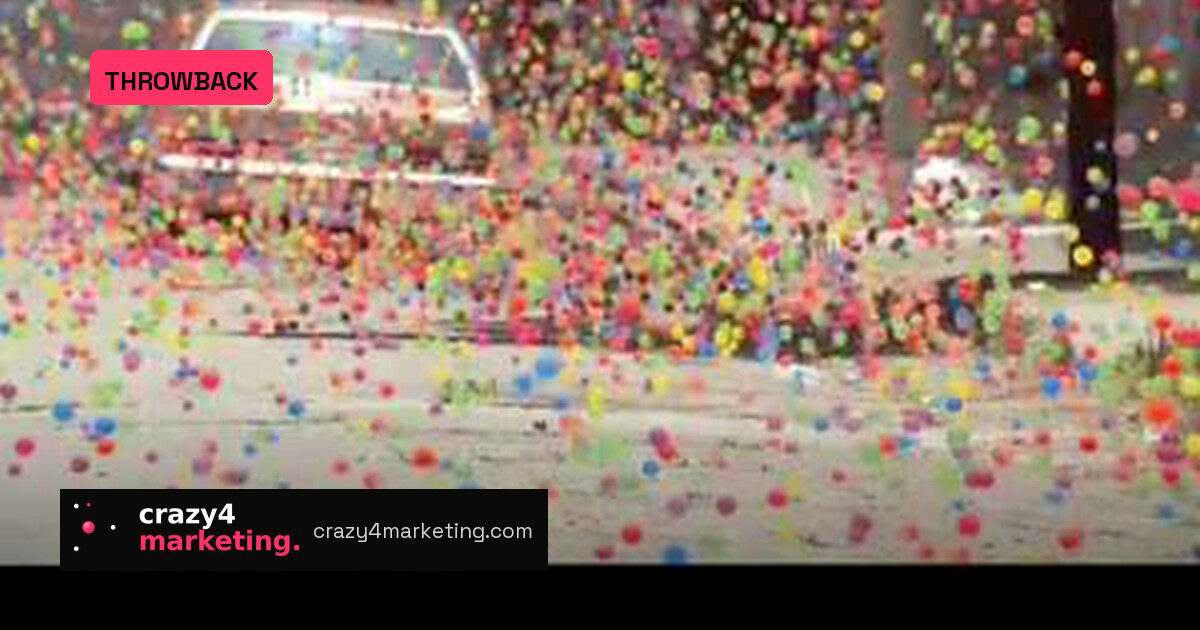
In 2005, Sony had a colour story it couldn’t print. Bravia’s LCD panels were built to show richer, more lifelike colour, but a spec sheet couldn’t make anyone feel that. Fallon London’s answer was to stage a real event: 250,000 multi-coloured bouncy balls released down a San Francisco street, with José González’s cover of Heartbeats underneath. The line carried the promise: Colour like no other. It ran in the UK at the moment flat-panel LCDs were moving into mainstream living rooms, when every set in the showroom looked much the same.
How the film was built
The idea was simple and the execution was meticulous. Real balls, real hills, real weather. Production teams positioned cameras to catch the balls at ground level as they bounced off cars, steps and corners. The team chose the steepest streets for maximum bounce and framed the balls low so the colour filled the screen. City authorities were involved, cleanup crews were on hand, and the shoot had to be choreographed without sealing off San Francisco entirely.
The sound design did as much work as the picture. González’s stripped-back track gave the chaos a calm, emotional pull. The contrast between playful visuals and gentle music became part of the ad’s identity.
Why it spread in its day
Before social platforms became distribution machines, this film travelled the hard way: email forwards, blogs, early video platforms and office monitors. People shared it because it felt like a visual event, not a commercial. The scale made it memorable, and the fact that it was real made it remarkable.
It also gave people a wordless way to recommend the product. Nobody needed to explain Bravia’s colour processing. The pitch was simply: have you seen the one with the balls? In a media culture still driven by TV spots and print, that kind of pass-around attention was rare.
What it did for the brand
The campaign is credited with giving Bravia a distinct emotional identity in a crowded LCD category. Sony already owned hardware credibility; this made the brand feel like it understood pleasure and craft. The ad won major awards and became a reference for selling technical products through feeling. The soundtrack also gave Heartbeats a second life, turning it into a hit long after its original release.
It also shaped Sony’s launch playbook. Later Bravia films kept the sensory approach, using paint and other real-world colour stunts. Colour like no other stopped being a slogan and started working as a creative brief.
Steal this
- Turn a spec into a spectacle. Find the physical, visible consequence of the feature and stage it at full scale.
- Let sound do emotional work. A piece of music can tell the viewer how to feel before they understand the product.
- Make the production the proof. If the shoot is real, the behind-the-scenes story becomes part of the ad.
Watch the original: Sony Bravia on YouTube