
Most car campaigns start with a car. The Fun Theory started with a staircase and a question: can fun change behaviour for the better?
The hook, and when it ran
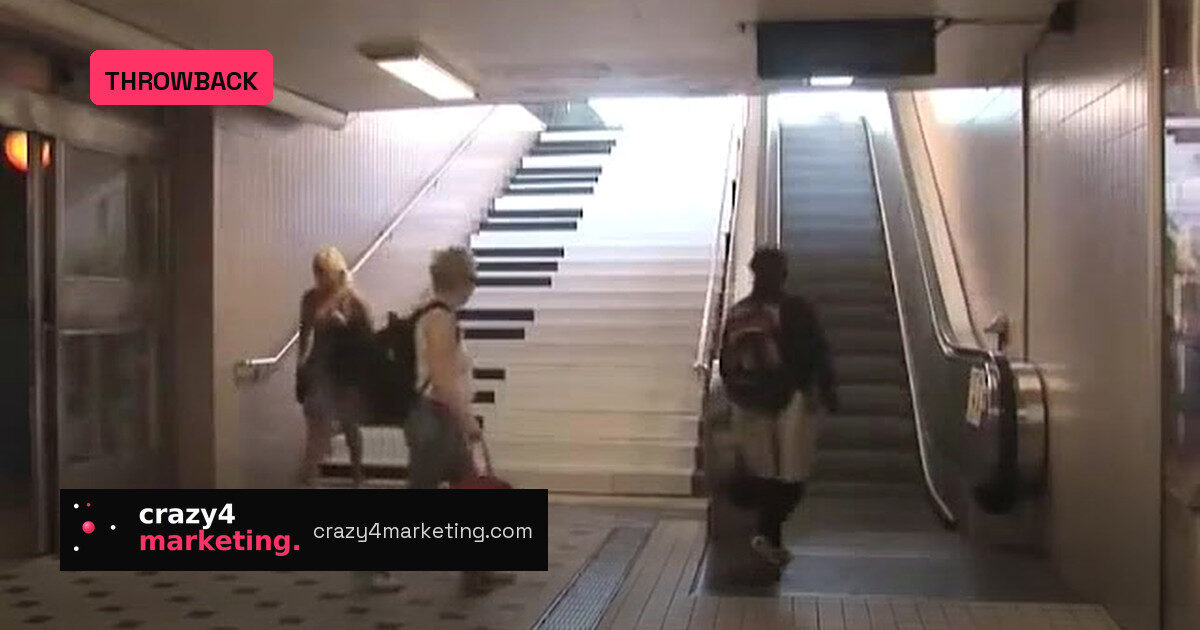
In 2009, Volkswagen and DDB Stockholm turned a subway staircase at Odenplan in Stockholm into a giant, playable piano. As part of the launch of The Fun Theory, the team replaced the usual escalator-or-stairs choice with a small moment of mischief: step on a key, get a note.
Commuters were not asked to participate. They were not handed a brochure. They simply heard the sound, smiled, and started bounding up and down like kids. The film ran online as a short documentary of that experiment, with no car in sight.
How the film was built
The execution was closer to product R&D than advertising. The staircase was fitted with pressure-sensitive steps and speakers, painted in a clean piano-key pattern, and left in place. Cameras captured real commuters, not actors.
There was no script to approve, no voiceover explaining the joke, and no product placement. The only branding was subtle. That made it feel like a discovery instead of an interruption. The film is cut like a behavioural science demo: problem, intervention, reaction, result. Its climax is not a brand logo; it is the sight of people choosing the stairs for the pure joy of it.
Why it spread in its day
In a moment when viral video was still young, The Fun Theory gave people something they had not seen: a public object that turned adult routine into play. It was optimistic, wordlessly understandable, and built to be shared by anyone who wishes their commute felt like this.
The film travelled because it proved an idea quickly: an escalator stands beside the staircase, and person after person chooses the piano. That visible choice made the behaviour-change claim believable.
The campaign also invited participation. The Fun Theory became a platform where people could submit their own ideas for making boring or wasteful choices fun. That turned viewers into contributors, which extended the campaign far beyond the staircase. The whole initiative ran under a simple promise: fun can change behaviour for the better.
What it did for the brand
For Volkswagen, the payoff was borrowed interest. The film is credited with generating millions of organic views and winning top honours on the awards circuit, including at Cannes Lions. More importantly, it gave Volkswagen a human, inventive aura at a time when the brand was pushing its efficiency story.
The experiment never asks you to buy anything. It simply makes a small case: if fun can get people to take the stairs, imagine what clever design can do elsewhere. That association is the ad.
Steal this: three moves that still work
The piano staircase endures because its mechanics are repeatable:
- Make the desired behaviour the entertainment. Do not tell people to change; make changing feel like a game.
- Design for the person filming, not just the person in the room. The staircase was an IRL moment engineered to become a mobile clip.
- Turn behaviour into the headline number. The team reported that 66% more people chose the stairs than usual, which is far stickier than a brand promise.
Watch the original: Volkswagen on YouTube