Third-party data sounds like a quick way to find new customers. Dig into the numbers and it looks like a premium you pay twice: once in cash, once in weak targeting. A new breakdown from PPC Land maps how the segment market works, what it costs and why accuracy is still shaky.
The relationship test
Third-party data is information collected by a company that has no direct relationship with the people it describes, then sold or licensed to advertisers. California’s data broker law defines the category around that gap: a business that knowingly collects and sells personal information of consumers with whom it has no direct relationship.
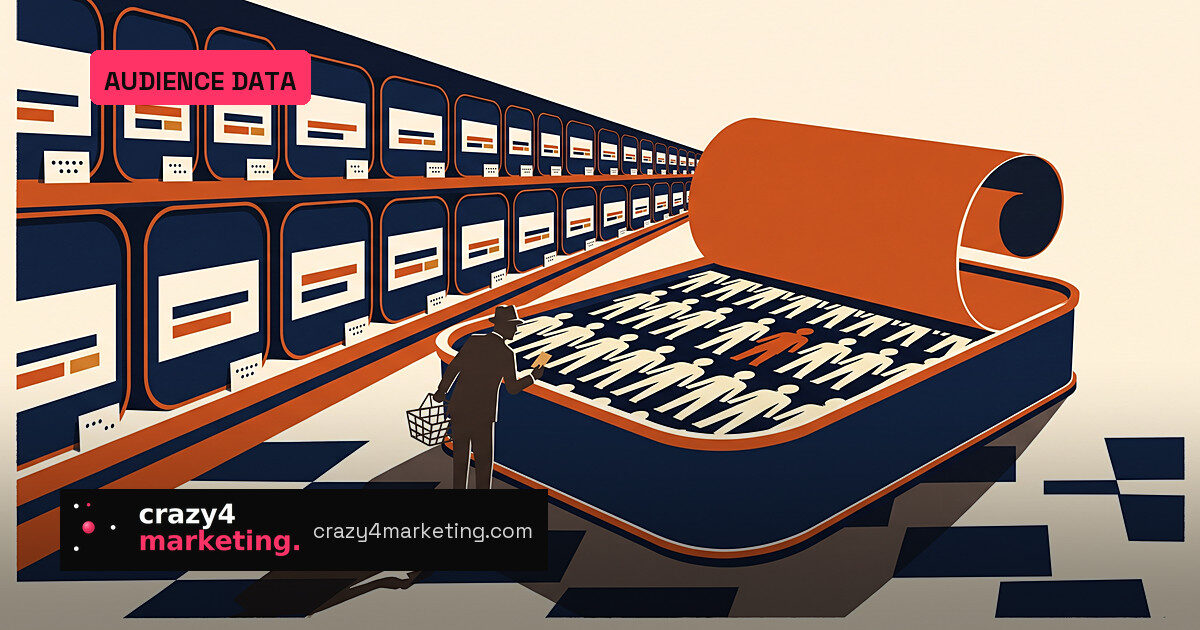
That data is organised into segments such as “auto intender” or “frequent traveller” and pushed into DSPs, DMPs and curated SSP deals. Yahoo’s Giovanni Gardelli compared segment shopping to a supermarket where buyers “can only see the product names and prices.”
What you actually pay
The fees sit on top of media. Google’s DV360 help centre puts typical data fees at $0.50 to more than $2 CPM. DataBeat’s average US mobile CPM was $1.44 in April 2026, so a mid-range data fee can nearly double the price of an impression. The Trade Desk said in September 2025 that advertisers using third-party data typically spent close to 20% of media costs on it.
Pricing is usually either a flat CPM or a percentage of media spend capped at a CPM; LiveRamp’s Data Marketplace documentation gives $1.25 as an example hybrid rate. If you run several data providers, you may pay each one whose list matches.
Accuracy is the weak spot
The bigger risk is performance. In field studies published in Marketing Science, Nico Neumann, Catherine Tucker and Timothy Whitfield tested more than 90 segments from 19 brokers. Gender segments identified a male user only about half the time, and black-box profiles improved on random selection by 0% to 77%.
Later measurements are similar. Truthset’s 2026 State of Data Accuracy report puts gender accuracy at 61% and age accuracy at 13%. An Adstra and InterMedia study found only 23% of residential IP addresses reached their intended geographic target.
Before you buy a segment
Treat third-party data as a line item you audit, not a black box you trust. Ask for the IAB Tech Lab Data Transparency Standard label, which covers roughly 20 disclosure fields. The ones that matter most for performance:
- Source and collection method: where the data came from and how consent was gathered.
- Modelled vs observed: modelled segments add scale but the attribute is projected, not measured.
- Refresh cadence and lookback window: how fresh the signal is.
- Segment criteria and fee structure: who is in the list and exactly what you pay when it matches.
Then run a small holdout against your own first-party or random baseline. If the segment cannot beat a simple heuristic, the extra CPM is not buying you much.
Source: PPC Land