
Insider credibility before scale
Huk launched in 2014 via Marolina Outdoor after founders Ben Verner, Josh Reed, Jason Hart and Doc Reed spotted a gap: fishing apparel was often treated as seasonal, but anglers fish across climates all year. Before launch they worked with professional anglers, captains, tournament organizers and retailers to get the product into real conditions. Cabela’s placed the first order; Bass Pro Shops, Dick’s Sporting Goods and tournament organizations followed.
The early play wasn’t about follower counts. A captain wearing Huk in salt spray or a guide testing a shirt through a full season gave the brand credibility rooted in repeated use. Customers were also encouraged to submit fishing content, with strong contributions rewarded with gear. That early UGC loop still matters.
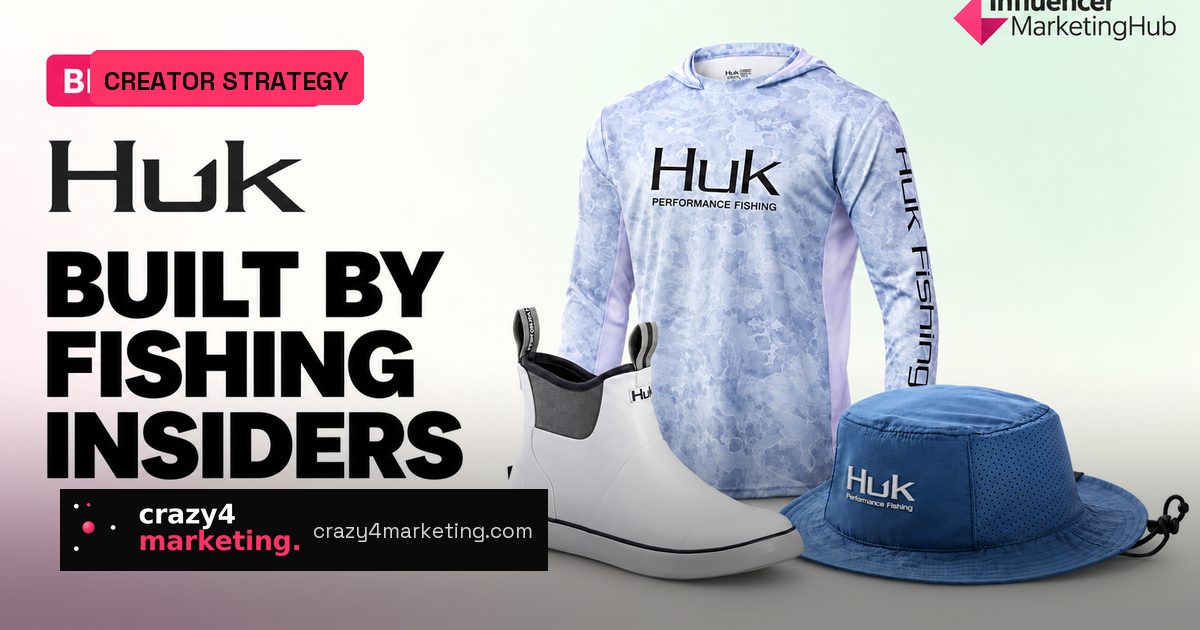
Product design fed the content engine too. Early shirts combined polyester and spandex with sun protection, stretch and a ventilated mesh back. Later the Rogue Wave boot, Airweight hoodie and women’s collections gave creators specific features to demonstrate—grip, waterproofing, drainage and quick-drying comfort. A $37.5 million growth investment in 2018 helped fund broader expansion, including footwear.
The partnership stack
As the brand grew, it gave each partner a clear job. This is the structure marketers should study:
- Pro anglers and captains: technical credibility and product proof.
- Creators and educators like Tia Clark: accessibility and local authority.
- Adjacent athletes such as Keon Johnson: crossover audience reach.
- Motorsports via Richard Childress Racing and Austin Dillon: broader outdoor lifestyle.
- Artists like KC Scott: recognizable visual identity.
- Tournaments, media properties and retail activations: recurring exposure and distribution.
That layering turns influencer marketing into an operating model rather than a series of one-off posts.
What the data shows
HypeAuditor data covering six months of worldwide mentions found 197 accounts produced 486 Huk mentions, with a modeled audience of 11.7 million and reach around 1.2 million. Nano and micro creators made up roughly 74% of the classified accounts. A core group including Fly Rod Chronicles, Reel Adventures with Matty B, Sport Fishing Championship, Saltwater Experience and Science of Fishing generated 26.3% of all mentions.
Reels accounted for 60.9% of tracked content and carousels 28.4%, which fits fishing’s visual payoff. Campaign-level engagement sat at 0.76%, but the dataset includes different jobs: a Captain Brad Solis post hit an extreme 309.02% engagement rate with about 11,200 likes, while a SIONYX giveaway drove 836 comments and an OutdoorHub review served shoppers in consideration mode.
TikTok turns proof into checkout
TikTok content does heavier conversion work. Boot reviews show waterproofing, grip, easy cleaning and durability in real conditions. Apparel videos explain UPF protection, stretch, ventilation and quick-drying fabric. TikTok Shop creators add sizing, colors, stock, promotions and shopping links, shortening the path from recommendation to purchase.
The downside: some boot videos repeat similar language and product points, which can make creators feel interchangeable. A stronger brief should share proof points but let creators attach them to their own audience’s problem. One creator even noted the boots were expensive and uncomfortable at first, which is useful fit guidance for buyers.
What to steal
Huk’s approach works because it starts with category authority, then layers partners for credibility, education, reach, entertainment and conversion. Marketers should define a specific job for each creator, mix recurring partners with a long tail of smaller voices, and measure content against the job it was designed to do. Cleaner tracking of paid, gifted, affiliate and organic activity would make the model even sharper.
Source: Influencer Marketing Hub