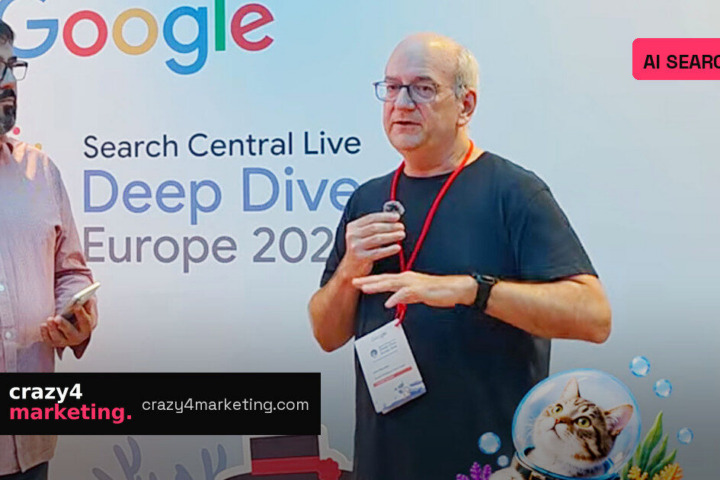
Link reports often look stronger than the outreach behind them. A campaign can report dozens of placements while publishers see little reason the pages should exist. That was the challenge Michael Johnson, CEO and founder of Resolve, put in front of marketers in an October 21 webinar hosted by Search Engine Journal’s Loren Baker.
A keep-or-cut test for every placement
Johnson’s framework for 2027 planning is blunt: a worthwhile link should benefit the brand, the publisher, and the publisher’s audience. That test applies to search rankings and AI visibility alike, and it treats raw link count as an output, not the target.
Stop leading with domain metrics
Domain Authority and Domain Rating often dominate link qualification, but Johnson argues they are not Google signals and are easy to inflate. “These are third-party metrics. They’re not Google signals, and they’re easy to inflate,” he said.
Instead, he recommends checking topical relevance first. Look at the keywords a site actually ranks for, not just estimated traffic. A technology publication pulling unrelated celebrity searches deserves scrutiny no matter its domain score.
That does not mean throwing metrics away. It means using them after you have confirmed subject expertise and an audience that matches your brand.
What gets buried
- Private blog networks
- Link-swap schemes
- Forced commercial anchors
- Generic roundup requests
- Outreach that always pushes product pages
Johnson also challenged the default of pitching product pages when a guide, dataset, or tool would give an editor a stronger reason to cite the site. He wasn’t saying partners should never link to each other, but that artificial patterns shouldn’t be the foundation of the program.
What still works when execution serves readers
Several familiar tactics stay alive when they improve the publisher’s coverage. Guest contributions should carry real expertise, not a thin article built around a commercial anchor. Broken-link and resource-page outreach should help an editor repair or improve a page. Unlinked mentions work when the brand is already being discussed and a link helps readers find it. Expert commentary is worth pursuing only when the spokesperson can add substantive knowledge.
One client example showed product links coming from existing brand mentions in relevant coverage, not from forcing product URLs into unrelated content.
Give roundup editors a reason to include you
Johnson draws a hard line between asking for a placement and improving a publisher’s list. The first step is studying the companies already featured and identifying what useful distinction your brand can add. Fresh data, a relevant feature, or a helpful tool makes the case; wanting the backlink does not.
He also noted that branded mentions can still carry AI-search value even when the underlying links route through affiliate programs or product pages. The goal is a legitimate recommendation, not an equal-weight pitch to every listicle.
Build assets that give outreach something to offer
For digital PR, Johnson favors original research that gives journalists a story they cannot find elsewhere. He pointed to campaigns built around workplace AI concerns and travel costs, where a dataset became a timely headline. He also cited an interactive news-desert map built from public data and paired with a guide, which gave journalism programs a relevant educational resource to link to.
Turn the list into a 90-day plan
The session closed with an execution sequence: audit current spending, establish a baseline for relevant AI buying prompts, identify worthwhile publishers and resource pages, create the assets those audiences need, then pitch. The final phase reviews placements and feeds the next useful asset.
Start small: flag placements with weak topical fit, build a target list from relevant AI citations and competitor coverage, choose one useful asset, and track referring domains, mentions, AI visibility, and organic rankings together.
Source: Search Engine Journal