A bedroom staple, repositioned as beauty
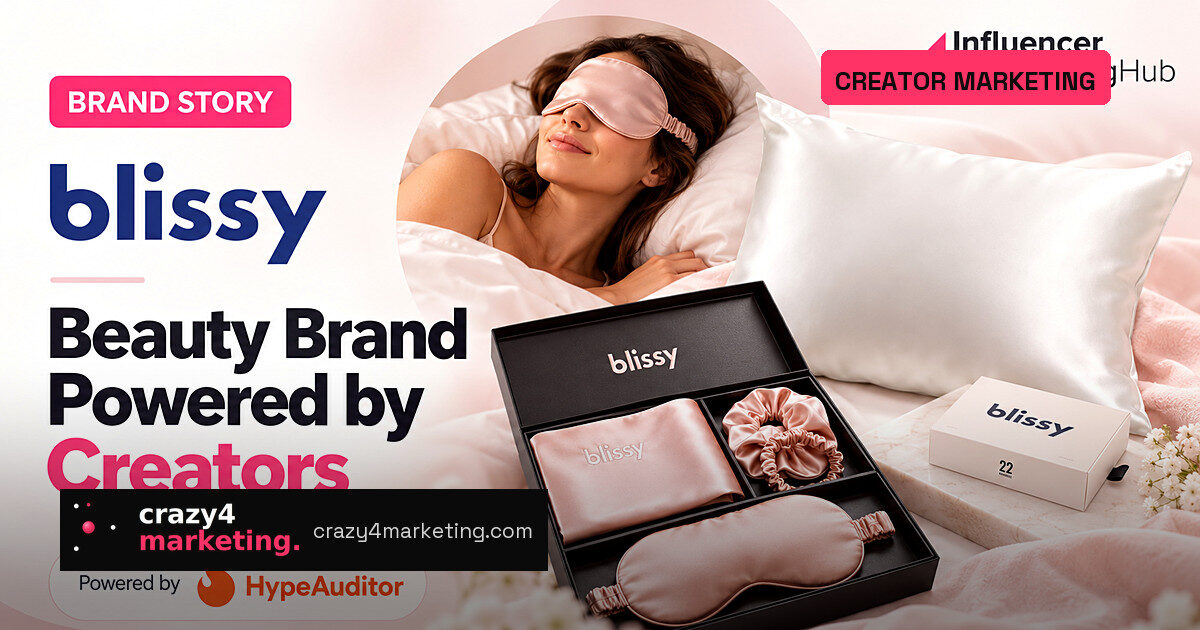
Blissy launched in May 2019 with a narrow range: white, 22-momme mulberry silk pillowcases in queen and king sizes. Founders Vahe Haroutounian and Edgar Babayan came from ecommerce, not beauty, and bet that the material next to your skin deserved the same attention as your hair and skin products. The bet paid fast: around $20,000 in first-month sales and more than $10 million in 2019.
The lesson for D2C founders is not “sell pillowcases.” It is that Blissy changed the evaluation frame. Customers were not buying bedding; they were buying overnight haircare and skincare. That repositioning justified a premium price before a single TikTok video existed.
Creator demos, not just creator ads
Blissy’s early growth leaned on Google, Facebook and Pinterest ads that compared fabrics and explained friction. Creators have since taken over the same job in a more personal format. A creator argues that skincare and haircare “should continue beyond the bathroom,” then shows the smooth material and zipper closure. Others compare a silk bonnet to a synthetic alternative with a burn test, or calculate cost per night.
That is the strategic shift: creator content absorbs pricing objections. Instead of the brand defending the markup, a trusted creator demonstrates why it exists.
TikTok Shop closes the loop
Blissy has built its TikTok Shop operation around affiliate recruitment, product bundles, merchandising and new styles. Creators link pillowcases, bonnets and scrunchies straight into carts and limited-time offers. At the October 2026 TikTok Shop Health & Home BFCM Creator Summit, Blissy says it met more than 200 new creators and took home the Iconic Impact Award.
The mechanism is clean: demo, link, discount, repeat. Different audiences hear different messages—protective hairstyles, frizz, travel, kids—without the brand losing its core sleep-and-beauty positioning.
The Instagram numbers are a mixed signal
A HypeAuditor analysis of the past six months found 87 influencers and 98 brand mentions, with estimated media value of $797,200. Smaller creators dominate: 49.4% nano, 21.2% micro, 70.6% combined. Beauty accounts made up 28.3% and family 20.2%; Reels drove 76.5% of content.
But visibility is not performance. Average campaign engagement was 0.92%, 64% of sponsored posts underperformed the creator’s baseline, and 62.5% of evaluated influencers showed low audience-quality scores.
What to steal and what to watch
- Reposition a familiar product inside a routine people already keep.
- Use creator demonstrations to justify premium pricing instead of discounting.
- Treat TikTok Shop as a testing layer for bundles and messaging.
- Audit engagement and audience quality, not just earned media value.
Blissy’s consistency is its real moat. Every channel—ads, retail, creator partnerships, licensed drops with Nicole Miller and Hello Kitty—keeps silk tied to beauty and sleep. During the 2026 Nordstrom Anniversary Sale, the company reported roughly 85% year-over-year sales growth for that promotion, with order volume more than doubled. For growth teams, the takeaway is to hold one positioning across every surface, and to measure whether all that visibility actually moves a cart.
Source: Influencer Marketing Hub