Horror usually isolates people. Candyman’s “A Desi Halloween” uses the opposite logic: a ghost who cannot scare anyone becomes the reason people come together.
The hook
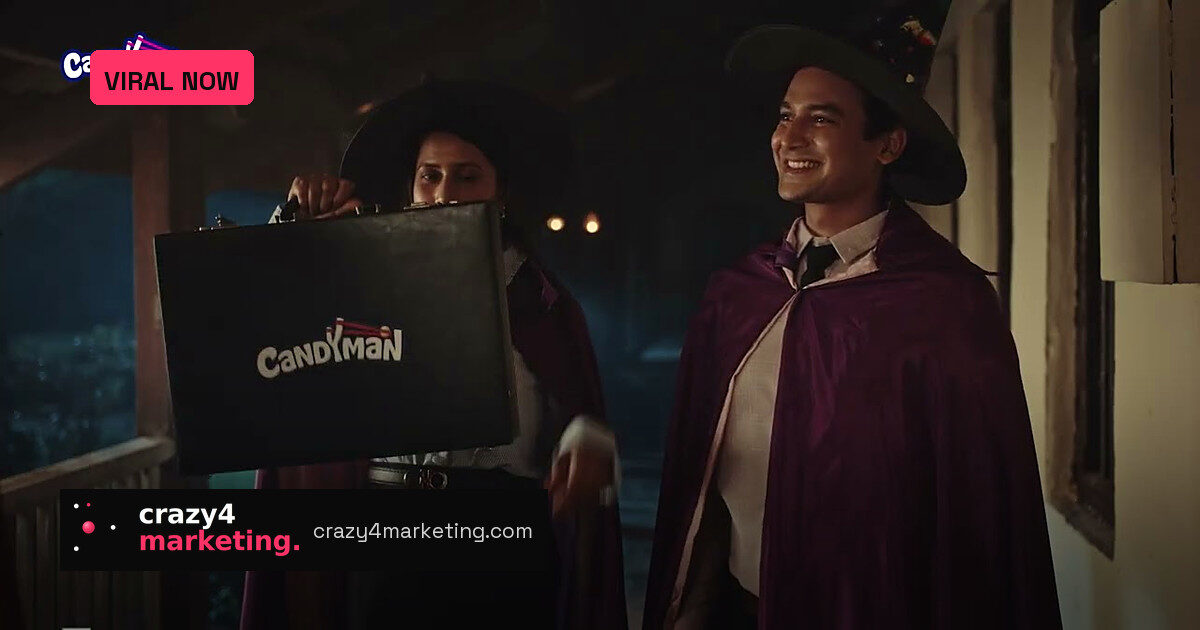
The opening seconds waste no time on setup. Viewers meet Tangy Tantrik mid-failure, a supernatural figure who is bad at the one job ghosts are known for. It reads as Indian horror-comedy rather than Western Halloween, and that mismatch is the hook. The promise is not a fright; it is a running joke about fear gone soft.
The structure of the film
The film runs on a clean reversal. Tangy Tantrik attempts to scare people, and each attempt produces a playful connection instead. Candyman enters as the brand that gives him a new role within its Desi Halloween idea. The campaign lands on the thought: “Darr sirf bhagane ke liye nahi, logon ko paas lane ke liye bhi hota hai.” Fear is not only for chasing people away; it can bring them closer.
The product is not the hero. The brand is the mischief-maker that makes a borrowed festival feel local, social and sweet. That is a tight positioning for a confectionery brand.
Why it spread
The share trigger is cultural recognition. Halloween is growing in India, but the usual carved-pumpkin visual language is still imported. Candyman replaces it with a figure Indian audiences already know: the ineffective tantrik from horror-comedy films and folklore. People do not have to work to get the joke.
The moment is also built for distribution, not just a film. Candyman has partnered with Zepto to offer spooky masks featuring the Desi Halloween characters and will introduce an exclusive SKU on select quick-commerce platforms. The brand is also encouraging get-ready-with-me content around Halloween dressing, supported by billboards and on-ground experiences.
Subash Balar, vice president and business head – chocolates, coffee and confectionery & NCD, foods division, ITC Ltd., framed the play as building on Halloween’s growing relevance to confectionery while giving a global celebration a distinctly desi spin.
The numbers
The source does not report view counts or engagement figures. The measurable push is in distribution: one exclusive SKU on select quick-commerce platforms, Zepto masks, billboards and on-ground activations. The campaign’s spread is being managed through retail and creator formats, not a single organic metric.
Steal this
For a smaller brand, the film is a lightweight template. Use a local archetype that already carries meaning, then bend it to your category.
- Borrow a known local character. Tangy Tantrik arrives pre-loaded, so the ad skips the explanation and goes straight to the joke.
- Flip the expected emotion. Fear turns into connection, giving the brand a warm role without ignoring the occasion.
- Make the content shoppable. Themed masks and an exclusive SKU turn attention into purchase while the film is fresh.
Watch the original: Candyman on YouTube
Source: ETBrandEquity.com