

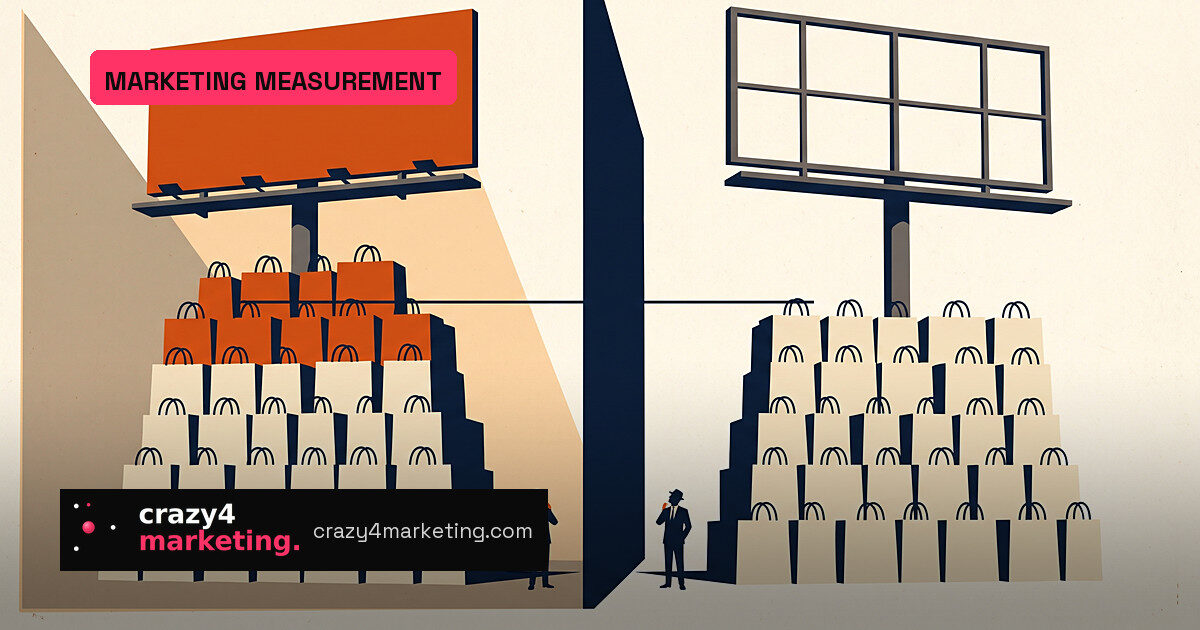
Attribution is seductive. It credits every purchase or sign-up that follows an ad, whether or not the ad actually caused it. Conversion lift is the correction: it compares people eligible to see a campaign with a randomly chosen control group kept from seeing it, then treats the difference as the campaign’s true incremental effect.
Google just made that correction easier to run. On October 7, 2026, the platform opened self-serve user-based Conversion Lift to Search and Performance Max campaigns, according to Search Engine Land. The $5,000 budget floor, announced at Google Marketing Live in May 2025, puts holdout experiments within reach of D2C teams that previously needed an account representative.
The math that exposes the gap
A conversion lift study produces three core numbers. Here they are in plain terms:
- Absolute lift — treatment conversions minus control conversions, after the control group is scaled to the same size.
- Relative lift — that difference divided by the control group’s conversions.
- Cost per incremental conversion — total spend divided by absolute lift.
PPC Land’s worked example shows why this matters. A retailer spends $45,000 targeting one million people and holds back 10% as a control. The 900,000 treatment users produce 9,900 purchases. The 100,000 control users produce 1,000, which scales to 9,000. That leaves 900 incremental purchases — a 10% relative lift and a cost of $50 per incremental purchase. If the platform’s attribution report credited 6,000 purchases, the reported CPA would be $7.50, nearly seven times lower than the test found.
The bigger structural warning
This is not a one-off error. Meta’s ‘suite of truth’ white paper drew on 307 Conversion Lift studies for 54 advertisers between March 2022 and November 2024 and found a median 31% undervaluation under rules-based attribution. Separately, academic work comparing observational methods with 663 Facebook experiments found observational methods often overshoot lift dramatically — for lower-funnel outcomes, median experimental lift was 5% while stratified propensity score matching produced 64%.
One fix is to treat seller-run studies with care. The IAB and IAB Europe’s November 2025 guidelines place platform-reported incrementality in their weakest evidence tier. A useful question from measurement product lead Karan Dhir: who holds the holdout, and can it be audited? Single-platform tests have another limit — a control user on Meta can still see the brand on YouTube, so the test captures contribution on one channel, not isolation.
What to do with lift data
Use the results before you scale budget. Google now reports certainty bands: 90% or more is a very good chance the ads caused the result, 70% to 90% is good, and 50% to 70% is directional. Below 50%, the interface says “No lift” — which Google explains does not prove the ads failed. Shorter studies can understate lift by up to 17% when conversion lags are long, so 14 days is the safer floor for most tests.
Platforms have different flavours: Meta has offered Conversion Lift since January 2015 and calls it the ‘gold standard’ of measurement, TikTok runs managed tests and geo lift studies, and Pinterest reported a 22% incremental checkout lift for Sostrene Grene across 14 European markets. Amazon has taken a third-party route with a catalogue of more than 50 measurement products. Run the version you can afford, but ask the audit question every time.
Source: PPC Land


