

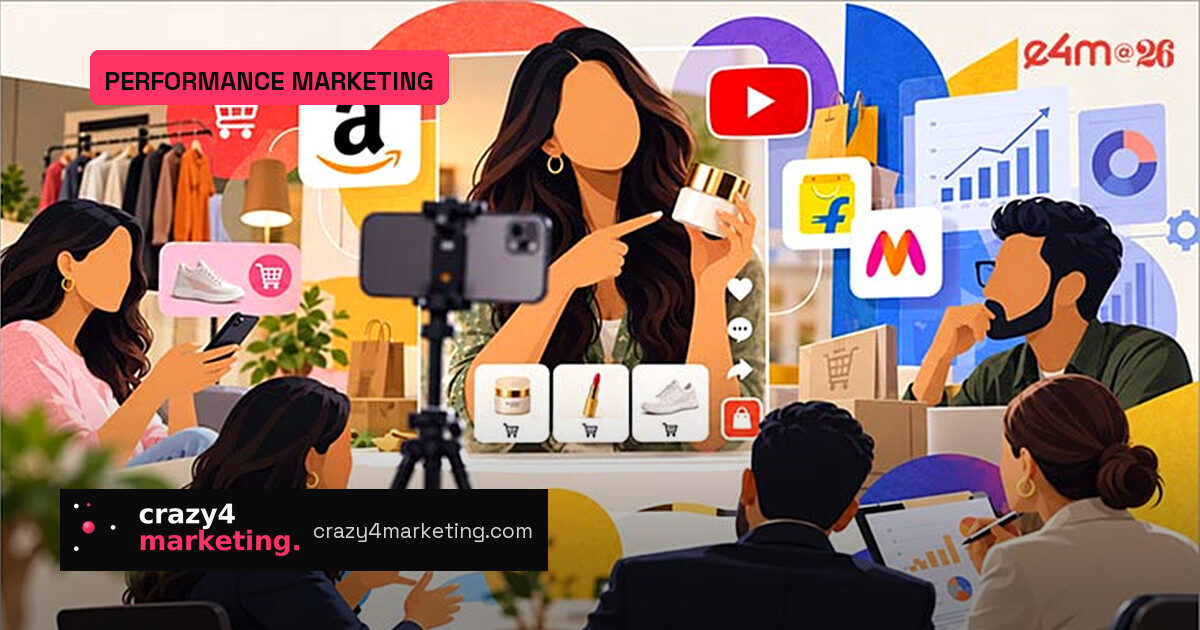
The creator marketing model in India used to be simple: a brand sent product, a creator posted, and success was counted in views, likes and comments. That handshake is being replaced by a harder question: did the content actually sell something?
The shift is now visible across marketplaces, brands, agencies and creators. Brands want clicks, conversions and incremental sales. Platforms are moving checkout into content. Creators are seeing real money from affiliate links, but the measurement problem remains unsolved.
Shopping moves inside the content
YouTube Shopping is the clearest example. Creators can tag products directly inside videos, so a viewer can consider and buy without leaving the content. Flipkart and Myntra were among the first Indian retailers linked to the tool, and Amazon is now joining.
Amazon India’s Head of Social Commerce, Nidhi Thakkar, says the buying journey becomes more fluid. The trade-off is low-intent traffic. “Not everyone will purchase, and it also means there will be a lot of low-intent clicks,” she said. Amazon’s newer Creator Connections programme, launched less than two months ago, lets brands pay creators per click.
Brands want incrementality, not noise
RENÉE Cosmetics co-founder Priyank Shah does not see creator marketing, paid social, marketplace advertising and shoppable content as competing channels. His team looks at click-through rates, conversions, customer acquisition costs and return on ad spend, not just views and likes.
The test Shah cares about most is whether a campaign creates incremental purchases rather than simply capturing demand that already existed. Pee Safe’s Brand Lead Somya Srivastava says attribution has to account for multiple touchpoints, and budgets should move only after consistent conversion rates, sustainable acquisition costs and evidence of incremental sales.
- Trackable links and campaign-specific discount codes are the starting point.
- Reach matters, but audience relevance and credibility now carry equal weight.
- Scale only after conversion rates stay consistent and acquisition costs hold.
Shah adds that scaling must not compromise the authenticity and creativity that make creator partnerships work.
Agencies rewrite the paperwork
Kushal Bhuva, Associate VP at White Rivers Media, says briefs now include product integration, calls to action and tracking. Payment is becoming a hybrid: fixed fees cover content, performance-linked payouts reward sales where they can be tracked.
The hard problem is proving causation. Tracking links show which purchases followed creator interactions, but they don’t show whether those purchases would have happened anyway. Bhuva says controlled tests are needed to separate credited sales from truly incremental ones. That, he argues, is where the agency role is growing.
The creator already sees the shift
Food creator Rishabh Kumar says affiliate marketing contributed nearly one-third of his YouTube Shorts earnings last month, and YouTube Shopping accounted for around one-tenth of his total income. About one-third of his brand enquiries now involve affiliate or performance-based collaborations.
But the shift is uneven: most brand partnerships still price on views and engagement rather than actual sales. Creators who chase high-commission products over genuinely useful picks also risk the trust that makes affiliate income work.
What to do now
Start with trackable links and campaign-specific codes. Agree attribution windows, usage rights and payment terms upfront. Use a hybrid contract that keeps fixed fees for content and adds performance pay where sales can be reliably measured. And protect authenticity: commissions should follow genuinely useful recommendations, not the other way around.
Until measurement catches up with the buy button, creator commerce will keep growing while the question of who deserves credit for each sale stays open.
Source: Indian Advertising Media & Marketing News – exchange4media


