
The hook and when it ran
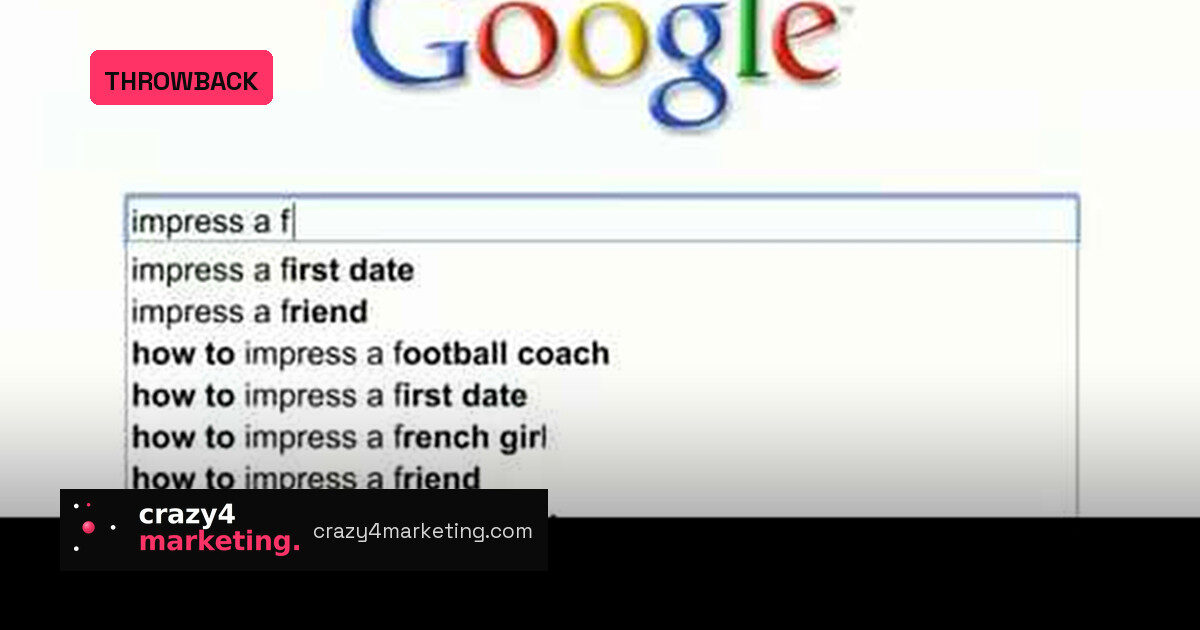
Google had never bought a Super Bowl spot. In February 2010, it changed that with "Parisian Love", a 60-second film that aired during Super Bowl XLIV. The idea was disarmingly simple: show a romantic story entirely through a sequence of Google searches, from a first spark in Paris to building a family years later. No actors, no voiceover, no product pitch. The tagline at the end was two words: "Search on."
How the film was built
The creative team let the interface do the storytelling. Each query appears as a real search, followed by a beat while the viewer reads the results. The next search picks up the narrative. It is structured like a miniature three-act play: meet someone, overcome distance, build a life. Because the searches are specific and personal, the viewer has to connect the dots. The music does the emotional work, while the screen stays almost completely still.
That construction is closer to editing a trailer than making an ad. The team relied on pacing, implication and the audience’s own life experience to fill in what happens between searches. It didn’t try to explain the product; it trusted that people already understood what a search box does.
Why it spread in its day
During Super Bowl XLIV, the surrounding ads were built for volume: celebrities, animals, effects, punchlines. "Parisian Love" was the quietest thing in the room. That contrast became its distribution strategy. Viewers leaned in, got emotional and then talked about it. The story also had a universal mechanism: anyone who has ever searched for a date, a job or a baby question could see their own life in the cursor.
The ad arrived as social platforms were turning Super Bowl spots into next-day conversations. It gave people something to say beyond "that was funny." They said, "I didn’t expect Google to make me feel that."
What it did for the brand
For Google, the spot was less about sales and more about brand meaning. It repositioned search from a utility to an emotional constant. The film didn’t launch a feature or promote a subscription; it made the case that Google is where life gets figured out. That is a far stickier association than any single performance metric.
The campaign also gave Google a creative template. It proved the company could show up on culture’s biggest ad stage and win with product truth instead of production stunts. In later years, Google returned with similarly emotional story-driven spots, but "Parisian Love" is the one credited with opening that door.
Steal this: three moves that still work
- Make the UI a narrator. Use the real interface, workflow or data pattern your customer already knows, rather than a stylized version.
- Leave intentional gaps. Show inputs, not the full scene. When people complete the story themselves, they feel ownership.
- Use restraint as a pattern interrupt. If the feed or ad break is loud, a quiet format can become the most distinctive message.
The lesson has aged well: emotional storytelling doesn’t have to mean big production. It means giving the audience just enough to care.
Watch the original: Google on YouTube