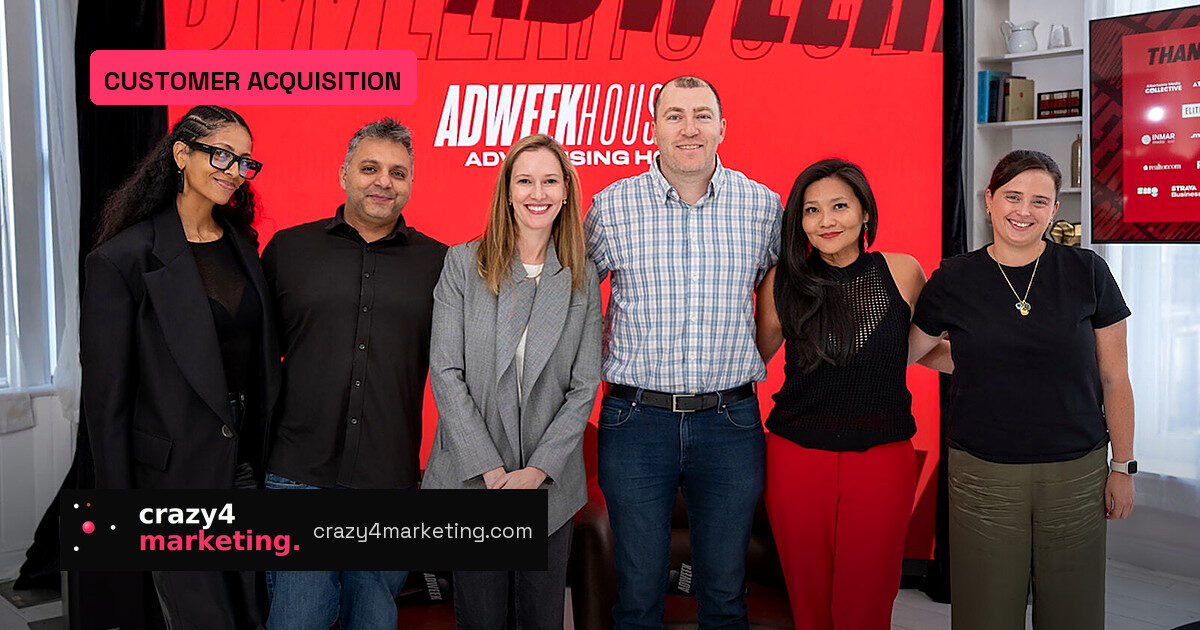
The customer acquisition math that used to feel settled is anything but. During an ADWEEK House Advertising HQ group chat co-hosted with Shopify, marketing leaders from D2C and retail brands compared notes on pricing new customers—and the picture is messier, not cleaner, than a decade ago.
More tools, more confusion
Jess Jacobs, VP of shop growth and marketing at Shopify, framed the old problem with an adage: “I know 50% of my marketing is wasted; I just don’t know what 50%.” Her point: modern measurement tools have added precision in some places but also added new layers of fragmentation.
Samir Pradhan, VP of product management at Shopify, pushed marketers to separate a new buyer from a truly loyal one. A first purchase does not make someone a customer, he argued; you need to know how much a new customer is worth and how much a repeat buyer becoming loyal is worth, then adjust what you pay for each.
Scott Kramer, CMO of skincare brand Naked & Thriving, applies that by pulling past buyers out of paid acquisition on Meta, Google and even ChatGPT, and letting email and SMS handle repeat revenue. That keeps acquisition spend focused on genuinely new demand.
Why CAC needs a use case, not a template
The group’s bigger point is that there is no one correct CAC. A telehealth service such as Petzey puts lifetime value and education first, because the customer’s need is often out of their control and retention matters more than acquisition. A coffee brand like Blue Bottle leans on understanding behavior across omnichannel touchpoints to decide where to invest.
Pradhan drew a practical line between lifetime value and incrementality: a repeat purchase may just be someone who would have bought anyway, now tracked better. Holdout tests are how he’d check whether a platform is delivering customers you truly would not have reached.
What to do before the holiday crunch
Marisa Smith, head of growth at Blue Bottle Coffee, said brands should fund experiments before Q4 so learnings—positive or negative—can inform holiday scaling. Kramer warned that testing new channels is hard when Meta still gets the majority of spend and a new channel rarely jumps to scale quickly.
Shopify’s Shop Campaigns makes that easier by letting merchants set separate prices for new and repeat customer sales, with payment only when a sale happens; Autopilot runs cross-channel tests against a merchant’s goals and guardrails and allocates budget accordingly.
Kramer’s closing advice is about creative, not just plumbing: stop fighting where you show up, and show up where the consumer already wants to be, with a message that actually breaks through.
- Match your CAC calculation to your business goal—acquisition, retention or both.
- Run tests before Q4 and treat negative results as useful signal.
- Separate new vs repeat pricing, and use holdouts to identify true incremental reach.
- Let email and SMS own repeat revenue; keep paid channels focused on net-new buyers.
Source: Adweek