
The hook and when it ran
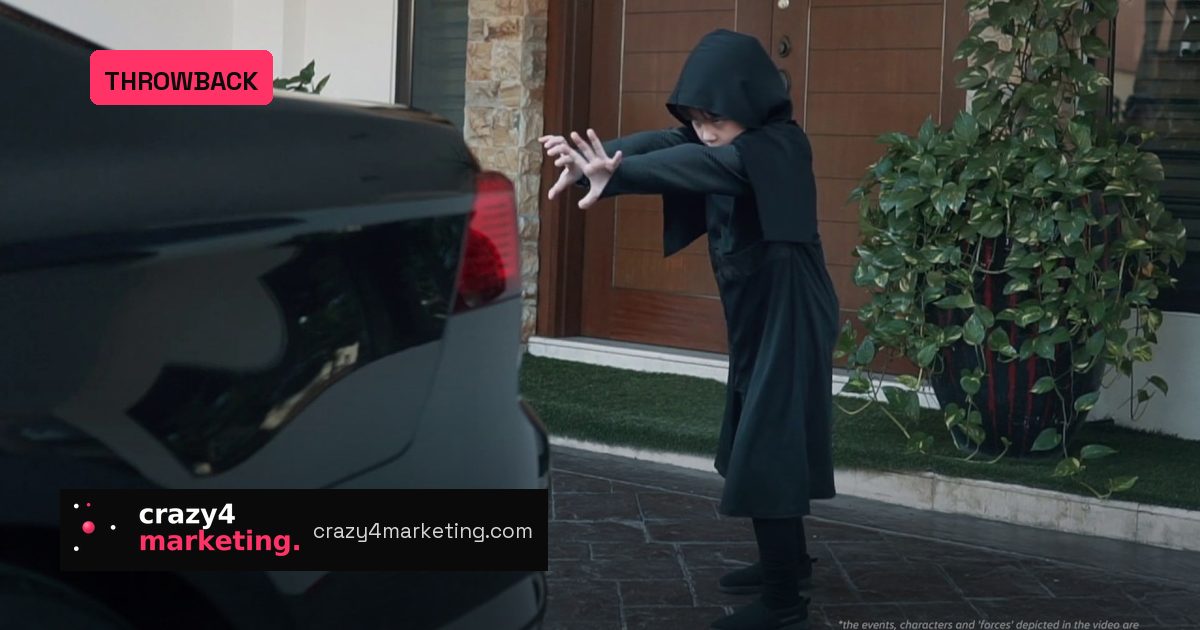
In early 2011, a few days before Super Bowl XLV, Volkswagen and Deutsch LA released “The Force” online. The spot starred child actor Max Page as a mini Darth Vader, patrolling a suburban home and trying to summon the Force on a static bike, a washer, a doll and the family dog. It ended with a 2012 Passat’s remote start startling him in the driveway, leaving the boy convinced he had moved a car.
That was the entire idea. No dialogue, no celebrity cameo, no explosion. Just a small human belief and a product feature hidden in plain sight.
How the film was built
Deutsch LA built the film around a universal fantasy: the child who desperately wants extraordinary powers to be real. The camera stays low, close to the boy’s world. The house feels calm and ordinary, which makes the final reveal feel magical rather than staged.
The product doesn’t interrupt the story; it completes it. Volkswagen’s remote start is the magic trick. The Passat becomes the payoff, turning a convenience feature into an emotional beat. That is why the ad still reads as product storytelling rather than a branded comedy sketch.
Why it spread in its day
Volkswagen did not save the spot for the broadcast. The team seeded “The Force” online before the game, letting fans, entertainment sites and early social platforms carry it into newsfeeds. By the time the commercial aired on Super Bowl Sunday, it was already inescapable.
- It borrowed Star Wars nostalgia but didn’t require deep franchise knowledge to work.
- It was wordless, so it traveled across languages, screens and markets without friction.
- It let viewers enjoy someone else’s impossible belief coming true, not just a product pitch.
That combination made it easy to share at a moment when online video sharing was hitting the mainstream.
What it did for the brand
The ad became one of the most shared Super Bowl spots of its era. It helped the 2012 Passat launch feel like a cultural moment, not a midsize sedan introduction. For a brand trying to warm up its image with American families, “The Force” delivered warm, earned attention that a traditional car spot could not buy.
It also reset the playbook. Early release, earned reach and product-as-payoff turned into tactics that other advertisers rushed to copy in the following Super Bowls. The industry learned that a pre-game reveal could compound attention instead of draining it.
Steal this
Three moves from “The Force” that still work in performance and brand campaigns:
- Launch before the big moment. Drop your strongest asset early, seed it to the right communities and let sharing build momentum before the media peak.
- Make the product the payoff. Don’t tack a logo onto a funny film. Let the product feature create the emotional resolution.
- Trade scale for specificity. A child wanting to be special is a sharper hook than “everyone loves a hero.” A precise human truth travels further than a broad one.
“The Force” is a reminder that performance advertising doesn’t have to feel like performance. The best spots earn attention by making the product inevitable to the story.
Watch the original: Volkswagen on YouTube